
Bitcoin’s Sharp Decline: What Sparks Anxiety During a Bullish Market?
- Bitcoin's 2025 bull market collapsed 30% to $83,824 amid Fed policy shifts and liquidity contractions, defying typical risk-on dynamics. - A 0.72 correlation to Nasdaq 100 and $19B leveraged liquidation event exposed Bitcoin's vulnerability to macro risks and institutional sentiment shifts. - AI-driven algorithms and algorithmic feedback loops amplified volatility, with Treasury yields and dollar strength triggering cascading sales. - Market psychology metrics (Fear & Greed Index, stablecoin outflows) an
Bitcoin’s 2025 Bull Run Disrupted: Unraveling the Causes Behind the Crash
In 2025, Bitcoin experienced a dramatic rally, reaching a peak of $126,000 in October. However, this upward momentum was abruptly halted as the cryptocurrency plunged by 30%, falling to $83,824 by December. This sharp correction, set against a backdrop of global risk aversion, prompts important questions: What sparks fear during a bull market? How do economic trends and investor psychology combine to intensify crypto market swings? This analysis explores the complex relationship between macroeconomic risks and market sentiment, drawing on recent institutional sell-offs, changes in Federal Reserve policies, and shifting liquidity conditions to explain Bitcoin’s recent turbulence.
Macroeconomic Headwinds: Federal Reserve Actions and Liquidity Changes
The Federal Reserve’s policy shift in 2025 was a significant driver of Bitcoin’s volatility. After a prolonged period of quantitative tightening, the Fed signaled a return to injecting liquidity, ending its balance-sheet reduction and hinting at potential interest rate cuts to loosen financial conditions. While such moves are typically seen as positive for risk assets, the market’s response was unexpectedly negative. Bitcoin’s price tumbled as investors reassessed their expectations regarding the timing and scale of Fed easing. For example, a sudden change in the likelihood of rate cuts—prompted by comments from regional Fed officials and disappointing labor data—triggered a steep selloff from $126,000 down to $81,000 in late 2025. This illustrates a paradox: liquidity support can both calm and unsettle markets, depending on how it is interpreted.

Bitcoin’s reaction to Fed policy is heightened by its status as a high-beta asset. With a correlation of 0.72 to the Nasdaq 100, Bitcoin now mirrors the behavior of equities more than it serves as a portfolio diversifier. This connection means Bitcoin is subject to the same volatility as technology stocks and capital shifts driven by artificial intelligence trends. As institutional investors redirected funds from blockchain projects to AI ventures, Bitcoin’s price movement diverged from its former “digital gold” narrative. Meanwhile, the Fed’s continued tight monetary stance—evident in rising Treasury yields and a robust dollar—has put additional pressure on Bitcoin, which does not generate yield.
Investor Psychology: Fear, Liquidity Crunch, and Feedback Effects
Beyond economic factors, shifts in investor sentiment have played a crucial role in Bitcoin’s recent price swings. The leveraged liquidation event on October 10, which wiped out $19 billion in open interest, marked a psychological inflection point. This was compounded by over $3.5 billion in Bitcoin ETF redemptions in November 2025, signaling waning institutional confidence. The Fear & Greed Index, a widely watched measure of market sentiment, plunged to extreme fear levels, reflecting a lack of buying interest.
The contraction in liquidity further fueled panic. In November 2025, the total value of stablecoins in circulation dropped by $4.6 billion, with $800 million flowing out of crypto and back into fiat currencies. Such liquidity shortages have historically preceded market corrections, making Bitcoin more susceptible to sharp, short-term price movements. On-chain data, including thinner order books and wider bid-ask spreads, confirmed a decline in market depth.
Corporate involvement also intensified the downward spiral. MicroStrategy (MSTR), which holds more than 649,870 BTC, saw its stock price tumble amid fears of being removed from major equity indices. This corporate vulnerability reinforced negative sentiment around Bitcoin, creating a self-reinforcing cycle of fear and selling.
The Volatility Multiplier: AI, Algorithms, and Automated Trading
Automated trading systems powered by artificial intelligence have further amplified Bitcoin’s volatility. Machine learning models, designed to identify bearish trends, accelerated short selling and position reductions during the downturn. These algorithms, which focus on liquidity and macroeconomic indicators rather than blockchain fundamentals, underscore Bitcoin’s reliance on external factors. For instance, rising U.S. Treasury yields and a strengthening dollar were interpreted by these systems as negative signals, triggering a cascade of automated sell orders.
Investor Takeaways: Navigating a Fragile Market
Bitcoin’s current price action points to a delicate balance. Technically, the cryptocurrency faces resistance above $106,000, with potential support in the $95,000 to $98,000 range. However, unless a significant catalyst emerges—such as a Federal Reserve rate cut or a renewed appetite for risk—the path of least resistance appears to be downward. Investors must approach this environment with caution, employing selective hedging, prudent leverage management, and close monitoring of both on-chain liquidity and macroeconomic developments.
Summary
The abrupt decline in Bitcoin’s price during 2025 is not an isolated event but a reflection of deeper underlying forces: economic uncertainty, shifting liquidity, and evolving investor psychology. The interplay between Federal Reserve decisions, institutional behavior, and algorithmic trading has turned Bitcoin into a gauge of global risk sentiment. The key lesson for investors is clear: in bull markets, fear is often driven not by Bitcoin’s fundamentals, but by the broader economic and psychological dynamics shaping the market’s direction.
Disclaimer: The content of this article solely reflects the author's opinion and does not represent the platform in any capacity. This article is not intended to serve as a reference for making investment decisions.
You may also like
Internet Computer's Rapid Rise: Key Drivers and What It Means for Long-Term Investors
- Internet Computer (ICP) surged 385% in November 2025, driven by Caffeine AI, Chain Fusion, and institutional partnerships. - Caffeine AI's no-code dApp platform and Chain Fusion's cross-chain interoperability expanded ICP's utility and developer adoption. - Institutional adoption via Microsoft/Azure and $237B TVL growth positioned ICP as a decentralized infrastructure leader in AI and DeFi. - Price forecasts range $4.4-$30 by 2025-2030, but risks include volatility, regulatory uncertainty, and unproven u

How Will the 2026 Federal Reserve Affect the Crypto Space?
To transition from the Powell era's technocratic caution to a more explicit policy framework aimed at reducing borrowing costs and advancing the President's economic agenda.

Infrastructure Initiatives Fuel Real Estate Growth in Upstate New York: The Impact of Local Government Projects on Industrial Market Transformation
- Webster , NY leveraged a $9.8M FAST NY grant to transform a 300-acre Xerox brownfield into a high-tech industrial hub, slashing vacancy rates to 2%. - Infrastructure upgrades attracted food processing and semiconductor firms , with a $650M fairlife® dairy plant expected to create 250 jobs by 2025. - Strategic site readiness and pre-leased industrial space at the NEAT site reduced investor risk, driving 10.1% residential property value growth since 2023. - The model highlights underpenetrated markets' pot

ZEC Rises 4.81% After Major Investor Increases Long Position with 10x Leverage
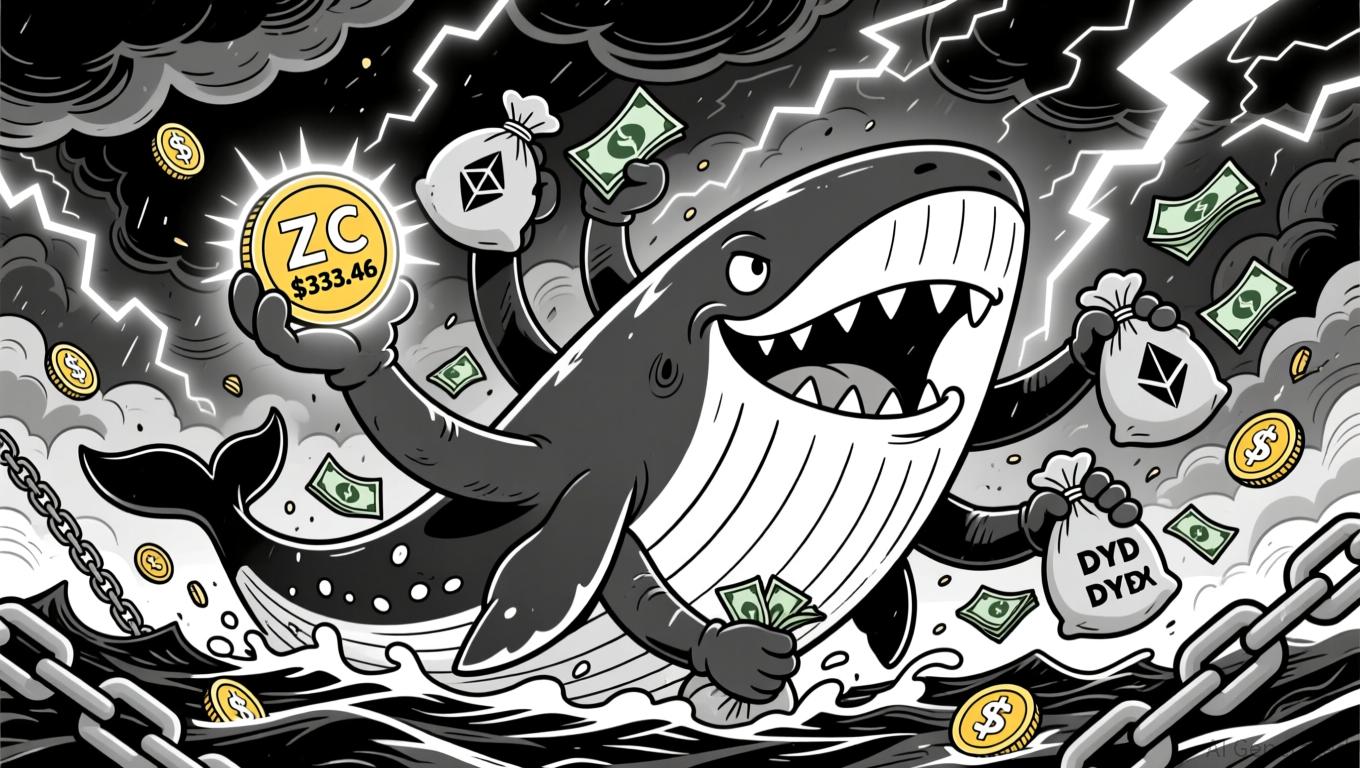
- ZEC surged 4.81% in 24 hours to $330.5 amid a whale's 10x leveraged long position on HyperLiquid targeting $333.46. - The whale also holds 20x ETH and 5x DYDX longs but faces $2.7M total losses, highlighting risks of leveraged trading during crypto volatility. - Grayscale's ZEC ETF filing and Chainlink's ETF launch signal growing institutional interest in altcoins, potentially boosting ZEC liquidity and demand. - ZEC's 482.71% annual gain contrasts with 27.45% weekly drop, reflecting its cyclical nature
Trending news
MoreCrypto prices
More






