
Vitalik Says Fileverse Now Stable for Secure Web3 Collaboration

Quick Take Summary is AI generated, newsroom reviewed. Vitalik Buterin confirmed Fileverse's stability and reliability for secure, decentralized document sharing and collaboration. The platform's design allows for instant use without needing crypto wallets, tokens, or prior blockchain knowledge. This usability fills a crucial gap, making Web3 tools practical for real-world document collaboration and secure online coordination. The endorsement highlights a shift toward high-quality, practical infrastructure
Ethereum co-founder Vitalik Buterin says Fileverse has quietly crossed an important milestone. After months of bug fixes and steady improvements. The decentralized, encrypted document platform is now stable enough for secure sharing, commenting and real-time collaboration. Without things suddenly breaking mid-workflow.
For Vitalik, this shift matters. He has long supported tools that expand Web3 beyond trading and speculation. Fileverse, he said, now feels reliable enough that he can confidently send documents to others and expect the entire process to work as intended. His comments immediately sparked fresh interest across the crypto community. Especially from builders who see decentralized collaboration as a missing cornerstone in Web3 infrastructure.
A Simple Promise: Use It Without Knowing Anything About Web3
One of Vitalik’s biggest praises centered around Fileverse’s accessibility. Unlike many Web3 tools that rely heavily on network effects. This means they only work well once lots of people use them. Fileverse avoids that trap. He said he could send someone a Fileverse document right now and they could open it, comment, and collaborate instantly. Even if they’ve never touched Fileverse or Ethereum before.
That design choice lowers friction dramatically. Users do not need wallets, tokens, or prior blockchain knowledge. Instead, Fileverse handles encrypted collaboration behind the scenes while keeping the interface simple. For a sector often criticized for complexity, this matters. It shifts Web3 tools closer to real-world usability.
Builders See Fileverse as More Than Just “Docs on a Blockchain”
Commentators responding to Vitalik framed Fileverse as a much bigger deal than it appears at first glance. Some argued that decentralized, encrypted documents represent a foundational shift in how people and, eventually, AI systems, will coordinate online. If knowledge can flow without choke points or centralized control, collaboration becomes safer and more resilient. It also creates a base layer where human and machine intelligence can work together. Without trusting a single company or server.
Vitalik also pushed back on the narrative that only a few teams in crypto are “well run.” He said more projects than people realize are building real, high-quality tools, Fileverse included. The real challenge, he added, is scaling that success so Web3 produces ten useful tools for every speculative token. Instead of the other way around.
A Quiet but Important Win for Web3 Infrastructure
Fileverse’s progress doesn’t come with flashy price charts or token hype. But it highlights a quieter evolution in crypto, one where infrastructure finally becomes stable, user-friendly and practical. A decentralized document platform may sound small, but it fills a gap many teams feel daily. People need secure spaces to collaborate, share drafts and coordinate work without relying on centralized platforms. With Vitalik’s endorsement and Fileverse’s recent upgrades. Web3 gets one step closer to a world where decentralized tools are not just technically impressive, they are actually usable.
Disclaimer: The content of this article solely reflects the author's opinion and does not represent the platform in any capacity. This article is not intended to serve as a reference for making investment decisions.
You may also like
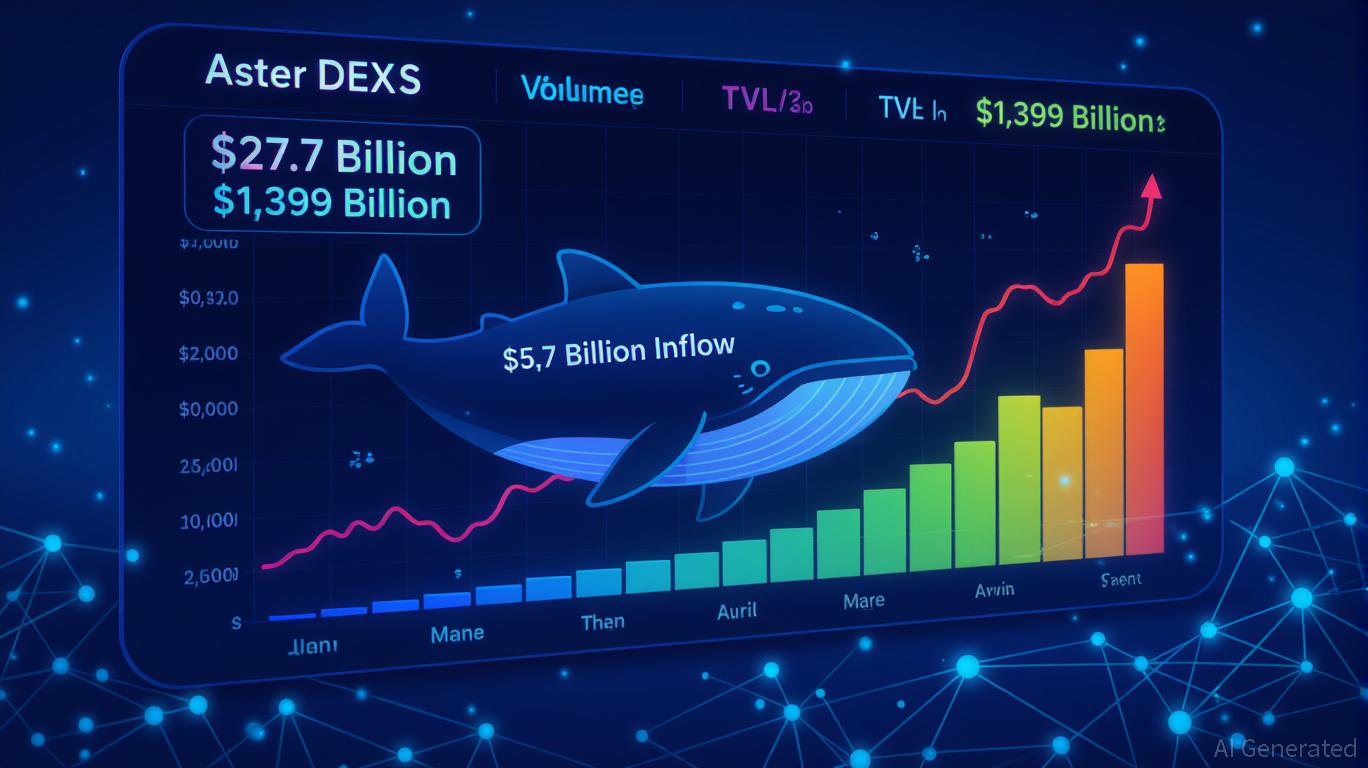
Aster DEX's On-Chain Momentum: Signaling the Future of DeFi
- Aster DEX reported $27.7B daily volume and $1.399B TVL in Q3 2025, outpacing DeFi benchmarks with 2M users. - Institutional whale activity, including CZ's $2M ASTER purchase, drove $5.7B inflows and 800% volume spikes. - Hybrid AMM-CEX model and ZKP privacy tech enabled 40.2% TVL growth, 77% private transactions, and 19.3% perpetual DEX market share. - ASTER's margin trading upgrades and Stage 4 airdrops fueled 30% price surges, while Aster Chain's 2026 launch will integrate privacy-preserving ZKPs. - On
Astar (ASTR) Price Rally: Protocol Enhancements and Ecosystem Growth Drive Long-Term Value
- Astar (ASTR) surged 150% due to protocol upgrades and ecosystem expansion, positioning it as a sustainable value creation case study in blockchain. - Tokenomics 3.0 (fixed 10.5B supply) and Burndrop mechanism created deflationary incentives, supported by Galaxy Digital's $3. 3M OTC investment and Astar's $29.15M buyback. - Cross-chain interoperability with Polkadot/Plaza and Sony's Soneium, plus partnerships with Toyota and Japan Airlines, expanded real-world utility in logistics, identity, and loyalty p

Astar 2.0 Debut and Tokenomics Revamp: Driving DeFi Innovation and Attracting Institutional Participation
- Astar Network's Astar 2.0 introduces Tokenomics 3.0 with fixed 10.5B ASTR supply and 5% annual burn rate to stabilize value for institutional investors. - The update features Burndrop mechanism, asynchronous cross-chain security, and ESG-aligned protocols to address regulatory risks and attract traditional capital. - Plaza platform enables seamless asset transfers across Ethereum , BSC, and Polkadot , while zkEVM scalability targets 300,000 TPS by 2026 for enterprise-grade DeFi solutions. - Governance sh

PNC Bank launches Bitcoin trading for high-net-worth clients
Trending news
MoreCrypto prices
More





