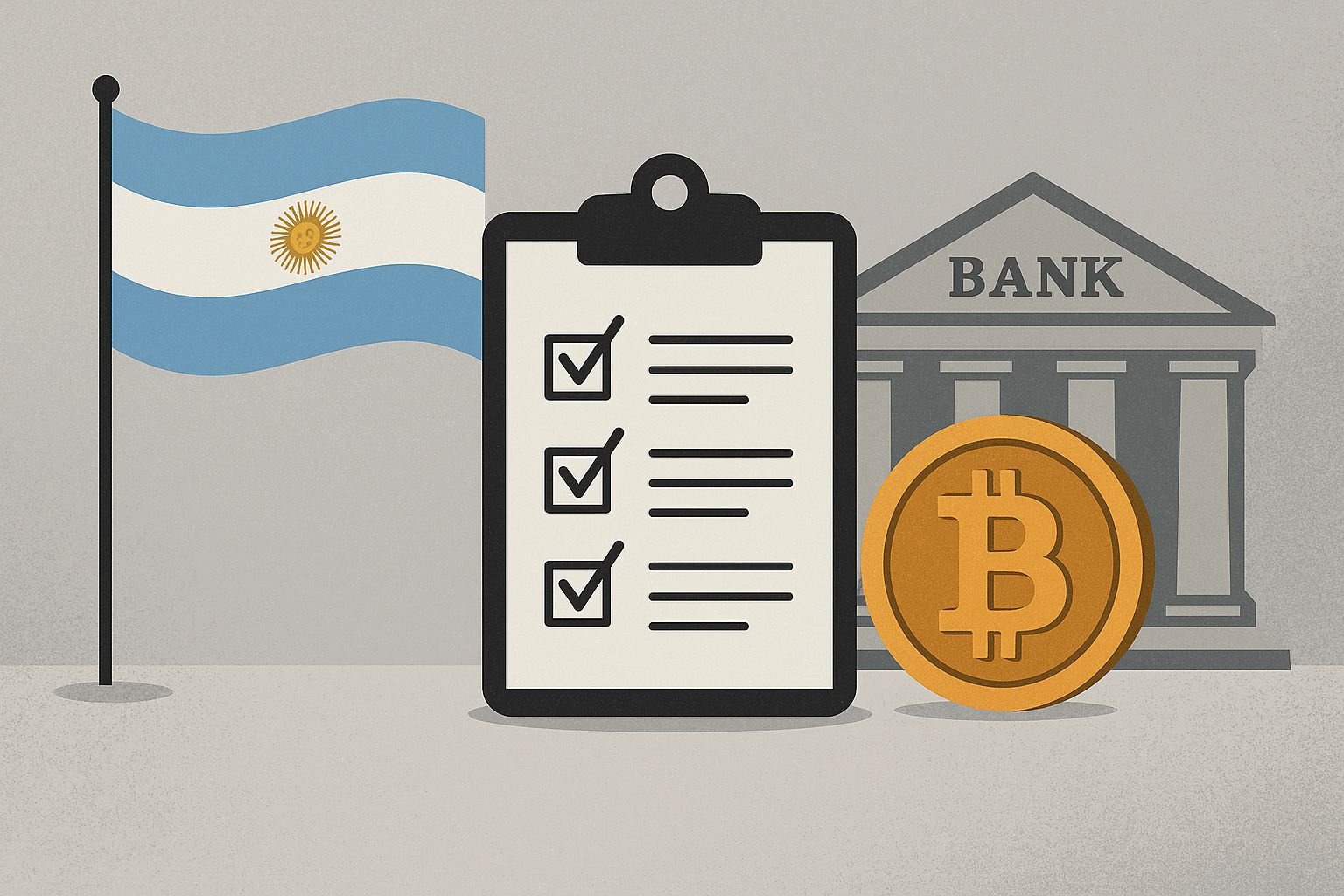
- A new framework would allow trading, custody, and approved coins.
- Banks must follow strict KYC, AML, and CNV regulations.
- High inflation has pushed people toward Bitcoin and stablecoins.
Argentina is preparing for a major shift in how its financial system treats digital assets, with regulators working on a plan that could allow banks to offer Bitcoin and other crypto services for the first time in three years.
The move marks a notable shift for a country where crypto has become a day-to-day tool for people trying to manage inflation, and it signals a wider effort to bring informal crypto activity into regulated channels.
The change remains under review, but internal planning shows that Argentina wants its banking system to play a formal role in crypto access, custody, and compliance.
Banks and crypto rules evolve
Argentina’s central bank, the Banco Central de la República Argentina, has restricted banks from handling crypto since May 2022.
The regulation was designed to contain financial risks and prevent money-laundering activity during a period of economic instability.
The policy now sits at the centre of a broader reassessment of how digital assets fit into a financial system that is struggling with persistent inflation and rising demand for stable alternatives.
Since December 2023, the arrival of President Javier Milei has reshaped the conversation.
His administration has promoted financial freedom, arguing that people should be able to choose different forms of money, including Bitcoin.
This shift has influenced how regulators approach the current ban and has accelerated work on a new framework.
New framework plans grow
Reports indicate that the central bank is developing a system that would permit banks to integrate crypto into their services.
The plan includes trading access, custody options, and a list of approved coins, limited to assets such as BTC, ETH, USDC, USDT, and XRP.
Banks would need to comply with strict rules under the CNV, follow enhanced KYC and AML procedures, and operate crypto activities through legally separate units with additional capital, security, and liquidity requirements.
The approach represents a transition from prohibition to controlled participation.
Argentina would be one of the first inflation-hit economies to regulate crypto within mainstream banking rather than leaving it to informal platforms.
The change also aims to reduce regulatory gaps and improve transparency across transactions that citizens already rely on to protect their savings.
Inflation pressures fuel demand
Crypto adoption has grown rapidly in Argentina over the past three years as households look for ways to preserve value.
With inflation reaching 1,427% in 2023 and still rising more than 2% each month, people have turned to Bitcoin and dollar-linked stablecoins to manage daily expenses, store money, and avoid exposure to the peso’s depreciation.
Regulators now want this activity to operate under formal safeguards.
Allowing banks to support crypto services would offer a safer environment, limit the use of unregulated exchanges, and help authorities strengthen financial monitoring.
It would also create a more structured relationship between digital assets and traditional banks during a period of economic stress.
Timeline points to 2026
Although approval is not final, experts suggest that the updated rules could be ready around April 2026. Work on the technical structure is already underway.
If the proposal moves forward, Argentina could become a key example of how a country facing extreme inflation integrates crypto into conventional financial channels.