
Sony Takes the Baton in Asia’s Entertainment–Web3 Convergence

Soneium, a Layer-2 blockchain platform by Sony Block Solutions Labs, announced a partnership with IRC APP, the official app for one of Japan’s largest idol and fashion festivals, Idol Runway Collection (IRC). The collaboration will bring the IRC onto Soneium’s AI-powered IPFi infrastructure to transform global fan engagement through measurable, rewarding on-chain contributions. Asia’s entertainment industry has
Soneium, a Layer-2 blockchain platform by Sony Block Solutions Labs, announced a partnership with IRC APP, the official app for one of Japan’s largest idol and fashion festivals, Idol Runway Collection (IRC).
The collaboration will bring the IRC onto Soneium’s AI-powered IPFi infrastructure to transform global fan engagement through measurable, rewarding on-chain contributions. Asia’s entertainment industry has become a trailblazer in fan participation, a trend that is now taking hold in Western markets.
Sony’s Blockchain Infrastructure for Entertainment
The IRC, Japan’s largest idol and fashion hybrid festival, is hosted by YOAKE entertainment and has expanded its scale through a collaboration with Tokyo Girls Collection (TGC). IRC has already established itself as a success, attracting approximately 11,800 attendees and 107 idol groups to its 2025 event.
The core goal of the partnership is redefining fan engagement by valuing and rewarding measurable on-chain contributions across the J-Pop fandom. This collaboration will unlock the creative community’s economic potential, starting with the world’s second-largest music market.
The core of fan engagement is within the IRC mobile app. This AI-powered app evaluates positive, consistent, supportive posts made by fans on platforms such as X (formerly Twitter). The measured engagement is converted into “IRC Score,” which is automatically claimed to fans’ on-chain wallets without gas fees.
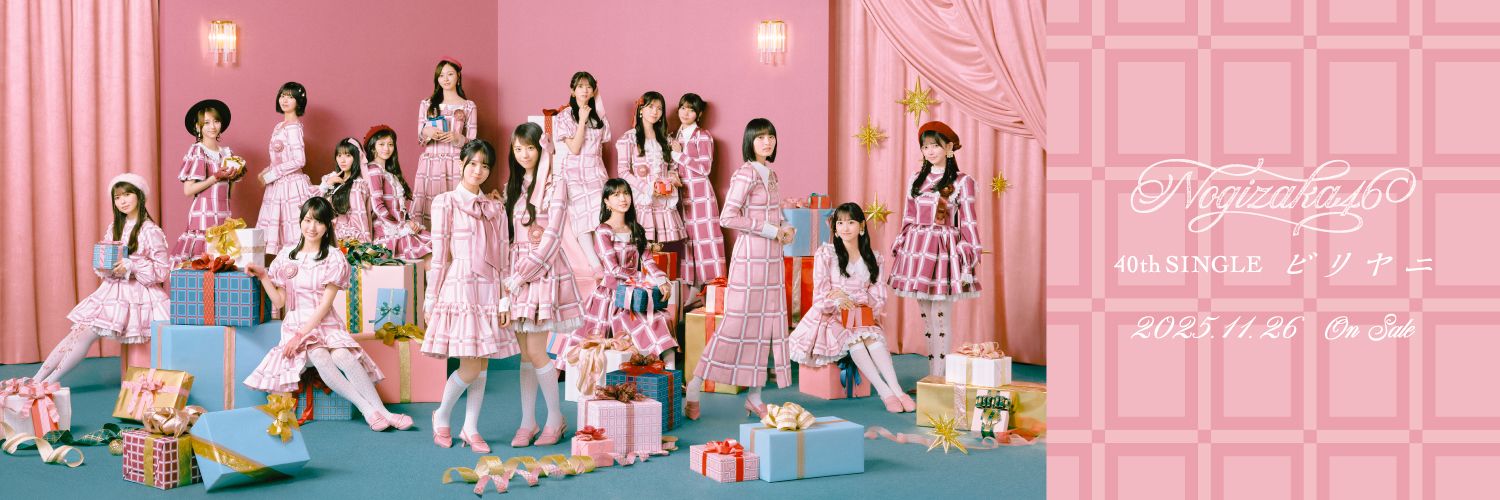 The first wave of IRC 2026 performers, including Nogizaka46, has been announced by YOAKE Entertainment. Source: YOAKE Entertainment
This accumulated score determines a user’s Membership rank—Regular, Bronze, Silver, or Gold—with each tier offering progressively enhanced real-world benefits for IRC 2026, scheduled for March 15, 2026, in Tokyo, including early ticket access, priority entry, and premium venue invitations. It also enables the on-chain Fan Vote, which directly shapes tangible aspects of the IRC 2026 event. This measurable fandom contribution system will expand beyond idol culture into new creative frontiers such as anime and fashion.
Sony launched its Soneium blockchain mainnet on January 14, 2025, setting a new standard for production-grade Web3 services focused on entertainment, gaming, and intellectual property protection. This public Layer-2 network uses Ethereum’s OP Stack, inheriting its security while offering lower transaction fees and higher throughput. Sony Block Solutions Labs designed Soneium to support scalable applications for digital communities and creative industries.
Asian Entertainment Companies Pioneer Fan Ownership Models
This is not the first time Asian entertainment companies have tried Web3-related projects. In Korea, girl group tripleS has made blockchain a core source of revenue. Produced by Modhaus and formed as a 24-member group, tripleS lets fans use NFTs and utility tokens to influence unit composition and song selection. Fans purchase NFT objects to gain Komos token voting power in the COSMO app, creating a system of transparent, participatory governance.
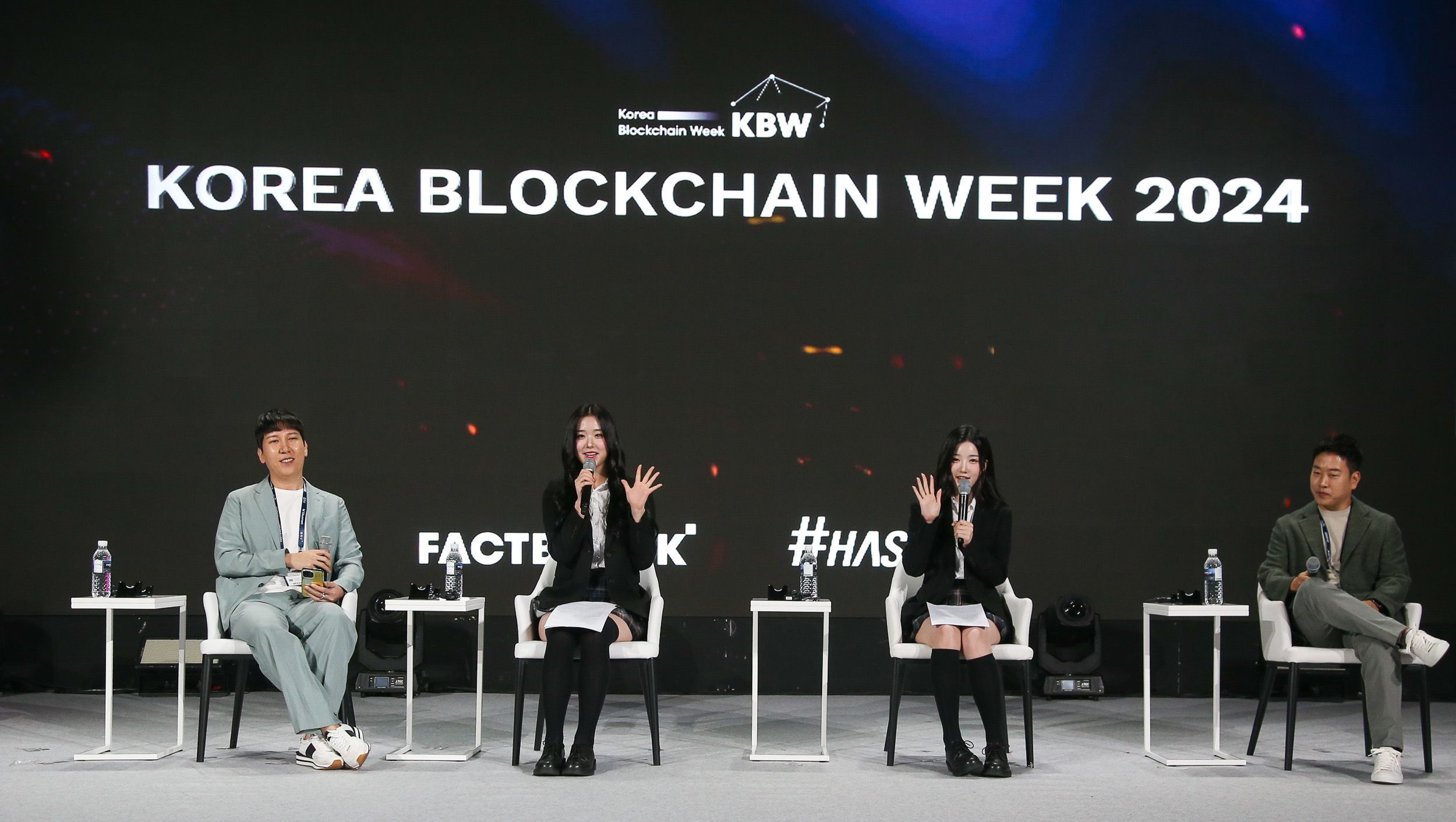 Korea’s girl group tripleS took the stage at the 2024 Korea Blockchain Week. Source: Factblock
This model enabled tripleS to generate revenue even before its debut, providing members with compensation comparable to that of large companies. Production exceeded 10 billion KRW ($6.8 million), and early NFT sales helped cash flow, offering a fairer distribution than typical idol group contracts. TripleS stands out as a case where blockchain drives fan co-creation and transparent value sharing in entertainment.
China’s entertainment platforms are rapidly adopting superfan-driven community models that resemble Web3 economics even without blockchain. HYBE’s expansion through Tencent Music and Alibaba shows how direct messaging, authenticated merchandise, and integrated fan services strengthen ownership-like engagement. This environment naturally supports large-scale Web3-style participation economies.
Tencent Music’s superfan ecosystem illustrates this shift with Bubble surpassing 2.3 million paying subscribers. G-DRAGON’s Macau shows drew 36,000 attendees and 7 million simultaneous online viewers, proving the power of hybrid fan engagement. Merchandise, tiered subscriptions, and the expansion of long-form audio show China building a multi-channel superfan economy aligned with Web3 principles.
Lessons From Failed Web3 Entertainment Experiments
Failures have existed, too. Momentrica, an NFT platform by Dunamu and HYBE, closed on July 2, 2025, after posting an operating loss of 13 billion KRW ($8.88 million USD)and a net loss of 12.3 billion KRW in the last reported year. Although HYBE artists’ digital collectibles sparked initial interest, Momentrica struggled due to a lack of long-term utility or sustained fan participation amid the broader NFT market downturn. Precisely, the platform only offered NFTs as static digital goods, not as engagement tools.
The contrast between Momentrica and tripleS highlights a key difference in Web3 entertainment. Momentrica provided digital collectibles without voting rights, participation, or ongoing utility. In contrast, tripleS used blockchain at its core, granting fans voting rights and engagement options. The lesson is clear: successful Web3 in entertainment requires participation architectures, not just digital merchandise.
Sony’s Soneium appears poised to avoid Momentrica’s pitfalls by supporting high-volume, participation-based applications. Its scalable Layer-2 network is built for voting, reward distribution, and community engagement. Whether entertainment companies create effective participation models on this infrastructure will determine if Sony’s blockchain strategy succeeds where others have failed.
Disclaimer: The content of this article solely reflects the author's opinion and does not represent the platform in any capacity. This article is not intended to serve as a reference for making investment decisions.
You may also like
COAI Experiences Significant Price Decline and the Enduring Insights for Investors Focused on the Long Term
- ChainOpera AI (COAI) collapsed from $44.90 to $0.52 in late 2025 due to market shifts, structural flaws, and regulatory uncertainty. - COAI's 88% supply concentration and 60 manipulative wallets exacerbated liquidity crises amid sector-wide AI token outflows to meme coins. - Regulatory pressures (GENIUS Act, FSB) and algorithmic stablecoin collapses (xUSD, deUSD) deepened distrust in DeFi, compounding COAI's decline. - Long-term investors may find opportunities in COAI's collapse by applying margin of sa
Assessing How the TGE of MMT Token Influences the Cryptocurrency Ecosystem
- Momentum Finance's MMT token TGE on Sui blockchain highlights innovative DeFi tokenomics with 42.72% community allocation and ve(3,3) governance model. - Post-TGE volatility (4,000% surge followed by 70% correction) reflects market dynamics, but technical indicators and buybacks suggest long-term resilience. - MMT's $250-350M FDV target and Sui integration demonstrate strategic benchmarks, offering lessons for balancing innovation, sustainability, and institutional trust in emerging blockchain projects.
Momentum (MMT) and the Rising Popularity Among Retail Investors: Insights from Behavioral Finance
- Momentum (MMT) price surges mirror 2021 GameStop dynamics, driven by social media sentiment and behavioral biases like overconfidence and herd behavior. - Retail-driven speculation distorts market efficiency, with 21% trading volume reflecting emotional decision-making over fundamentals, as shown by Bitget and academic studies. - Institutional investors exploit these anomalies through contrarian strategies, while regulators scrutinize social media's role in destabilizing traditional market models. - The

Timeless Strategies for Investing in Today's World
- McNeel and Buffett's value investing principles remain vital in today's volatile crypto markets. - Crypto surges driven by FOMO and hype, like MMT's 2025 rise, highlight risks of ignoring these strategies. - Buffett's focus on fundamentals and emotional discipline offers a structured approach to avoid speculative traps. - Case studies show adherence to these principles can mitigate losses during market corrections. - Timeless tenets of patience and intrinsic value are essential for long-term success in u

Trending news
MoreCrypto prices
More





