
Cronos launches x402 hackathon for AI payment systems

A new initiative by Cronos opens x402 PayTech Hackathon to $42,000 in prizes for developers building AI-native payment applications on its recently upgraded blockchain network.
- $42,000 prize pool for AI-directed on-chain payment innovation
- Cronos infrastructure upgraded with 10X lower gas fees and sub-second block times
- Registration open on DoraHacks with builds running December through January
Cronos has kicked off registrations for its x402 PayTech Hackathon, putting up a $42,000 pool for developers experimenting with AI-native payment rails on its blockchain stack. The program is looking for teams working on automated settlement flows, intelligent wallet tooling, and real‑world asset payment links that plug into both the Cronos network and Crypto.com’s broader ecosystem.
“The x402 PayTech Hackathon represents the first wave of real-world experimentation where AI agents don’t just compute, but exchange value, said Mirko Zhao, Head of Cronos Labs told crypto.news. “With Cronos’ recent performance gains and its growing suite of AI-native tooling, teams now have the infrastructure they need to turn agentic applications into reality. We look forward to seeing builders transform these capabilities into practical applications that advance the industry.”
Performance upgrades drive AI infrastructure push in newest Cronos endeavour
Recent upgrades to the Cronos network slashed gas costs by around 90%, pushed daily transactions up roughly fourfold, and brought block times below one second. With those performance gains in place, the team is pitching Cronos as a base layer for institutional tokenization projects and AI-driven financial infrastructure.
Teams will have access to practical guidance, including workshops, office hours, and detailed documentation on Cronos EVM, x402 programmatic payments, and the Crypto.com AI Agent SDK. Standout projects can continue past the event through grants, incubator slots, or direct partnerships in the wider ecosystem.
Cronos already counts more than 500 developers building on its stack and ties directly into Crypto.com, giving successful products a path to roughly 150 million potential users. The network ranks among the top 15 blockchains by total value, securing over $6 billion in user assets and logging more than 100 million transactions since launch.
Cronos Labs head Mirko Zhao presents the hackathon as a live proving ground for AI agents that handle value transfers, not just background computation. The build phase runs from early December through late January, with teams signing up via DoraHacks.
Disclaimer: The content of this article solely reflects the author's opinion and does not represent the platform in any capacity. This article is not intended to serve as a reference for making investment decisions.
You may also like
LUNA up 24.4% in 24 hours: Surge Fueled by Upgrades and Increased Inflows
- LUNA surged 24.4% in 24 hours on Dec 10, 2025, driven by rising on-chain activity, capital inflows, and anticipation of a major network upgrade. - The terrad v3.6.1 upgrade, set for Dec 18, aims to resolve legacy contract issues and enhance security, with successful testnet trials and rollback options in place. - Futures open interest rose to $25.55M, while technical indicators suggest continued bullish momentum, targeting $0.000098 resistance if the 50-week EMA is sustained. - Legal proceedings against

Evaluating HYPE Token: Authenticity and Price Fluctuations Amid the Changing Meme Coin Scene
- Hyperliquid's HYPE token combines DeFi infrastructure with meme coin speculation, distinguishing itself through Layer-1 blockchain technology and structured governance. - Unlike DOGE or SHIB , HYPE features transparent governance proposals, deflationary buybacks ($2.1B projected), and institutional partnerships to counter volatility. - While HYPE's 13% price drop post-token unlock shows market sensitivity, its RSI and support levels suggest resilience compared to BONK's 185% weekly swings. - The token's

The Growing Need for STEM and Technical Studies in American Higher Education
- U.S. higher education is rapidly adopting EdTech SaaS to address STEM workforce demands, with the global market projected to grow from $200.86B in 2025 to $907.7B by 2034. - AI-driven platforms like Frizzle and Labster are revolutionizing STEM education through automated grading, virtual labs, and personalized learning solutions. - Strategic university partnerships and micro-credentialing models (e.g., SkillBloom) are bridging skills gaps in data science, cybersecurity, and engineering. - Investors face

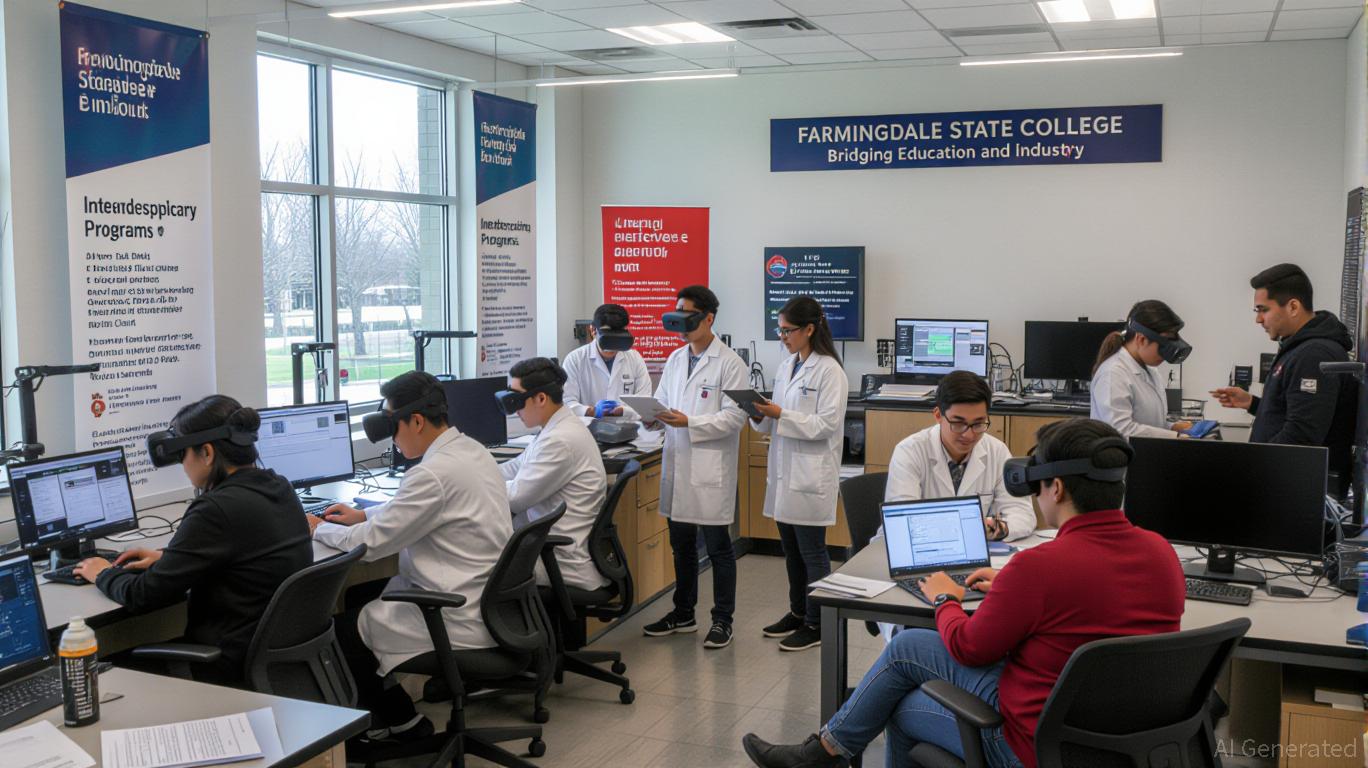
The Influence of Educational Facilities on Sustained Economic Growth and Investment Patterns: Farmingdale State College’s Contribution to Preparing the Workforce and Regional Development
- Farmingdale State College (FSC) aligns interdisciplinary programs with workforce needs, boosting 80% six-month employment rates for 2025 graduates. - Its STEM Diversity Summit and inclusivity initiatives address labor gaps, fostering equitable pathways in biotech and renewable energy sectors. - A $75M Center for Computer Sciences and Broad Hollow Bioscience Park expansion aim to double tech enrollment and create 135 jobs, strengthening Long Island’s innovation ecosystem. - FSC’s focus on applied learning
Trending news
MoreCrypto prices
More





