
Japan’s Crypto Exchanges Push for 10 Times Leverage on Margin Trading: Bloomberg

The push for revised margin trading caps aims to attract diverse traders, including institutional investors, while enhancing market liquidity.

Japan's cryptocurrency exchanges are urging regulators to relax margin trading restrictions on popular cryptocurrencies such as bitcoin (BTC).
Exchanges in the country once offered leverage of up to 25 times principal capital, and trading volumes reached as high as $500 billion annually in 2020 and 2021, according to Bloomberg.
In early 2022, however, Japanese regulators limited crypto exchanges to offering leverage of only twice the principal capital, which led to trading volumes dropping drastically last year.
The Japan Virtual and Crypto Assets Exchange Association (JVCEA), a self-regulated body of local exchanges, is now arguing that these restrictions hinder market growth and discourage new participants.
Among the body's demands is a request for higher leverage limits of at least 10 times the principal.
JVCEA Vice Chairman Genki Oda in an interview that reforming the leverage rule could make Japan “more attractive for crypto and blockchain companies” and encourage more trading.
The regulators are expected to evaluate the proposals, taking into account market risks and investor protection. Any revisions to margin trading caps will undergo thorough reviews and consultations with industry participants.
The push for revised margin trading caps aims to attract diverse traders, including institutional investors, while enhancing market liquidity. Allowing higher leverage would also enable traders to manage their positions more effectively, JVCEA said.
Japanese crypto exchanges processed just over $110 million worth of trading volumes in the past 24 hours, . Most volume was generated on bitcoin (BTC), ether (ETH) and xrp (XRP) trading, the data shows.
JVCEA’s comments come as Japan warms up to crypto regulation and stablecoin usage. Lawmakers are said to be to support the growth of NFT and virtual lands-related businesses in the country, while local banks are working on plans to issue their own stablecoins – tokens pegged to a fiat currency such as the Japanese yen – in the coming months.
Edited by Sheldon Reback.
Disclaimer: The content of this article solely reflects the author's opinion and does not represent the platform in any capacity. This article is not intended to serve as a reference for making investment decisions.
You may also like
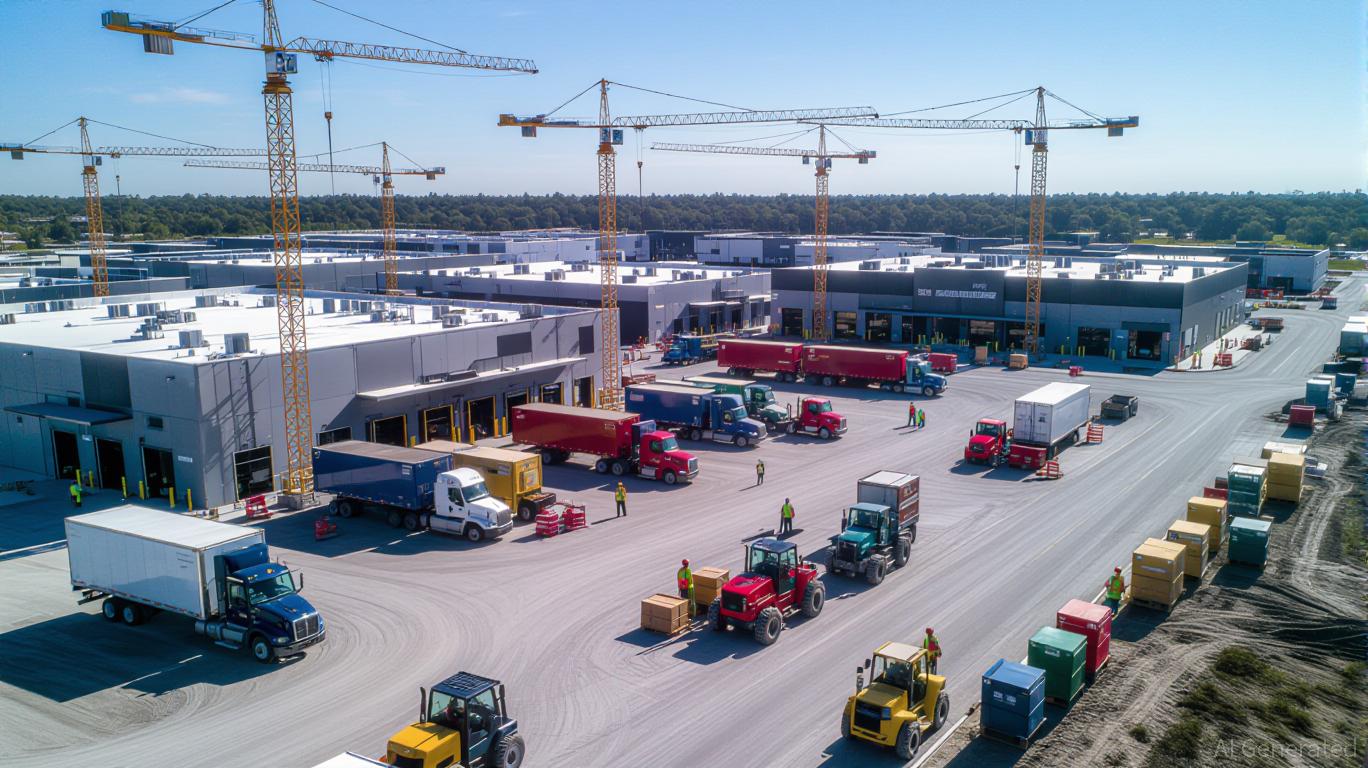
Emerging Prospects for Industrial Real Estate in Webster, NY
- Webster , NY, is transforming its industrial real estate through the $9.8M FAST NY Grant, upgrading infrastructure on a 300-acre Xerox brownfield into a high-tech hub. - The initiative aims for a 2% industrial vacancy rate by 2025, boosting residential property values by 10.1% and attracting projects like the $650M fairlife® dairy facility. - Xerox campus reconfiguration and 600 Ridge Road redevelopment, supported by state programs, create shovel-ready spaces with modern infrastructure for advanced manuf
Why Solana's Latest Plunge Highlights Underlying Weaknesses in the Crypto Market
- Solana's 57% price crash in Nov 2025 exposed systemic crypto vulnerabilities, including psychological biases, excessive leverage, and fragile infrastructure. - Token unlocks from Alameda/FTX estates and $30M selling pressure triggered the downturn, yet $101.7M in institutional inflows highlighted market paradoxes. - Fed rate cuts drove $417M into Solana ETFs, but uncertainty caused 14% price drops, revealing crypto's growing integration with traditional finance. - $19B in liquidations during the Oct 11 "
The Growing Impact of Security Systems Technology on the Future Development of Higher Education Infrastructure
- 21st-century higher education infrastructure increasingly relies on advanced security systems to address cyberattacks and campus safety threats. - AI and zero-trust architectures enable proactive threat detection, with 80% of institutions adopting zero-trust strategies by 2025. - Integrated security investments boost enrollment, research credibility, and institutional reputation, though skill gaps and outdated infrastructure hinder full implementation. - ROI extends beyond cost savings, with 60% of stude

Bitcoin Leveraged Position Liquidations and Market Fluctuations: Urging Proactive Risk Control Strategies
- 2025 crypto market saw $21B in leveraged liquidations as Bitcoin's volatility triggered systemic collapses in October and November. - Over-leveraged long positions, social media hype, and automated deleveraging mechanisms fueled cascading losses across exchanges. - Traders shifted to 1-3x leverage and AI-driven risk tools post-liquidations, with 65% reducing exposure in Q4 2025. - Experts emphasize dynamic position sizing, diversification, and 5-15% stablecoin allocations to mitigate volatility risks in
Trending news
MoreCrypto prices
More





