As Bitcoin experiences a significant correction and market sentiment remains subtle, key figures from the global political and business arenas have spoken out one after another. Their comments are no longer limited to short-term price predictions, but instead delve into the fundamental value of Bitcoin as a strategic asset, a financial foundation, and a new form of currency. These perspectives intertwine and collide, collectively outlining Bitcoin’s new role and narrative in the evolution of the global landscape.

1. National Positioning: Putin’s “Unbannable” Theory and a New Strategic Perspective
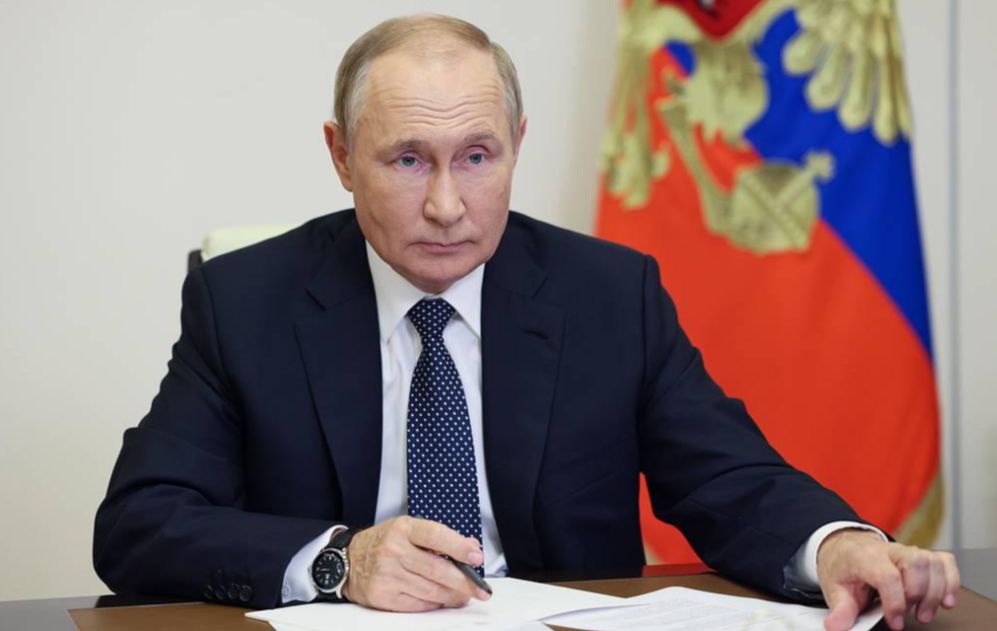
● Russian President Vladimir Putin’s latest statement has given Bitcoin a geopolitical interpretation. At the “Russia Calling!” investment forum, Putin made it clear that the development of new payment tools like Bitcoin is an “inevitable” natural process.
● His core assertion—“Who can ban it? No one”—fundamentally denies the possibility of completely banning Bitcoin.
● More importantly, Putin directly links Bitcoin’s survival logic to the decline of dollar hegemony. He criticized the United States for using the dollar “for political purposes,” believing that this is forcing many countries to turn to alternative assets, including cryptocurrencies. This comment elevates Bitcoin from a technical topic to the dimension of global reserve currency competition, implying its potential “alternative” role in the future international financial system.
2. Institutional Blueprint: Saylor’s “Digital Capital” and the Financialization Revolution
● If Putin views Bitcoin from a macro perspective, then MicroStrategy founder Michael Saylor is building its future from the micro level of financial engineering.
● At a recent conference, Saylor summed up his company’s strategy in a striking phrase: “We will buy all the Bitcoin.” The company has accumulated more than 660,000 Bitcoins and continues to purchase hundreds of millions of dollars’ worth every week.
● Saylor’s ambition goes far beyond hoarding. He regards Bitcoin as “digital capital” and is committed to building a brand new global credit system based on it. By issuing financial instruments such as bonds (STRF) and preferred shares (STRK) over-collateralized by Bitcoin, he transforms non-yielding assets into interest-bearing assets that generate stable cash flow.
This “digital treasury” model aims to attract traditional financial giants. In fact, major U.S. banks have shifted from bystanders to active participants providing Bitcoin-related services. Former White House Communications Director Anthony Scaramucci publicly praised this strategy, considering the approach of building up dollar reserves and then increasing Bitcoin holdings as “very smart.”
3. Market Caution: Traditional Wall Street Warnings and Cycle Skepticism
● Amidst the bullish voices, the traditional financial sector has also issued cautious and even warning signals. Billionaire investor Mark Cuban once pointed out that Bitcoin is more of a “belief” and faces significant risks of government intervention.
The recent deep market correction has also sparked widespread discussion about the classic “four-year cycle” theory. On this issue, some top investors and institutions have expressed different views.
● ARK Invest founder Cathie Wood believes that “Bitcoin’s four-year cycle will be broken, and we may have already seen the low point of this cycle.”
● Binance founder Changpeng Zhao (CZ) holds a similar view, believing that the four-year cycle may have become invalid and that we may be entering a “supercycle.”
● Grayscale, the world’s largest crypto asset management company, explicitly supports this judgment in its research report, stating that the correction in this bull market is a normal “bull market pullback” rather than a deep “cyclical correction,” and predicts that Bitcoin prices are expected to reach new all-time highs next year.
Their arguments include changes in market structure (institutional entry via ETPs), the absence of parabolic surges, and a favorable macro environment.
4. Clash of Beliefs: The Value Debate Between Gold Enthusiasts and Crypto Fundamentalists
The core debate about Bitcoin’s value centers on its comparison with its traditional benchmark—gold. This debate is epitomized in the exchanges between gold loyalist Peter Schiff and Binance founder Changpeng Zhao.
● Schiff insists that gold has intrinsic value due to its physical form and industrial uses, while Bitcoin “has nothing but belief.”
● Changpeng Zhao counters that Bitcoin has natural advantages in terms of divisibility, verifiability, and a fixed supply. This debate has no winner, but it clearly reveals two fundamentally different philosophies of value storage: one based on millennia-old faith in physical assets, the other on algorithmic and network trust in the digital age.
5. Dialectics of the Future: Challenges and Opportunities Under Multidimensional Narratives
Current leader comments on Bitcoin present a dialectical picture.
● On one hand, the camp represented by Saylor is vigorously promoting its “financialization,” integrating it into the traditional credit creation system;
● On the other hand, the perspective represented by Putin explores its role as a “geopolitical tool,” serving as an alternative option to the traditional financial system.
● At the same time, Bitcoin must also face its own paradox: it aspires to become a decentralized “digital gold,” but its price volatility and ecosystem development are highly dependent on the adoption and compliance frameworks of centralized institutions (such as banks and asset management companies). The debate over whether the cycle has failed is essentially a test of its maturity.
The comments of celebrity leaders act like a multifaceted prism, refracting the complex and diverse future of Bitcoin. It is both the “digital capital” reconstructing finance in Saylor’s eyes, the “strategic option” for hedging dollar risk in Putin’s context, the “emerging asset” breaking cycles in the judgments of Wood and Grayscale, and the “new value contender” fiercely competing with gold’s faith.
The coexistence of these seemingly contradictory roles precisely illustrates that Bitcoin is evolving from a marginal financial experiment to being deeply embedded in the complex fabric of global political economy. Its future path is destined to become clearer through the ongoing collision of these multidimensional narratives and real-world challenges.