
Castle Island Ventures partner: I don’t regret spending eight years in the cryptocurrency industry

A cryptocurrency practitioner who once held libertarian ideals became disillusioned after reflecting on a career spent building "financial casinos," sparking a profound reflection on the divergence between the original aspirations and the current reality of the crypto space.
A cryptocurrency practitioner who once held libertarian ideals became disillusioned after reflecting on a career spent building a "financial casino," sparking deep reflection on the divergence between the crypto industry's original intentions and its current reality.
Written by: Nic Carter, Partner at Castle Island Ventures
Translated by: AididiaoJP, Foresight News
Ken Chang recently published an article titled "I Wasted Eight Years of My Life in Crypto," in which he laments the industry's inherent capital destruction and financial nihilism.
Crypto insiders often mock these kinds of "angry exit" articles, relishing stories of historical figures like Mike Hearn or Jeff Garzik who left the scene in high-profile fashion (while never forgetting to point out how much bitcoin has risen since their departure).
But Ken's article is largely correct. He says:
Cryptocurrency claimed to help decentralize the financial system, and I once deeply believed it. But in reality, it’s just a super-system for speculation and gambling, essentially a replica of the current economy. Reality hit me like a truck: I wasn’t building a new financial system—I built a casino. A casino that doesn’t call itself a casino, yet is the largest, always-on, multi-user casino ever built by our generation.
Ken points out that VCs have burned through billions of dollars funding all sorts of new blockchains, even though we clearly don’t need that many. He’s not wrong, though his description of incentive models is a bit off (VCs are essentially conduits for capital—they only do what their limited partners will tolerate). Ken also criticizes the proliferation of perpetual and spot DEXs, prediction markets, and meme coin launchpads. Indeed, while you can defend these concepts in the abstract (except for meme coin launchpads, which make no sense), it’s undeniable that their proliferation is simply because the market incentivizes it and VCs are willing to pay for it.
Ken says he entered crypto with idealistic dreams and a light in his eyes. This is familiar to many in the field: he had libertarian leanings. But instead of realizing libertarian ideals, he ended up building a casino. Specifically, he’s best known for his work at Ribbon Finance, a protocol that allows users to deposit assets into vaults and earn yield by systematically selling options.
I don’t want to sound too harsh, but it’s true. If it were me, I’d also reflect deeply. When the conflict between principles and work becomes unbearable, Ken reached his pessimistic conclusion: cryptocurrency is a casino, not a revolution.
What struck me most is that it reminds me of an article Mike Hearn wrote nearly a decade ago. Hearn wrote:
Why did bitcoin fail? Because the community behind it failed. It was supposed to be a new kind of decentralized currency, with no "systemically important institutions," no "too big to fail," but it became something worse: a system completely controlled by a small group of people. Worse still, the network is on the brink of technical collapse. The mechanisms that were supposed to prevent all this have failed, so there’s little reason to believe bitcoin can truly be better than the existing financial system.
The details differ, but the argument is the same. Bitcoin/cryptocurrency was supposed to be something (decentralization, cypherpunk practice), but became something else (casino, centralization). Both agree: it ultimately hasn’t proven better than the existing financial system.
Hearn and Ken’s arguments can be summed up in one sentence: cryptocurrency started with a purpose, but ultimately went astray. So we have to ask: what is the real purpose of cryptocurrency?
The Five Goals of Cryptocurrency
In my view, there are roughly five camps, which are not mutually exclusive. Personally, I most identify with the first and fifth camps, but I empathize with all of them. However, I’m not dogmatic about any side, not even the hardcore bitcoin camp.
Restoring Sound Money
This was the original dream, shared by most (though not all) early bitcoiners. The idea is that, in time, bitcoin will pose a competitive threat to the monetary privilege of many sovereign nations, and may even replace fiat, returning us to a new gold standard-like order. This camp usually sees everything else in crypto as a distraction or scam, simply riding bitcoin’s coattails. Admittedly, bitcoin has made limited progress at the level of national sovereignty, but in just 15 years, it has gone far enough as an important monetary asset. Those who hold this view are long caught between disillusionment and hope, with almost delusional expectations that bitcoin’s mass adoption is just around the corner.
Encoding Business Logic with Smart Contracts
This view is championed by Vitalik Buterin and most of the Ethereum camp: since we can digitize money, we can express all kinds of transactions and contracts in code, making the world more efficient and fair. To bitcoin purists, this was once heresy. But it has indeed succeeded in some narrow areas, especially contracts that are easy to express mathematically, like derivatives.
Making Digital Property Rights Real
This is my summary of the "Web3" or "read-write-own" philosophy. The idea is reasonable: digital property rights should be as real and reliable as physical property rights. However, its practice—NFTs, Web3 social—has either gone completely off track or, to put it kindly, is ahead of its time. Despite billions of dollars invested, few now defend this philosophy. But I still think there’s something worth considering. I believe many of our current internet dilemmas stem from not truly "owning" our online identities and spaces, nor being able to effectively control who we interact with or how our content is distributed. I believe one day we’ll regain sovereignty over our digital property, and blockchains will likely play a role. It’s just that the timing isn’t right yet.
Improving Capital Market Efficiency
This is the least ideological of the five goals. Few get excited about securities settlement, COBOL, SWIFT, or wire transfer windows. But regardless, this is a real driving force behind a significant part of the crypto industry. The logic is: Western financial systems are built on outdated tech stacks, and due to path dependence, are extremely hard to upgrade (no one dares to replace core infrastructure that settles trillions of dollars daily). So an upgrade is long overdue, and it must come from outside the system, using a completely new architecture. The value here is mostly in efficiency gains and possible consumer surplus, so it’s less exciting.
Expanding Global Financial Inclusion
Finally, there are some passionate people who see cryptocurrency as an inclusive technology that can provide low-cost financial infrastructure globally—sometimes, for some, the first financial service they’ve ever had. This means enabling people to self-custody crypto assets (nowadays, more often stablecoins), access tokenized securities or money market funds, get credit cards issued via crypto wallets or exchange accounts, and be treated equally on the financial internet. This is a very real phenomenon, and its surface-level success offers comfort to many idealists whose enthusiasm has faded.
Pragmatic Optimism
So, who’s right? The idealists, or the pessimists? Or is there a third possibility?
I could go on at length about how bubbles always accompany major technological revolutions, how they actually catalyze the building of useful infrastructure, and how crypto is especially speculative because it is itself a financial technology—but that’s somewhat self-soothing.
My real answer is: maintaining pragmatic optimism is the right attitude. Whenever you despair at the crypto casino, you must hold onto this. Speculation, mania, and capital withdrawal should be understood as inevitable, if unpleasant, side effects of building useful infrastructure. They come with real human costs, and I don’t mean to downplay that. Meme coins, pointless gambling, and financial nihilism becoming normalized among young people is especially disheartening and socially unhelpful. But this is an inevitable (even if negative) side effect of building capital markets on permissionless rails. I don’t think there’s any other way—you just have to accept it’s part of how blockchains work. And you can choose not to participate.
The key is: crypto has its goals, and it’s completely normal to be idealistic about it. It’s these goals that motivate thousands to devote their careers to the industry.
It’s just that it may not be as exciting as you imagined.
The world is unlikely to suddenly embrace bitcoin en masse. NFTs haven’t revolutionized digital ownership, and capital markets are moving on-chain slowly. Apart from the dollar, we haven’t tokenized many assets, and no authoritarian regime has fallen because ordinary people hold crypto wallets. Smart contracts are mainly used for derivatives, and little else. So far, the only applications with real product-market fit remain bitcoin, stablecoins, DEXs, and prediction markets. Yes, much of the value created may be captured by big companies, or ultimately returned to consumers as efficiency gains and cost savings.
Therefore, the real challenge is to maintain optimism rooted in realistic possibilities, rather than indulge in blind, utopian optimism. If you believe in a libertarian utopia, the gap between expectation and reality will eventually leave you disillusioned. As for the casino effect, rampant token issuance, and wild speculation—these should be seen as ugly, hard-to-remove tumors in the industry’s belly, but they objectively exist. If you think the costs of blockchain now outweigh its benefits, then choosing disillusionment is perfectly reasonable. But in my view, things are actually better than ever. We have more evidence than ever that we’re on the right track.
Just remember that goal.
Disclaimer: The content of this article solely reflects the author's opinion and does not represent the platform in any capacity. This article is not intended to serve as a reference for making investment decisions.
You may also like
Wall Street interprets the Federal Reserve decision as more dovish than expected
The market originally expected a "hawkish rate cut" from the Federal Reserve, but in reality, there were no additional dissenters, no higher dot plot, and the anticipated tough stance from Powell did not materialize.
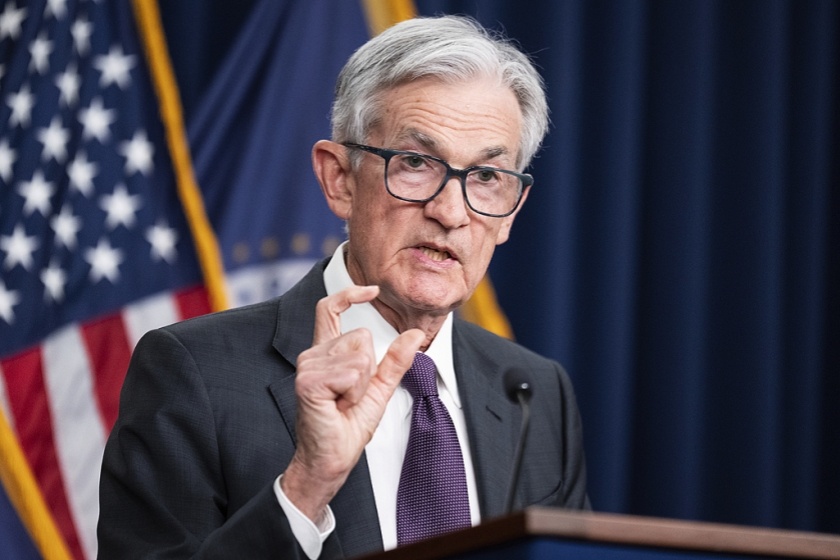
The Federal Reserve cuts rates again but divisions deepen, next year's path may become more conservative
Although this rate cut was as expected, there was an unusual split within the Federal Reserve, and it hinted at a possible prolonged pause in the future. At the same time, the Fed is stabilizing year-end liquidity by purchasing short-term bonds.

Betting on LUNA: $1.8 billion is being wagered on Do Kwon's prison sentence
The surge in LUNA’s price and huge trading volume are not a result of fundamental recovery, but rather the market betting with real money on how long Do Kwon will be sentenced on the eve of his sentencing.

What is the overseas crypto community talking about today?
What have foreigners been most concerned about in the past 24 hours?

Trending news
MoreCrypto prices
More





