
Ethereum Burns $18B, Yet Its Supply Keeps Growing

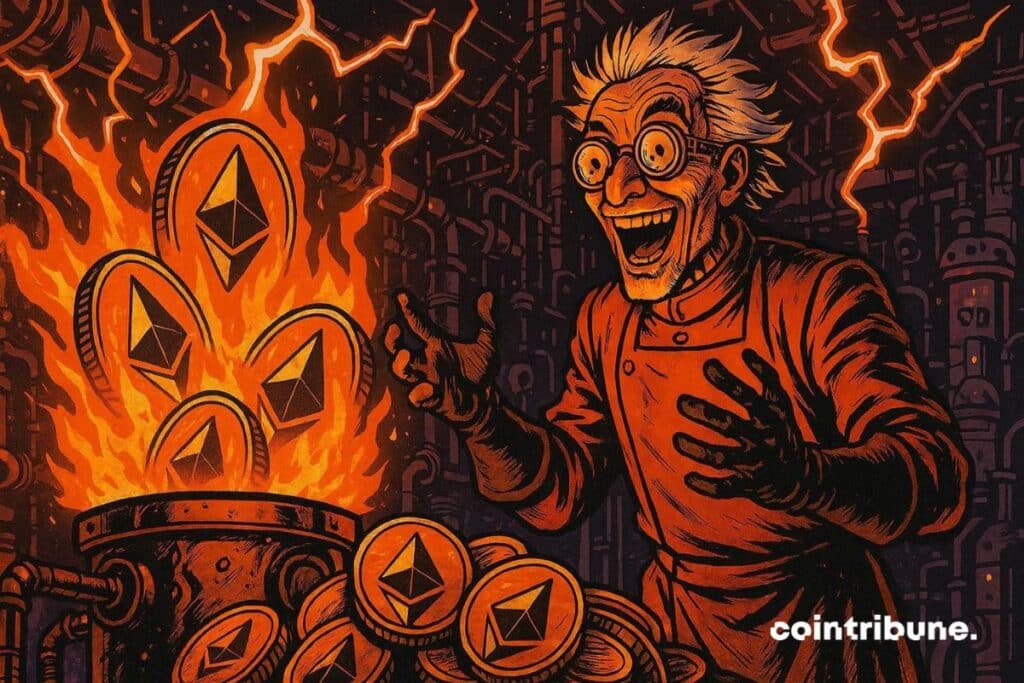
Since 2021, Ethereum has burned more than 6 million ETH, worth 18 billion dollars. Yet, despite this mechanism intended to reduce supply, the total amount of ETH in circulation continues to rise. How to explain this paradox? Analysis of the numbers, causes, and consequences for the second most important crypto on the market.
In brief
- Ethereum has burned 6.1 million ETH ($18 billion) via EIP-1559, but its total supply keeps growing.
- Despite the burn, issuance of new ETH often exceeds destroyed volumes, maintaining a net annual inflation of about 0.8%.
- The Fusaka update could reverse Ethereum’s trend, boosting crypto network activity.
Crypto: Ethereum burns $18 billion in value
The introduction of EIP-1559 in August 2021 marked a turning point for Ethereum. This mechanism, integrated through the London hard fork, allows burning a portion of crypto transaction fees, thus reducing the circulating supply. To date, more than 6.1 million ETH have been permanently removed, representing a value of 18 billion dollars at the current rate.
The most active protocols, like OpenSea and Uniswap, contribute massively to this phenomenon. For example, OpenSea, the leading NFT platform, alone has burned hundreds of thousands of ETH. Periods of high activity, such as transaction peaks in 2021 and 2022, accelerated this process, but since then, the pace has slowed down.
Data shows that the volume of ETH burned depends directly on network usage. In 2025, with decreased activity, the burning rate slowed, limiting the expected deflationary impact. Despite everything, this mechanism remains a key tool to regulate crypto supply in the long term.
Why Ethereum keeps expanding despite burning 6 million ETH
Even with 6 million ETH burned, Ethereum’s total supply keeps growing . The reason? The switch to Proof-of-Stake (PoS) in 2022. Unlike Proof-of-Work (PoW), PoS issues new ETH to reward validators who secure the crypto network. As a result, about 4 million ETH have been added to supply since the London hard fork.
The PoS mechanism, though less inflationary than PoW, maintains a net positive issuance. During periods of low activity, burned fees are insufficient to offset newly issued ETH. Thus, despite efforts to reduce supply, Ethereum remains inflationary, with an estimated annual rate of 0.8%. The consequences are twofold: on one side, a growing supply limits ETH’s scarcity; on the other, a rebound in activity could reverse the trend.
Crypto: Could Fusaka save Ethereum?
The recent Fusaka update , deployed on Ethereum, introduces major optimizations to reduce transaction costs and improve network efficiency. By facilitating the adoption of rollups and Layer 2 solutions, Fusaka could revive blockchain activity, thereby increasing the volume of ETH burned through crypto transaction fees.
If this update manages to attract more users and projects, the burning rate could surpass net issuance, making Ethereum deflationary. However, effects will only be visible in the medium term. By the end of 2025, forecasts vary. Some crypto analysts predict stabilization around $3,000. Others, more pessimistic, mention a bearish scenario if Ethereum fails to differentiate itself from competitors like Solana.
Ethereum has burned $18 billion in ETH, but its supply keeps growing. This paradox is explained by the Proof-of-Stake mechanism, which still issues new tokens. The question remains open: will Ethereum become deflationary? The answer will depend on the evolution of its ecosystem and its ability to attract more crypto users.
Disclaimer: The content of this article solely reflects the author's opinion and does not represent the platform in any capacity. This article is not intended to serve as a reference for making investment decisions.
You may also like
Espresso co-founder’s decade in crypto: I wanted to disrupt Wall Street’s flaws, but witnessed a transformation into a casino instead
Everything you've been hoping for may have already arrived; it just looks different from what you expected.

Solana Foundation Steps In as Kamino and Jupiter Lend Dispute Intensifies

Bitcoin Firms Confront the Boomerang Effect of Excessive Leverage
Surprising Shift: Bitcoin Active Addresses Decline After Spot ETF Approval
Trending news
MoreCrypto prices
More





