
Grayscale Predicts Bitcoin’s Four-Year Cycle Will ‘Prove To Be Incorrect’ in 2026 – Here’s Why

The crypto investment giant Grayscale is challenging the conventional wisdom that says the price of Bitcoin (BTC) will go down next year.
Bitcoin’s four-year halving schedule and large price drawdowns that historically happened once every four years give the impression that the benchmark cryptocurrency follows a four-year cycle.
But in a new report, Grayscale says that Bitcoin will likely defy the cyclical thesis and possibly even surge by next year.
“Although the outlook is uncertain, we believe the four-year cycle thesis will prove to be incorrect, and that Bitcoin’s price will potentially make new highs next year.”
The firm says Bitcoin’s current price pattern and market structure are different from those that characterize the previous cycles.
“First, unlike in past cycles, there was no parabolic price increase during this bull market that might suggest overshooting. Second, Bitcoin’s market structure has changed, with new capital largely coming through ETPs and digital asset treasuries (DATs) rather than retail exchanges.”
Grayscale says the optimistic outlook also stems from a broad market backdrop that appears favorable to the crypto asset class.
“Regulatory clarity drove a wave of institutional investment that will likely become the foundation for continued growth over the coming years…Although 2025 has been uneven for crypto markets, eventually fundamentals and valuation will converge, and we are optimistic about the crypto market outlook into year-end and 2026.”
Featured Image: Shutterstock/Dotted Yeti/Nikelser Kate
Disclaimer: The content of this article solely reflects the author's opinion and does not represent the platform in any capacity. This article is not intended to serve as a reference for making investment decisions.
You may also like
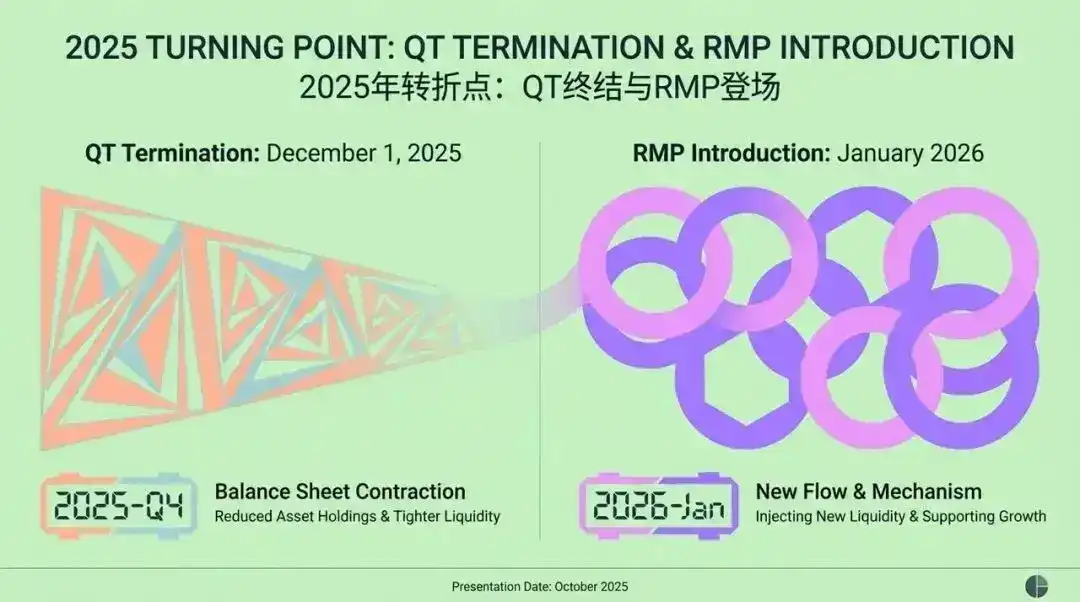
Federal Reserve’s Major Shift: From QT to RMP, How Will the Market Transform by 2026?
The article discusses the background, mechanism, and impact on financial markets of the Federal Reserve's introduction of the Reserve Management Purchases (RMP) strategy after ending Quantitative Tightening (QT) in 2025. RMP is regarded as a technical operation aimed at maintaining liquidity in the financial system, but the market interprets it as a covert easing policy. The article analyzes RMP's potential effects on risk assets, the regulatory framework, and fiscal policy, and provides strategic recommendations for institutional investors. Summary generated by Mars AI This summary was generated by the Mars AI model, and the accuracy and completeness of its content are still in the process of iterative improvement.
Rate Hike in Japan: Will Bitcoin Resist Better Than Expected?

Crucial Decision: Trump’s Final Interviews for Federal Reserve Chair Could Reshape Markets
Spot Bitcoin ETFs Defy Odds with $150M Net Inflow Despite BlackRock’s $136M Outflow
Trending news
MoreCrypto prices
More





