
Stable Unveils STABLE Tokenomics to Power High-Performance Settlement Network

Quick Breakdown
- Stable Network settles all transactions in USDT with instant finality and predictable costs.
- STABLE token secures the network, enables governance, and powers ecosystem incentives.
- Tokenomics feature a 100B fixed supply, vesting schedules, and a phased rollout of validators and governance.
Stable has published its STABLE tokenomics, detailing the economic framework designed to secure governance, align incentives, and support long-term sustainability, while all user transactions continue to settle in USDT. The Stable Network acts as a high-performance settlement layer that enables stablecoins to move with the reliability of traditional payment networks and the programmability of blockchains.
Introducing the STABLE token, the coordination layer that secures governance, aligns incentives, and supports long-term growth across the Stable ecosystem.
Users transact entirely in USDT, while STABLE provides the economic foundation that maintains network performance. pic.twitter.com/yP1BTfjEQS
— Stable (@stable) December 2, 2025
Next-generation settlement layer
Every transfer, payout, and transaction occurs in USDT with predictable costs and instant finality, enabling high-volume monetary activity while removing operational uncertainties that have historically limited stablecoin adoption.
The STABLE token underpins the network’s backend coordination without being part of routine transactions. It secures the network through staking in the Delegated Proof-of-Stake StableBFT model, enables governance over protocol upgrades, and supports ecosystem incentives. Validators stake STABLE tokens to participate in consensus, and delegators can earn USDT rewards distributed from protocol fees. This structure ensures security and alignment while keeping the user experience stablecoin-focused and straightforward.
Tokenomics and network governance
The STABLE token has a fixed supply of 100 billion, divided across four categories: Genesis Distribution (10%), Ecosystem & Community (40%), Team (25%), and Investors & Advisors (25%). Team and investor allocations follow a one-year cliff with 48-month linear vesting to ensure long-term commitment. All network fees are denominated in USDT, maintaining a single-token transactional experience while linking STABLE staking and governance participation to the network’s growth.
As Stable moves toward mainnet, the next phase will include validator onboarding, ecosystem integrations, and gradual activation of governance rights for STABLE token holders. By separating the user-facing settlement from the economic and governance layer, Stable provides a scalable, secure, and predictable settlement infrastructure. The launch of STABLE tokenomics marks a critical step toward enabling a USDT-native network capable of supporting institutional-scale activity while preserving simplicity for everyday users.
Meanwhile, as merchants lose approximately 3% per card transaction to hidden fees in legacy systems, stablecoins like USDT offer a faster, cheaper, and more transparent alternative, further highlighting the importance of robust settlement networks like Stable.
Take control of your crypto portfolio with MARKETS PRO, DeFi Planet’s suite of analytics tools.”
Disclaimer: The content of this article solely reflects the author's opinion and does not represent the platform in any capacity. This article is not intended to serve as a reference for making investment decisions.
You may also like
COC the Game Changer: When Everything in GameFi Becomes "Verifiable", the Era of P2E 3.0 Begins
The article analyzes the development of the GameFi sector from Axie Infinity to Telegram games, pointing out that Play to Earn 1.0 failed due to the collapse of its economic model and trust issues, while Play for Airdrop was short-lived because it could not retain users. COC Game has introduced the VWA mechanism, which verifies key data on-chain in an attempt to address trust issues and build a sustainable economic model. Summary generated by Mars AI. This summary was generated by the Mars AI model, and its accuracy and completeness are still being iteratively updated.

BTC Volatility Weekly Review (November 17 - December 1)
Key metrics (from 4:00 PM HKT on November 17 to 4:00 PM HKT on December 1): BTC/USD: -9.6% (...

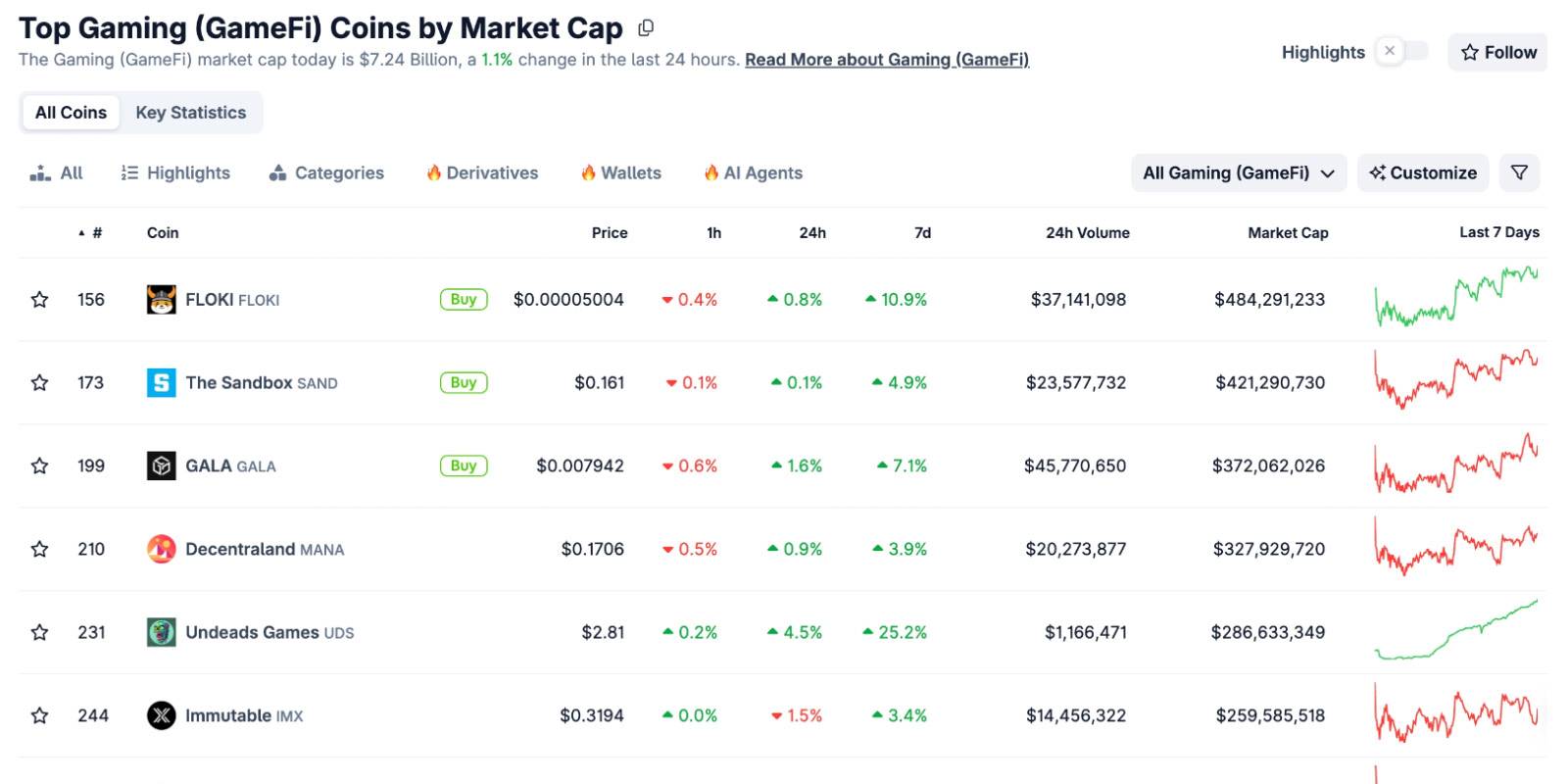
When all GameFi tokens have dropped out of the TOP 100, can COC reignite the narrative with a Bitcoin economic model?
On November 27, $COC mining will be launched. The opportunity to mine the first block won't wait for anyone.
Ethereum's Next Decade: From "Verifiable Computer" to "Internet Property Rights"
Fede, the founder of LambdaClass, provides an in-depth explanation of anti-fragility, the 1 Gigagas scaling goal, and the vision for Lean Ethereum.
Trending news
MoreCrypto prices
More






