
Vitalik: I hope more researchers working on ZK and FHE can use overhead ratio to express performance instead of operations per second.

Vitalik posted on the X platform, "I hope more people who do ZK (zero-knowledge proof) and FHE (fully homomorphic encryption) can express performance using cost ratio, rather than just saying 'we can do N calculations per second'. This way is less dependent on hardware and can provide a very useful metric: how much efficiency am I sacrificing when I change the application from 'trust-based' to 'cryptography-based'? It is also more suitable for performance estimation, because as a developer, I already know how much time the original calculation takes, so I can estimate the performance by simply multiplying the cost ratio. (Yes, I know this is not easy, because the types of operations between execution and proof are different, especially in SIMD/parallelization and memory access methods, so even the cost ratio still partially depends on hardware. However, I still believe that the 'cost ratio' is a very valuable metric, although it is not perfect.)"
Disclaimer: The content of this article solely reflects the author's opinion and does not represent the platform in any capacity. This article is not intended to serve as a reference for making investment decisions.
You may also like

Trump's CFTC, FDIC Picks Closer to Taking Over Agencies as They Advance in Senate
ETFs are being launched in clusters, but coin prices are falling. Can ETF approval still be considered good news?
On one hand, Vanguard has opened Bitcoin ETF trading, while on the other hand, CoinShares has withdrawn its applications for XRP, Solana Staking, and Litecoin ETFs, highlighting a significant divergence in institutional attitudes toward ETFs for different cryptocurrencies.

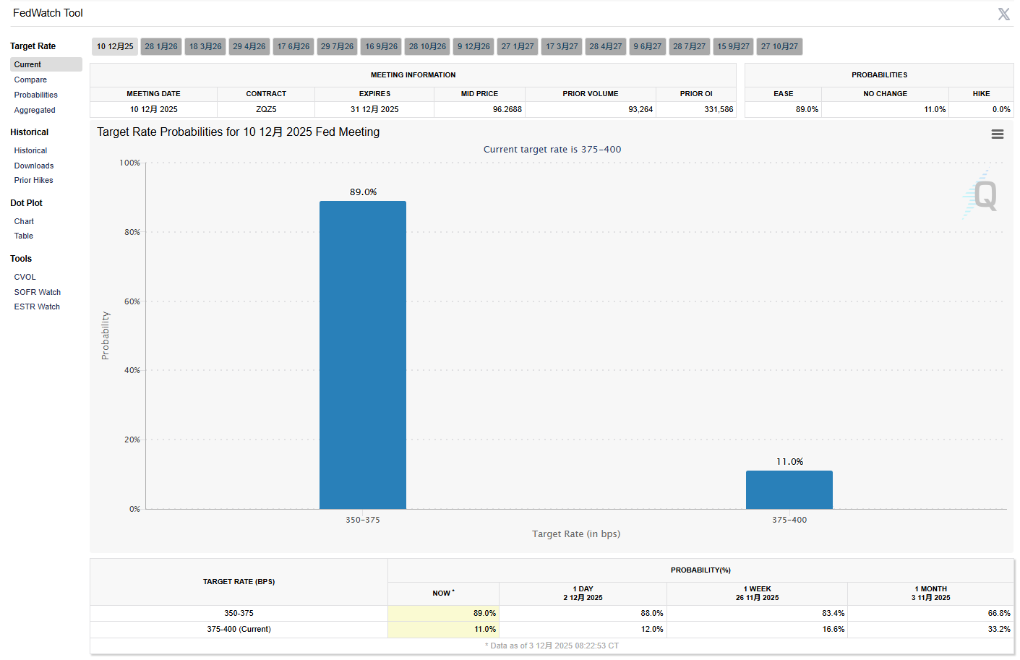
ADP employment data "unexpectedly weak", is a Federal Reserve rate cut imminent?
Trending news
MoreCrypto prices
More






