
Solana Partners With Korea’s Wavebridge to Launch KRW Stablecoin and Tokenization Platform

Quick Breakdown
- Solana and Wavebridge are jointly developing a KRW-backed stablecoin and institutional tokenization engine.
- The initiative will train Korean banks and expand Solana’s on-chain financial presence in Asia.
- It aligns with Korea’s growing stablecoin ecosystem and upcoming FSC regulatory updates.
Solana expands into Korean financial market
The Solana Foundation has entered a strategic partnership with Wavebridge, a Korean blockchain infrastructure firm, to develop a Korean won (KRW)-pegged stablecoin and a suite of institutional-grade tokenization products.
Solana Foundation Partners With Wavebridge to Develop Korean Won (KRW) Stablecoin via @SolanaDailyN #Solana #Stablecoin #Crypto #DeFi #Blockchain #CryptoNews pic.twitter.com/MjoSqKdfo1
— Solana Daily News (@SolanaDailyN) October 14, 2025
According to a the press release on October 14, the collaboration marks Solana’s latest push to strengthen its footprint in Asia’s rapidly evolving digital finance landscape.
Developing a regulated KRW stablecoin framework
Under the agreement, both organizations will build a tokenization engine designed to handle issuance, verification, and compliance for KRW-backed stablecoins. The platform will include whitelist management and transaction control features, making it suitable for banks and regulated institutions.
Beyond stablecoin development, Solana and Wavebridge also plan to train Korean banks in on-chain operations, tokenize money market funds, and expand Solana’s role in Korea’s blockchain ecosystem.
Wavebridge, known for its digital asset infrastructure and prime brokerage solutions, will help align the initiative with Korea’s regulatory landscape—particularly as the Financial Services Commission (FSC) prepares to introduce new stablecoin guidelines later this year.
KRW stablecoin momentum accelerates
South Korea’s stablecoin sector has gained momentum in 2025, with projects such as Sui’s retail partnership with t’order, KRW1 on Avalanche, and KRWT by Frax moving into pilot or live phases. These initiatives aim to reduce dependence on USD-pegged stablecoins and address the recurring “kimchi premium”—a pricing gap in local crypto markets.
Additionally, South Korea launched its first-ever Korean won-backed stablecoin, KRWIN, in a limited test phase. The stablecoin was developed by fanC, in partnership with financial software firm Initech, and is pegged 1:1 to the Korean won.
According to Jongwook Oh, CEO of Wavebridge. “This collaboration is about designing structures where a KRW stablecoin is not only issued but also verified, controlled, and fit for institutional use,” With recent integrations by Worldpay and Bullish Exchange, the Solana–Wavebridge collaboration could strengthen the network’s position in institutional finance and support Korea’s transition to regulated decentralized finance (DeFi) .
Disclaimer: The content of this article solely reflects the author's opinion and does not represent the platform in any capacity. This article is not intended to serve as a reference for making investment decisions.
You may also like
ETFs are being launched in clusters, but coin prices are falling. Can ETF approval still be considered good news?
On one hand, Vanguard has opened Bitcoin ETF trading, while on the other hand, CoinShares has withdrawn its applications for XRP, Solana Staking, and Litecoin ETFs, highlighting a significant divergence in institutional attitudes toward ETFs for different cryptocurrencies.

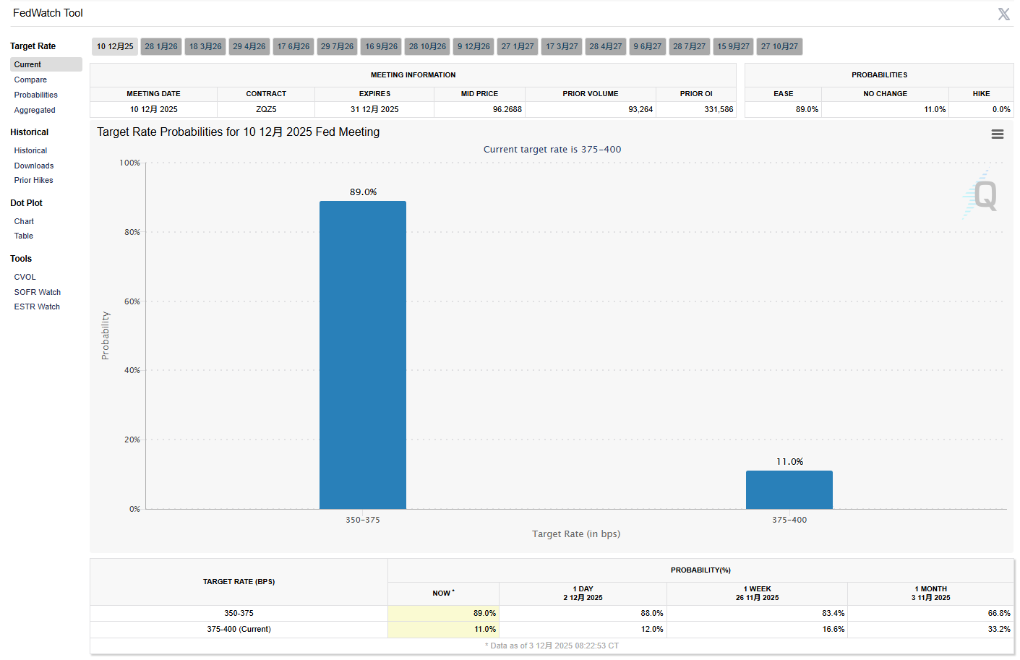
ADP employment data "unexpectedly weak", is a Federal Reserve rate cut imminent?
Glassnode Report: Current Structure Strikingly Similar to Pre-Crash 2022, Beware of a Key Range!

Coinglass report interprets Bitcoin's "life-or-death line": 96K becomes the battleground between bulls and bears—Is the ETF capital withdrawal an opportunity or a trap?
Bitcoin's price remains stable above the real market mean, but the market structure is similar to Q1 2022, with 25% of supply currently at a loss. The key support range is between $96.1K and $106K; breaking below this range will increase downside risk. ETF capital flows are negative, demand in both spot and derivatives markets is weakening, and volatility in the options market is underestimated. Summary generated by Mars AI. The accuracy and completeness of this summary are still being iteratively updated by the Mars AI model.
Trending news
MoreCrypto prices
More






