
Market Maker Wintermute Reviews "1011", the Largest Liquidation Day in Crypto History

The US imposition of tariffs on Chinese goods has triggered a wave of risk aversion in the market, leading to a decline in the stock market and large-scale liquidations in cryptocurrencies. After a synchronized sharp drop, the spot market quickly rebounded, with BTC and ETH showing the strongest resilience. Options market trading volume reached a record high, and demand for short-term put options surged. The perpetual contracts market underwent an extreme test, with a significant increase in on-chain liquidation activities. Summary generated by Mars AI. The accuracy and completeness of this summary are still being improved as the Mars AI model continues to iterate.
Last Friday, the United States announced a 100% tariff on all Chinese imports effective November 1, triggering a wave of risk aversion across major markets. The S&P 500 index fell by 2.9%, the VIX fear index surged from 16 to 22, and the ten-year yield dropped from 4.14% to 4.05%. Investors rushed to de-risk, shifting toward defensive allocations, and gold prices rose. Digital currencies also suffered heavy losses, with total open interest reaching $220 billions before the event, and $19 billions in leveraged positions liquidated within just a few hours, setting a record for the largest single-day liquidation in history.
Below are our observations on the spot, perpetual contracts, and options markets.
1. Spot Market
Based on aggregated data from centralized exchanges, we observed that the sell-off was rapid and synchronized, with most trading pairs on centralized exchanges bottoming out within 55 minutes (UTC 20:40 to 21:35). The sharp price fluctuations quickly led to a market-wide liquidity drain. As prices rebounded from the lows, liquidity rapidly returned.
According to aggregated exchange data for the top 50 cryptocurrencies, we observed:
- The median drawdown reached -54%, with over 90% of tokens dropping more than 10%. BTC (-11%) and ETH (-13%) showed the strongest resilience, while small and mid-cap assets saw peak declines of 60-80%.
- During the global liquidation wave, nearly all tokens bottomed out around UTC 21:20, followed by a sharp rebound as forced liquidations triggered short covering, with an average rebound of +84% within 30 minutes.
- Losses were negatively correlated with market cap: based on the GMCI30 index, large-cap coins fell by an average of -27%, while small-cap coins dropped by -52%. Within an hour, order book conditions normalized, and funds flowed back into BTC, ETH, and major layer-one network tokens, with small-cap tokens lagging in the rebound.
- Overall bid-ask depth on centralized exchanges dropped by about 65% at the trough, but recovered to over 90% of pre-event levels within 35 minutes as quote frequency and spreads normalized. During this period, although liquidity was provided, the spread between quotes and the mid-price widened significantly.
2. Options Market
After the US tariff policy shock on Friday triggered market panic, BTC futures positions quickly shifted to a defensive stance, with traders scrambling for downside protection, pushing total options volume to a record high.
Data covering the 24-hour period during the tariff headlines and market sell-off showed that panic hedging dominated capital flows, with short-term put options aggressively bid. By Saturday, as market sentiment shifted and BTC stabilized around $115,000, trading strategies turned to volatility harvesting and range trading, profiting by selling call options and shorting calendar spreads.
Volatility surged due to heightened demand for hedging, with 7-14 day implied volatility jumping by 20-25 points. Put options with strike prices between $105,000 and $115,000 traded at a 10-15 volatility point premium over calls, marking one of the largest single-day front-end option surges on record.
Options trading volume hit a new high, mainly concentrated in October expiry contracts, with about 70% of premiums flowing into puts below $115,000, highlighting strong demand for downside protection. Deribit’s 24-hour trading volume doubled the previous record.
On Saturday, capital flows reversed to volatility selling, with traders selling call options and straddles in the $118,000-$130,000 range, compressing 1-week implied volatility from 63% to 51%, indicating the market quickly judged the tariff shock as a short-term disturbance.
3. Perpetual Contracts Market
During Friday’s market crash, both centralized and decentralized perpetual contract markets underwent extreme stress tests, with hundreds of millions of dollars in leveraged positions liquidated within minutes. Centralized exchanges saw record liquidation volumes and brief liquidity gaps, while on-chain DEX perpetuals faced heavy pressure on liquidation systems and insurance funds, yet mainstream DEX platforms maintained normal operations and solvency throughout. This event served as a real-world stress test for the resilience of on-chain trading and margin systems.
Due to some users employing long-short spread strategies, their short positions were subject to automatic deleveraging (ADL), causing positions to temporarily deviate from neutrality, and as prices continued to fall, long positions faced liquidation. On the Hyperliquid platform, over 1,000 wallets were automatically deleveraged, which may have been one of the triggers for the cascade of liquidations.
Taking HYPE, which suffered the most severe network-wide liquidation, as an example, its liquidation amount reached $10.3 billions:
This round of liquidations triggered the first cross-margin automatic deleveraging (ADL) event on mainstream DEX perpetual platforms. The mechanism works by partially closing profitable positions to resolve risk when the insurance fund is depleted.
Gas usage soared to a historic peak of 105K, about three times the daily average since March and double the previous record, reflecting the surge in on-chain liquidations and trading activity during the event.
Let’s look at the situation on centralized exchanges:

Open interest suffered a heavy blow, with most contracts shrinking by about half during the crash, indicating a comprehensive leverage shock.
Funding rates sharply turned negative, a mechanical fluctuation driven by liquidations rather than position adjustments. Only partial recovery was seen over the weekend, with funding rates for most of the top 100 tokens still below average levels.
All of this reminds us: in the cryptocurrency market, risk management and leverage control are crucial, and one must always be prepared for unexpected events.
Disclaimer: The content of this article solely reflects the author's opinion and does not represent the platform in any capacity. This article is not intended to serve as a reference for making investment decisions.
You may also like
Stablecoin Legislation Booms Globally, Why Is China Taking the Opposite Approach? An Article to Understand the Real National Strategic Choices
Amid the global surge in stablecoin legislation, China has chosen to firmly curb stablecoins and other virtual currencies, while accelerating the development of the digital yuan to safeguard national security and monetary sovereignty. Summary generated by Mars AI. This summary is produced by the Mars AI model and its accuracy and completeness are still being iteratively improved.

Liquidity migration begins! Japan becomes the Fed's "reservoir," 120 billions in carry trade returns set to ignite the December crypto market
The Federal Reserve has stopped quantitative tightening and may cut interest rates, while the Bank of Japan plans to raise rates, changing the global liquidity landscape and impacting carry trades and asset pricing. Summary generated by Mars AI. This summary is produced by the Mars AI model, and the accuracy and completeness of its content are still under iterative improvement.

Weekly Hot Picks: Bank of Japan Sends Strongest Rate Hike Signal! Is the Copper Market Entering a Supercycle Rehearsal?
The leading candidate for Federal Reserve Chair is being questioned for potentially "accommodative rate cuts." Copper prices have reached a historic high, and a five-hour meeting between the United States and Russia ended without results. Expectations for a Japanese interest rate hike in December have surged, and Moore Threads' stock soared more than fivefold on its first day... What market moves did you miss this week?
Monad Practical Guide: Welcome to a New Architecture and High-Performance Development Ecosystem
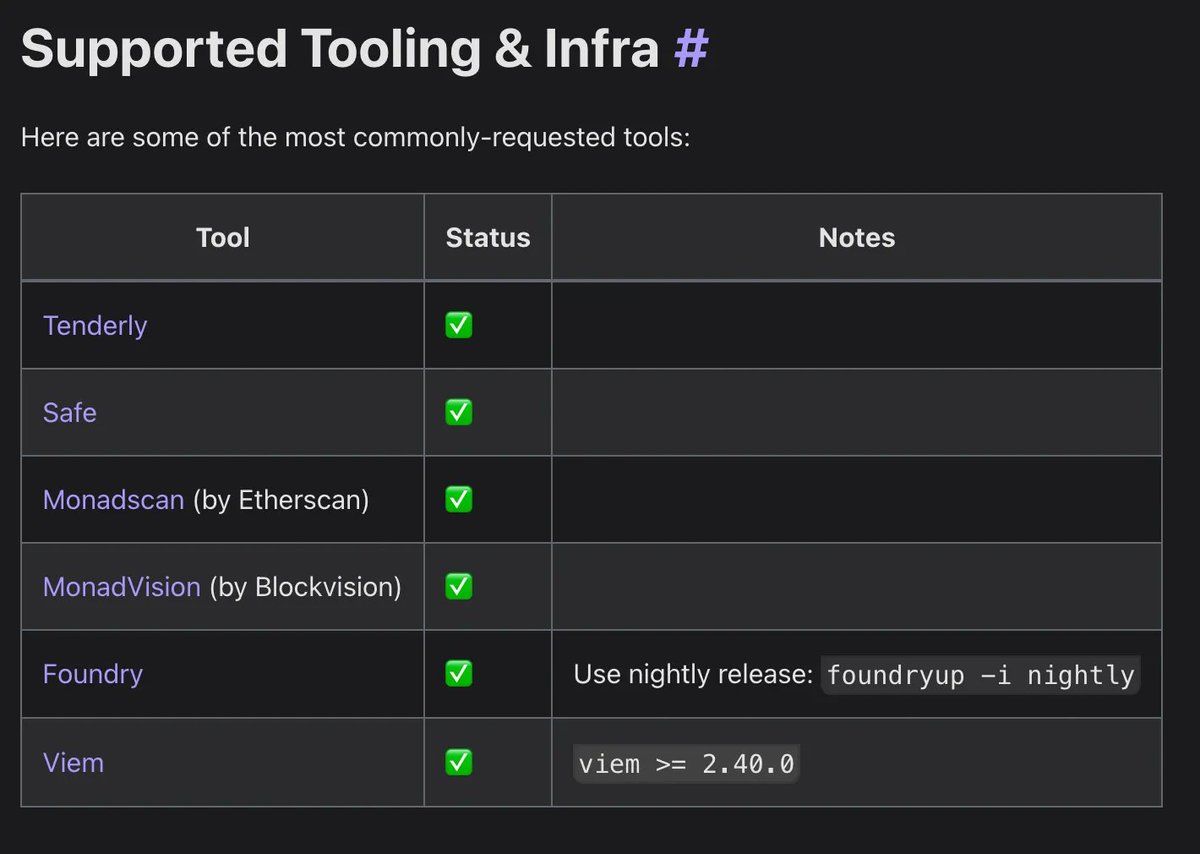
This article will introduce some resources to help you better understand Monad and start developing.
Trending news
MoreCrypto prices
More





