
BitMine's Ethereum holdings top 3 million ETH after latest multi-million dollar purchase

Quick Take BitMine Immersion now holds over 3 million ETH after its latest weekly acquisitions — more than triple its closest Ethereum treasury company competitor. Its total crypto and cash holdings have reached nearly $13 billion, and the company owns more than 2.5% of Ethereum’s circulating supply.

The Tom Lee-chaired Ethereum treasury company BitMine Immersion said its holdings have now surpassed 3.03 million — worth around $12.6 billion — following its latest weekly acquisitions.
BitMine bought 202,037 ETH since its last update on Oct. 6, reporting its total crypto and cash holdings had reached $12.9 billion on Monday. BitMine did not disclose the total purchase cost, but at current prices, its latest acquisitions are worth around $839 million.
As of Oct. 12, BitMine also holds 192 BTC ($22 million), a $135 million stake in WLD treasury firm Eightco, and $104 million in unencumbered cash. The company's ETH holdings are equivalent to around 2.5% of Ethereum's current circulating supply, which sits at approximately 120.7 million ETH, according to The Block's price page .
BitMine is currently the largest Ethereum treasury holder, followed by Joe Lubin's SharpLink and The Ether Machine, with approximately 838,730 ETH and 496,710 ETH, respectively, according to SER data .
BitMine is also the second-largest public crypto treasury company overall, behind Michael Saylor's Strategy, which holds 640,250 BTC ($73 billion) — equivalent to more than 3% of bitcoin's total 21 million supply — following Strategy's latest acquisition announcement on Monday.
Supported by institutional investors including Ark Invest's Cathie Wood, Founders Fund, Bill Miller III, Pantera, Kraken, DCG, and Galaxy Digital, BitMine targets acquiring 5% of the circulating ETH supply, currently equivalent to around 6.04 million ETH.
Buying the dip
The acquisition announcement comes after ETH fell 11.5% over the past week as renewed U.S.-China trade war fears saw traders go risk off across markets on Friday, before recovering slightly.
The broader crypto market witnessed much more severe contagion, driven in part by traders using illiquid altcoins as collateral for over-leveraged perpetual longs. Cascading liquidations saw at least $20 billion of positions wiped out as some cryptocurrencies briefly fell literally to zero — the largest crypto liquidation event in history in U.S. dollar terms.
"The crypto liquidation over the past few days created a price decline in ETH, which BitMine took advantage of," Lee said in Monday's release. "Volatility creates deleveraging, and this can cause assets to trade at substantial discounts to fundamentals, or as we say, 'substantial discount to the future,' and this creates advantages for investors, at the expense of traders."
BitMine is now among the top-traded U.S. equities, with a five-day average daily volume of $3.5 billion as of Oct. 10. That ranks it 22nd nationwide, just ahead of UnitedHealth, per Fundstrat and Statista data.
Disclaimer: The content of this article solely reflects the author's opinion and does not represent the platform in any capacity. This article is not intended to serve as a reference for making investment decisions.
You may also like
Mars Morning News | The crypto market rebounds across the board, Bitcoin rises above $94,500; The "CLARITY Act" draft is expected to be released this week
The crypto market has fully rebounded, with bitcoin surpassing $94,500 and US crypto-related stocks rising across the board. The US Congress is advancing the CLARITY Act to regulate cryptocurrencies. The SEC chairman stated that many ICOs are not securities transactions. Whales are holding a large number of profitable ETH long positions. Summary generated by Mars AI. The accuracy and completeness of the content generated by the Mars AI model is still being iteratively updated.

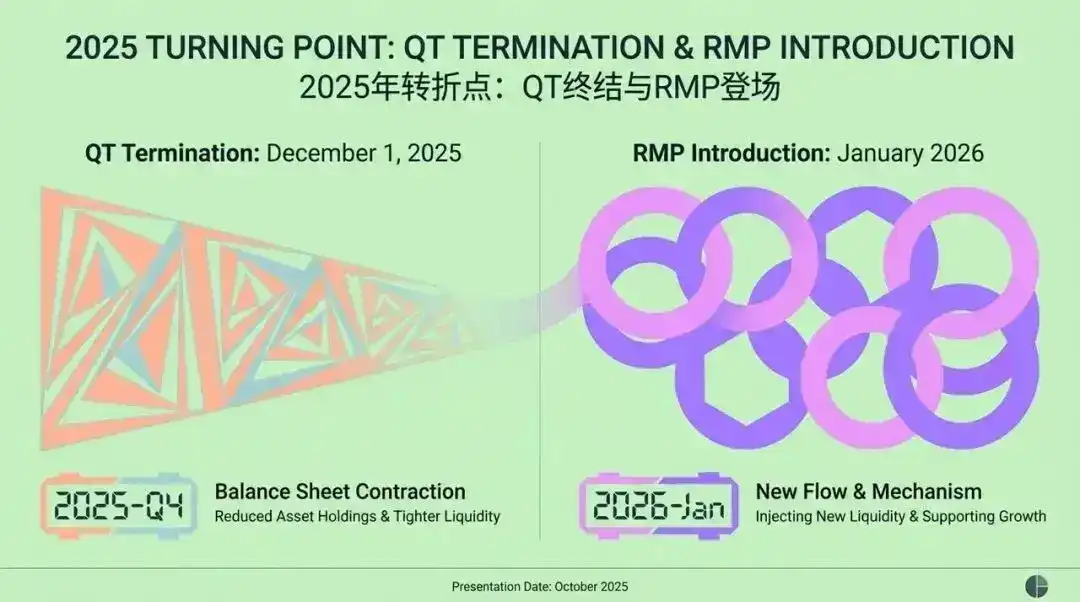
Federal Reserve’s Major Shift: From QT to RMP, How Will the Market Transform by 2026?
The article discusses the background, mechanism, and impact on financial markets of the Federal Reserve's introduction of the Reserve Management Purchases (RMP) strategy after ending Quantitative Tightening (QT) in 2025. RMP is regarded as a technical operation aimed at maintaining liquidity in the financial system, but the market interprets it as a covert easing policy. The article analyzes RMP's potential effects on risk assets, the regulatory framework, and fiscal policy, and provides strategic recommendations for institutional investors. Summary generated by Mars AI This summary was generated by the Mars AI model, and the accuracy and completeness of its content are still in the process of iterative improvement.
Rate Hike in Japan: Will Bitcoin Resist Better Than Expected?

Crucial Decision: Trump’s Final Interviews for Federal Reserve Chair Could Reshape Markets
Trending news
MoreCrypto prices
More





