
Polymarket Traders Predict 83% Chance U.S. Government Shutdown Will Extend Beyond October 15

The shutdown started earlier this week following the failure of the budget discussions between the republican and the democrats. BBC news (October 8, 2025) states that the controversy revolves around budget cuts and reversals on social programs in the administration of President Donald Trump. It is one of more than 20 shutdowns since 1976, and the 20182019 shutdown took 35 days and cost the economy estimated by the Congressional Budget Office (CBO) more than $11 billion. Analysts have cautioned that the polymarket stalemate would extend even beyond two weeks in the event that Congress does not agree on funds to operate before October 15, which is the next major budget target.
UPDATE:
— Crypto Rover (@rovercrc) October 9, 2025
Polymarket traders see an 83% chance the U.S. government shutdown lasts past Oct 15. pic.twitter.com/oTyfRYXJZY
Economic Impact
According to the estimates presented by economists at The Conversation (October 2, 2025), each week of shutdown is costing the U.S. economy permanent losses of around $3 billion primarily because of the stagnated federal expenditures, postponed grants, and the lack of consumer confidence. With the shutdown continuing until October 15, the total loss of the economy may be up to $6 billion, though there are risks of it growing to 9-12 billion in case it is prolonged to November.
Polymarket has emerged as one of the best decentralized prediction markets which predicts traders sentiment with the help of stablecoins (USDC). In major event forecasts (such as the 2024 U.S. election), it has historically had a 7090% accuracy.
The amount of trading volumes in the closed market currently is reportedly over $2 million indicating an increase in investor interest. The 83 percent probability value is in line with media reports indicating no improvement in Congressional negotiations as of Thursday, October 9, which has supported the sentiment based forecast in the market.
Market Response
The 20182019 shutdown also furloughed 800,000 federal workers and caused a 2.5% decline in the S&P 500 market, as well as a 8 percent decline in Bitcoin, as the shutdown spread uncertainty in both the traditional and the crypto markets.
Analysts are already forecasting the same scenario: in case the shutdown continues after mid-October, the U.S. equities are likely to fall by 3 5 percent, and the crypto-volatility is likely to increase, particularly in Bitcoin and Ethereum pairs.AQQ
Disclaimer: The content of this article solely reflects the author's opinion and does not represent the platform in any capacity. This article is not intended to serve as a reference for making investment decisions.
You may also like
Five charts to help you understand: Where does the market go after each policy storm?
After this regulatory crackdown, is it a harbinger of an impending downturn, or the beginning of a new cycle where all negative news has been fully priced in? Let’s examine the trajectory after the storm through five key policy milestones.

Mars Morning News | The crypto market rebounds across the board, Bitcoin rises above $94,500; The "CLARITY Act" draft is expected to be released this week
The crypto market has fully rebounded, with bitcoin surpassing $94,500 and US crypto-related stocks rising across the board. The US Congress is advancing the CLARITY Act to regulate cryptocurrencies. The SEC chairman stated that many ICOs are not securities transactions. Whales are holding a large number of profitable ETH long positions. Summary generated by Mars AI. The accuracy and completeness of the content generated by the Mars AI model is still being iteratively updated.

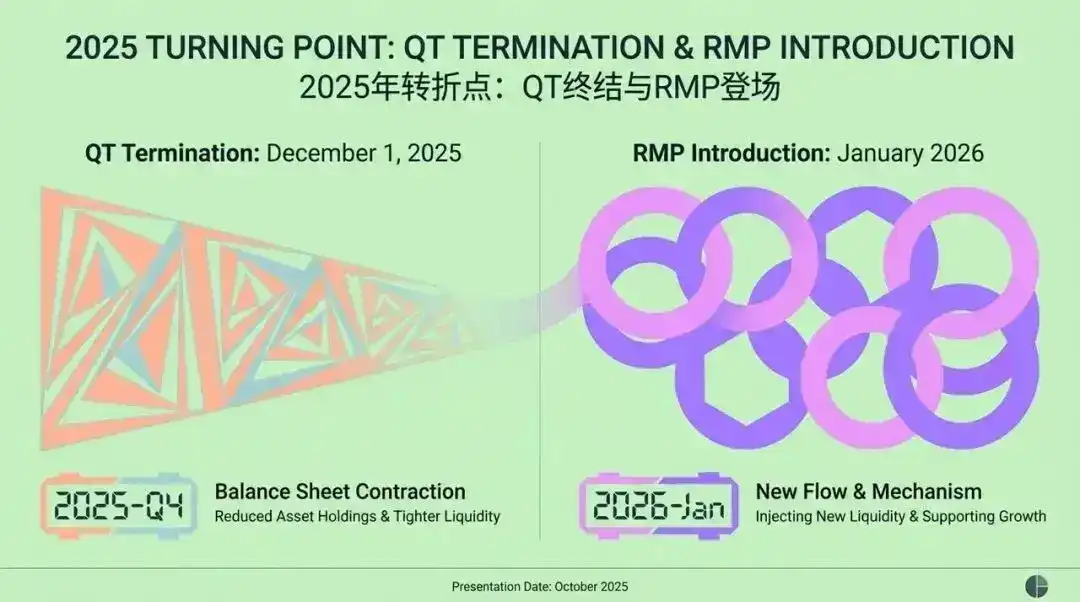
Federal Reserve’s Major Shift: From QT to RMP, How Will the Market Transform by 2026?
The article discusses the background, mechanism, and impact on financial markets of the Federal Reserve's introduction of the Reserve Management Purchases (RMP) strategy after ending Quantitative Tightening (QT) in 2025. RMP is regarded as a technical operation aimed at maintaining liquidity in the financial system, but the market interprets it as a covert easing policy. The article analyzes RMP's potential effects on risk assets, the regulatory framework, and fiscal policy, and provides strategic recommendations for institutional investors. Summary generated by Mars AI This summary was generated by the Mars AI model, and the accuracy and completeness of its content are still in the process of iterative improvement.
Rate Hike in Japan: Will Bitcoin Resist Better Than Expected?

Trending news
MoreCrypto prices
More





