New Prospects in Higher Education Fueled by Technological Advancements
Accelerating Change in Higher Education
Higher education is undergoing rapid transformation, fueled by technological breakthroughs and an urgent need for skilled professionals in science, technology, engineering, and mathematics (STEM). As economies worldwide embrace digitalization and automation, academic programs focused on STEM are not only shaping the workforce of tomorrow but also offering attractive investment opportunities. This overview examines how these programs are responding to labor market demands, the influence of technology on educational outcomes, and the financial performance of leading institutions and platforms in this evolving landscape.
Meeting Workforce Demands
STEM-related jobs are expected to expand by 10.4% between 2023 and 2033—a rate nearly triple that of the overall job market. However, there remains a significant disconnect between the number of STEM graduates and the needs of employers. Recent findings indicate that just 30% of STEM graduates find work directly related to their field of study, highlighting persistent gaps in skill development and job readiness. These challenges are compounded by ongoing disparities: women represent only 26% of the STEM workforce in the United States, and Black professionals, who make up 11% of the general workforce, account for just 9% of STEM roles.
Technology Driving Educational Progress
Emerging technologies, particularly artificial intelligence (AI) and educational technology (EdTech), are playing a crucial role in addressing these gaps. The global EdTech sector, valued at $277.2 billion in 2025, is anticipated to soar to $907.7 billion by 2034, propelled by AI-driven personalized learning and immersive experiences such as virtual and augmented reality. These tools enable educational institutions to adapt curricula to industry requirements, providing practical training in high-demand fields like cybersecurity, advanced manufacturing, and data analytics.
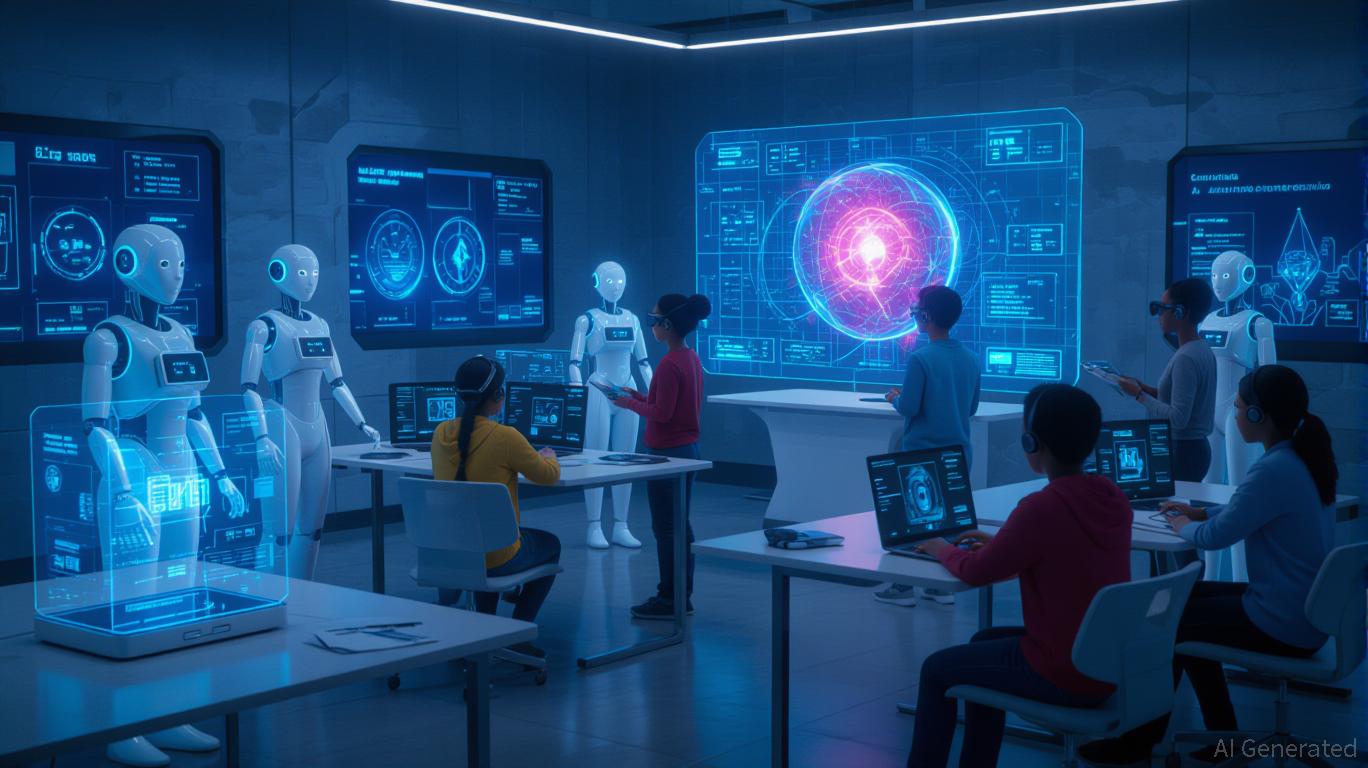
Institutions like MIT’s Schwarzman College of Computing, established with a $350 million endowment, illustrate how AI-focused programs can bridge the gap between academic research and workforce needs, while also boosting institutional reputation and financial health.
Financial Outcomes and Collaborative Ventures
STEM programs that integrate AI are demonstrating impressive financial results. For instance, a 12-week AI course designed for non-STEM students in England led to notable improvements in both academic achievement and employment rates within six months of graduation. Universities that implement AI across multiple departments have reported operational efficiencies of 20–30% and up to a 75% increase in return on investment compared to isolated AI initiatives.
Investors are seizing these opportunities. Platforms such as OpenClassrooms, which has enrolled 43,000 learners in career-focused programs, and providers of vocational micro-credentials—expected to reach a market value of $1.9 billion by 2029—demonstrate the scalability of education models aligned with workforce needs. Public and private investments are further accelerating growth; for example, the U.S. Department of Education has allocated $540 million toward STEM education, with a focus on teacher training and promoting diversity.
Ongoing Challenges and Future Directions
Despite significant progress, obstacles remain. High operational expenses, barriers to access for underrepresented groups, and the necessity for responsible AI oversight present ongoing challenges. According to UNESCO, two-thirds of higher education institutions are in the process of developing guidelines for AI use, reflecting an increased awareness of these issues. Looking ahead, the U.S. is expected to face a shortage of 1.4 million STEM workers by 2030, creating substantial opportunities for institutions and EdTech companies that prioritize alignment with labor market needs.
Looking Ahead
The intersection of STEM education, AI, and EdTech represents more than a response to workforce trends—it is a strategic investment in the future of employment. For investors, the benefits are twofold: strong financial returns from scalable, fast-growing ventures and meaningful social impact through expanded access to skills training. As the EdTech industry grows and AI transforms learning, aligning academic offerings with technological and economic developments will be essential for shaping the next generation of higher education.





