
Urban Industrial Properties in Markets Following Corporate Divestitures: Approaches to Strategic Investment and Insights from the Xerox Webster Campus Example
- Xerox Webster campus in NY secures $14. 3M in public grants to transform 300-acre brownfield into advanced manufacturing hub. - Infrastructure upgrades reduced industrial vacancy to 2% by 2024, attracting $650M fairlife® dairy plant creating 250 jobs. - Public-private partnerships and policy alignment through Brownfield Opportunity Area designation ensure sustained investment and regulatory stability. - The model demonstrates how strategic infrastructure and policy frameworks can catalyze $1B+ developmen
Revitalizing Urban Industrial Areas: A New Era for Investment
The transformation of underused industrial spaces in cities, particularly following major corporate exits, marks a significant opportunity for investors. As traditional manufacturing centers evolve into modern industrial hubs, the collaboration between government funding, infrastructure improvements, and private sector innovation paves the way for substantial value generation. The Xerox Webster campus in upstate New York stands as a prime example of this shift, illustrating how thoughtful capital investment can convert outdated industrial sites into thriving economic zones.
Xerox Webster Campus: A Model for Urban Renewal
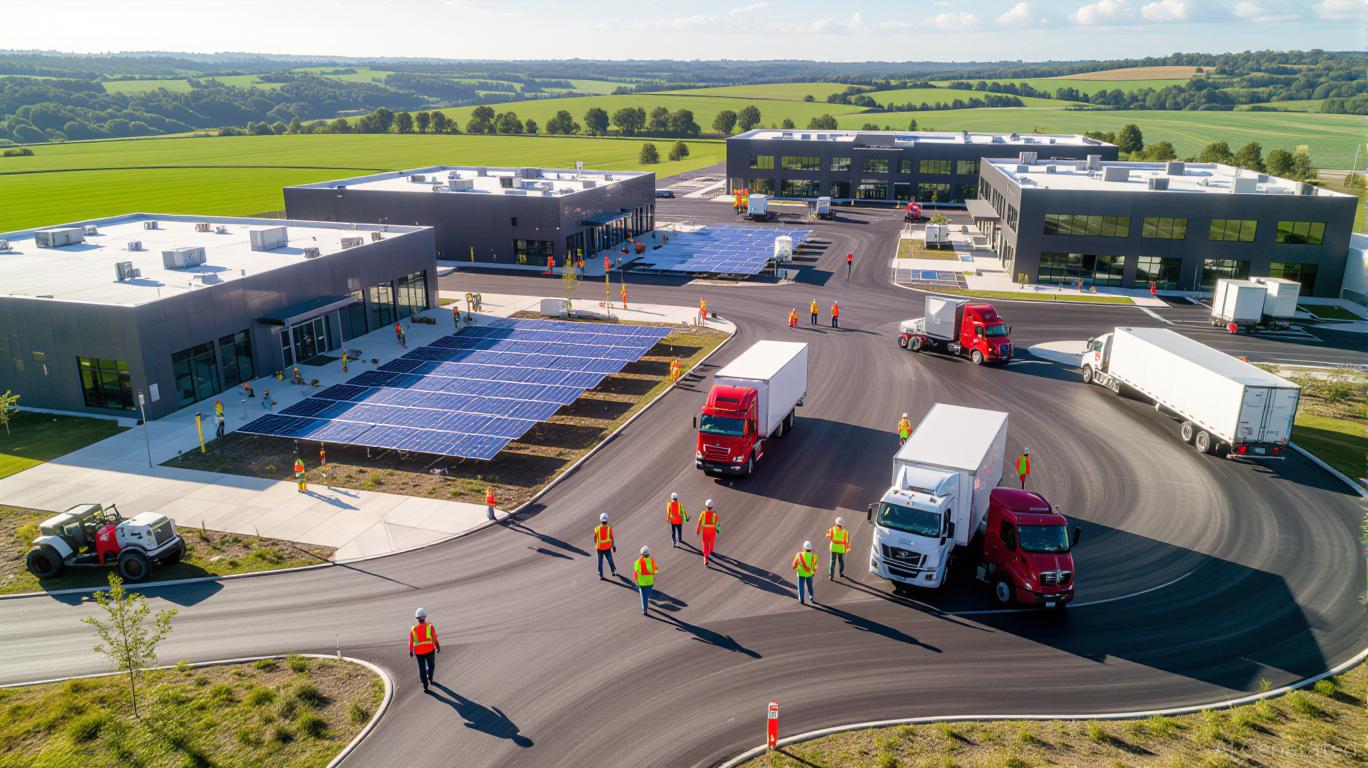
Spanning 300 acres, the Xerox Webster campus was once a hallmark of corporate strength in the mid-1900s. Today, it leads the way in post-industrial redevelopment. Recent reports highlight that the site has received a $9.8 million FAST NY grant, jumpstarting its transformation into a center for advanced manufacturing and logistics. This, combined with an additional $4.5 million from the NY Forward Program, highlights the essential role of public-private partnerships in reducing the risks associated with large-scale redevelopment projects.
Significant infrastructure enhancements—such as upgrades to roads, sewer systems, and electrical networks—have already begun to reshape the campus’s appeal. As a result, industrial vacancy rates have dropped to just 2% in 2024, drawing in major investments like the $650 million fairlife® dairy facility, which is expected to generate 250 new jobs. These efforts are part of a larger $1 billion development plan for the NEAT (North East Accessible Transit) corridor, supported by $283 million in combined public and private funding. The Reimagine Webster Master Plan further strengthens this direction by designating the campus as a Brownfield Opportunity Area, giving future projects priority access to state resources.
Key Takeaways for Investors: Strategic Capital Deployment
The Webster redevelopment offers several important insights for those looking to invest in areas affected by corporate divestitures:
-
Infrastructure Investment Drives Growth
The allocation of $9.8 million through the FAST NY grant demonstrates how focused spending on infrastructure can unlock the hidden potential of underutilized sites. By improving access and utilities, these investments lower risks and attract advanced manufacturing businesses. For instance, transferring Orchard Street and Panama Road to public ownership has improved campus accessibility, a crucial factor for logistics-heavy industries. -
Public-Private Collaboration Reduces Risk
The partnership between organizations like WEDA, local government, and community members shows how shared goals can accelerate progress. Public grants serve as a foundation, encouraging private developers to expand projects with greater confidence. The swift progress of the fairlife® dairy plant, despite its large scale, was made possible by completing infrastructure upgrades ahead of schedule. -
Long-Term Planning and Policy Support
By designating the campus as a Brownfield Opportunity Area, the Reimagine Webster Master Plan ensures ongoing public backing for future developments. This policy clarity reduces regulatory uncertainty, making the environment more attractive for long-term investors.
Investment Prospects for Private Equity and Infrastructure Funds
The Webster campus offers promising opportunities for private equity and infrastructure-focused investors, especially those interested in early-stage projects. With nearly full occupancy and a $1 billion development pipeline, the campus is well-positioned for new capital infusions. Investors specializing in revitalizing brownfield sites should focus on:
- Early-Stage Equity: Funding infrastructure improvements that directly boost land value, such as expanding roads and utilities.
- Partnerships with Anchor Tenants: Collaborating with major manufacturers like fairlife® to secure long-term leases and stable cash flows.
- Policy-Driven Investment Structures: Leveraging state incentives, including tax credits and grants linked to job creation, to enhance returns.
The NEAT corridor’s $283 million in combined public and private investment further enhances these prospects. By 2026, this area is expected to emerge as a key regional center for advanced manufacturing, with the Webster campus serving as a driving force.
Conclusion
The Xerox Webster campus is more than just a redevelopment initiative—it represents the future of urban industrial real estate. For investors, the experience at Webster highlights the critical importance of infrastructure investment, policy alignment, and early engagement in markets undergoing post-corporate transformation. As similar sites across the country face change, the Webster approach provides a replicable model for turning outdated industrial areas into engines of economic growth.
Disclaimer: The content of this article solely reflects the author's opinion and does not represent the platform in any capacity. This article is not intended to serve as a reference for making investment decisions.
You may also like
Timeless Investment Principles: How Insights from 1927 Continue to Influence Today’s Crypto and Stablecoin Approaches
- McNeel and Buffett's 1920s investment principles combat modern crypto volatility through emotional discipline and intrinsic value focus. - The 2025 Binance crash exposed market fragility, with panic selling and FOMO-driven rebounds amplifying $19B in 24-hour liquidations. - Risk management tools like stop-loss orders and diversified portfolios reduced losses by 37%, underscoring enduring relevance of timeless strategies. - Stablecoin vulnerabilities highlighted by USDC's 2023 depegging and 2025 liquidity

Zcash Halving and Its Impact on Cryptocurrency Market Trends
- Zcash's 2028 halving will cut block rewards to 0.78125 ZEC, continuing its deflationary supply model to reduce annual inflation to 2%. - Historical data shows halvings trigger extreme volatility, with ZEC surging 1,172% in 2025 but collapsing 96% within 16 days. - Institutional adoption grows via $137M Grayscale Zcash Trust, yet EU's MiCA regulations challenge privacy coins' compliance with transparency rules. - Future success depends on balancing privacy features with regulatory adaptability as Zcash's

Emerging Prospects for Industrial Real Estate in Webster, NY
- Webster , NY, is transforming its industrial real estate through the $9.8M FAST NY Grant, upgrading infrastructure on a 300-acre Xerox brownfield into a high-tech hub. - The initiative aims for a 2% industrial vacancy rate by 2025, boosting residential property values by 10.1% and attracting projects like the $650M fairlife® dairy facility. - Xerox campus reconfiguration and 600 Ridge Road redevelopment, supported by state programs, create shovel-ready spaces with modern infrastructure for advanced manuf
Why Solana's Latest Plunge Highlights Underlying Weaknesses in the Crypto Market
- Solana's 57% price crash in Nov 2025 exposed systemic crypto vulnerabilities, including psychological biases, excessive leverage, and fragile infrastructure. - Token unlocks from Alameda/FTX estates and $30M selling pressure triggered the downturn, yet $101.7M in institutional inflows highlighted market paradoxes. - Fed rate cuts drove $417M into Solana ETFs, but uncertainty caused 14% price drops, revealing crypto's growing integration with traditional finance. - $19B in liquidations during the Oct 11 "
Trending news
MoreCrypto prices
More





