
What's Causing the Latest BTC Price Swings: Is It a Macro-Fueled Reevaluation?
- Bitcoin's late 2025 volatility reflects macroeconomic pressures, Fed policy shifts, and regulatory changes impacting institutional demand. - Sharp price swings from $126k to $87k highlight sensitivity to inflation, interest rates, and leveraged trading risks amid delayed economic data. - New U.S. crypto laws and ETF approvals boosted institutional participation, but geopolitical risks and token unlocks maintained uncertainty. - A potential Fed rate cut and stabilizing inflation could reignite risk appeti
Bitcoin’s Volatility in Late 2025: Key Drivers and Market Dynamics
In the final months of 2025, Bitcoin experienced dramatic price swings, highlighting its vulnerability to shifting global economic trends, evolving regulations, and institutional activity. The cryptocurrency’s value plummeted from a record high of $126,000 in October to under $87,000 by December, underscoring how sensitive it remains to changes in the broader financial landscape. These fluctuations go beyond speculative trading, pointing to deeper transformations at the intersection of traditional finance and digital assets.
Macroeconomic Forces and Federal Reserve Policy
The U.S. Federal Reserve’s firm approach to monetary policy was a major influence on risk sentiment during this period. Although inflation showed signs of easing, it stayed above the central bank’s 2% objective, prompting officials to keep interest rates high. According to The Economic Times, Bitcoin’s price closely tracked the Fed’s tightening measures, as restricted liquidity and increased borrowing costs weighed heavily on volatile assets like cryptocurrencies. However, by December, expectations began to shift, with markets anticipating a more accommodative stance. The probability of a 0.25% rate reduction at the Fed’s December 10 meeting soared to 87.6%, hinting at a possible improvement in liquidity that could renew institutional interest in Bitcoin.
Regulatory Developments and Institutional Involvement

Regulatory changes in the United States added further complexity to Bitcoin’s price movements. The introduction of the GENIUS and CLARITY Acts in 2025 provided much-needed legal certainty for large investors, while the approval of spot Bitcoin ETFs marked a significant step toward mainstream acceptance. Despite these advances, uncertainty persisted. Ongoing geopolitical challenges, such as new U.S. tariffs and the anticipated release of Pi Network tokens, continued to unsettle the market. The push and pull between regulatory progress and lingering economic concerns resulted in a volatile environment, with institutional investments helping to stabilize prices but not fully counteracting broader market anxieties.
Market Sentiment and the Fragility of Gains
Bitcoin’s performance during this period also revealed how quickly positive momentum can unravel. As noted by Altsignals.io, steep price drops were intensified by leveraged trading, with forced liquidations accelerating declines. In late November alone, $569 million in long positions were liquidated, demonstrating how unexpected economic news—such as delayed U.S. data releases—can trigger rapid sell-offs. Nevertheless, these turbulent conditions also presented opportunities. Individual investors, encouraged by past trends of buying during downturns, continued to accumulate Bitcoin, while major holders adopted a more cautious approach, pausing new investments amid ongoing uncertainty.
Looking Forward: The Importance of Economic Stability
Bitcoin’s path to greater stability depends largely on resolving key macroeconomic issues. U.S. Treasury Secretary Scott Bessent’s reassurances about recession risks suggest that the pessimism driving December’s selloff may have been exaggerated. Should inflation continue to decline and the Fed wrap up its quantitative tightening, improved liquidity could boost investor confidence and support a market recovery. Analysts such as Tom Lee predict that Bitcoin could revisit the $100,000 mark by the end of the year, provided that economic indicators remain positive and institutional interest endures.
In summary, Bitcoin’s late-2025 volatility serves as a reflection of the ongoing tension between monetary policy, regulatory shifts, and global economic health. While short-term threats—including geopolitical instability and security incidents like the $1.5 billion Bybit breach, as highlighted by security experts—remain, Bitcoin’s long-term outlook is increasingly intertwined with the broader financial system. For investors, successfully navigating this landscape requires a deep understanding of these interconnected forces, recognizing that Bitcoin will continue to mirror the ebb and flow of global economic cycles.
Disclaimer: The content of this article solely reflects the author's opinion and does not represent the platform in any capacity. This article is not intended to serve as a reference for making investment decisions.
You may also like
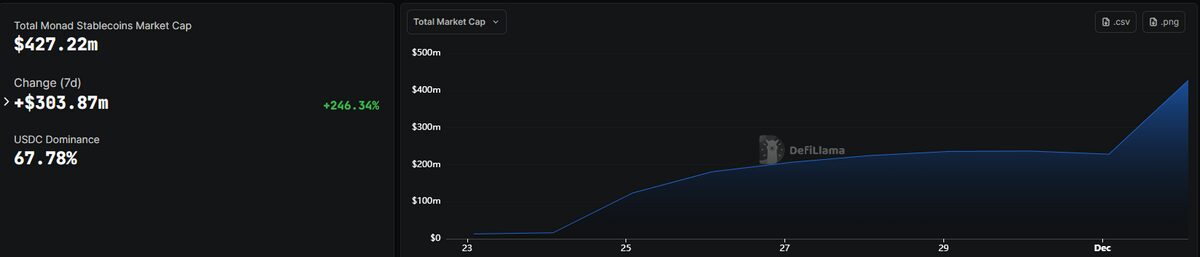
Transak Joins Monad, Unlocking Global MON Access
Astar 2.0's Market Rally and Growing Institutional Interest: Evaluating the Long-Term Strategic Impact for Cryptocurrency Investors
- Astar 2.0's 2025 market surge driven by cross-chain tech and partnerships with Sony/Animoca Brands. - Institutional $3.16M ASTR acquisition and 4.32% inflation reduction via tokenomics reforms. - Governance shifts to community council and regulatory clarity boost institutional trust. - Projected $0.80–$1.20 ASTR price by 2030, contingent on roadmap execution and macro risks.
BitMine Invests $70M in Ethereum Despite Market Crash
ZK Atlas Upgrade: Transforming DeFi with Enhanced On-Chain Scalability
- ZKsync's 2025 Atlas Upgrade introduces ZKPs and modular architecture, enabling 15,000-43,000 TPS with $0.0001 proof costs, addressing DeFi scalability challenges. - Full EVM compatibility and 70% lower gas fees attracted Deutsche Bank/UBS for asset tokenization, while TVL surged to $28B with $15B in Bitcoin ETF inflows. - ZK token value rose 50% post-upgrade, supported by deflationary mechanics, as analysts project 60.7% CAGR for ZK Layer-2 solutions through 2031. - Upcoming Fusaka upgrade (Dec 2025) aim
Trending news
MoreCrypto prices
More






