
Striking baristas win $38.9 million in compensation, yet contract disputes continue
- Starbucks settles NYC Fair Workweek Law violations for $38.9M, including $35.5M restitution to 15,000+ workers. - Striking baristas demand collective bargaining amid ongoing labor disputes and unionization efforts at 550 stores. - Mayor-elect Mamdani and Sen. Sanders join protests, framing demands as moral issues against corporate resistance. - Settlement addresses 500,000 scheduling violations since 2021, with workers receiving $50/week compensation. - Starbucks defends labor law complexity but faces cr
Starbucks Reaches Landmark Settlement Over Worker Scheduling in NYC
On Monday, Starbucks Corp. (NASDAQ: SBUX) came under increased public scrutiny as New York City Mayor-elect Zohran Mamdani and U.S. Senator Bernie Sanders joined striking Starbucks employees on a picket line in the city. This demonstration followed the company’s announcement of a $38.9 million settlement with New York City, resolving allegations of violating the Fair Workweek Law. The agreement, one of the largest labor settlements in the city’s history, includes $35.5 million in restitution for more than 15,000 workers and $3.4 million in civil penalties. The settlement comes after a protracted four-year dispute, during which unionized baristas have been pushing for a collective bargaining agreement.
The city’s Department of Consumer and Worker Protection (DCWP) determined that Starbucks had failed to provide consistent work schedules, unlawfully cut employee hours, and prevented staff from picking up extra shifts. Since 2021, the company was found to have committed over 500,000 violations of the Fair Workweek Law, impacting the majority of hourly workers across its 300-plus New York City locations. Under the settlement, affected employees will receive $50 for each week worked between July 2021 and July 2024, with additional compensation available for those who filed complaints after that period. Starbucks also agreed to adhere to the law going forward, including offering to reinstate workers laid off during recent store closures.
Escalating Labor Tensions and Political Support
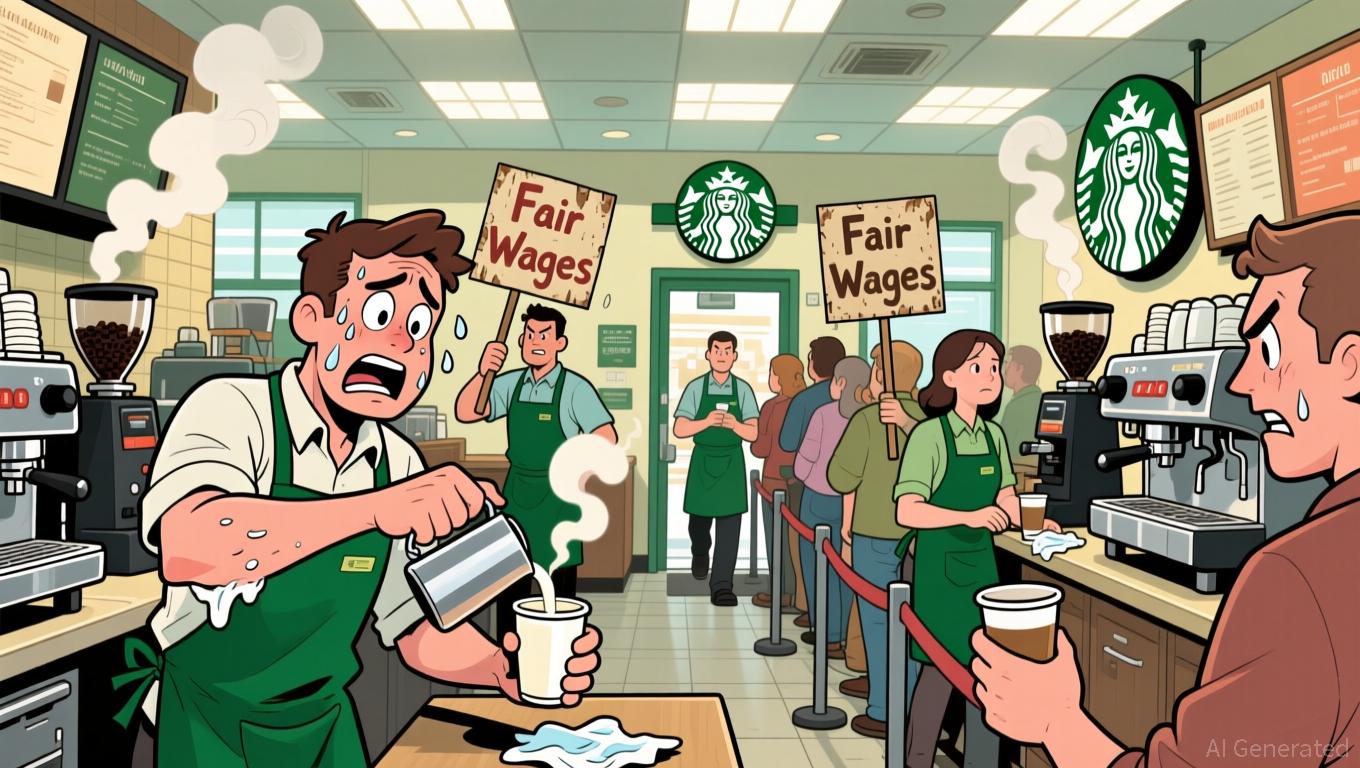
The timing of the settlement coincided with rising tensions between Starbucks and its unionized workforce. Since October, baristas at dozens of locations nationwide have been on strike, demanding better staffing levels, improved scheduling, and a long-sought contract nearly four years after the first unionization vote in Buffalo, New York. Currently, about 550 of Starbucks’ 10,000 company-owned stores have unionized. Workers have criticized the company for persistent understaffing and complicated order systems that add to workplace stress. During the Brooklyn picket, Mamdani described the workers’ demands as a matter of basic decency, while Sanders condemned Starbucks for refusing to negotiate a fair contract despite repeated union efforts.
Company Response and Ongoing Challenges
Starbucks responded by acknowledging the complexities of New York’s labor regulations but reaffirmed its commitment to providing a top-tier retail job. The company pointed to a $500 million investment aimed at enhancing the employee experience as part of its “Back to Starbucks” initiative, which includes store redesigns and restructuring. However, critics argue that the settlement exposes deeper, systemic problems. The DCWP’s investigation revealed that most employees rarely received predictable schedules, making it difficult to manage other responsibilities like childcare or education.
Broader Impact on Labor Rights
The ongoing union campaign at Starbucks has broader significance for labor rights in the fast-food industry, where laws like the Fair Workweek Law are intended to give workers more stability. The size of the settlement and the involvement of prominent political figures reflect increasing public support for the baristas’ cause. Starbucks, meanwhile, faces the challenge of addressing employee concerns while contending with economic pressures, including inflation and restructuring costs. The company recently reported its first increase in same-store sales in nearly two years but continues to navigate a cautious consumer environment.
As the settlement is implemented, the dispute highlights the ongoing struggle between corporate objectives and employee well-being. While the agreement may provide Starbucks with short-term relief, unresolved contract negotiations and the growing momentum of the labor movement suggest that the push for fair working conditions will persist.
Disclaimer: The content of this article solely reflects the author's opinion and does not represent the platform in any capacity. This article is not intended to serve as a reference for making investment decisions.
You may also like
OpenEden Secures Strategic Funding to Expand Tokenized Finance and Institutional RWAs

Evaluating How ZK Technology Will Influence Future Cryptocurrency Market Values: Institutional Strategies and Risk Evaluation
- Zero-knowledge (ZK) proof technology is reshaping blockchain scalability and privacy, with the global ZKP market projected to reach $7.59 billion by 2033. - Institutional adoption accelerated in 2025 as platforms like zkSync Era and StarkNet achieved 27 million and 15,000 TPS, supported by EU MiCAR and U.S. regulatory frameworks. - Vitalik Buterin proposed removing Ethereum's modexp precompile and replacing EVM with RISC-V to optimize ZK-EVM scalability while cautioning against plutocratic governance ris

Vanguard reverses course, opens door to Bitcoin, Ethereum, XRP, and Solana ETFs

Ripple, leading VCs invest in OpenEden to support the real-world asset tokenisation firm’s expansion

Trending news
MoreCrypto prices
More






