
BOJ's Era of Prolonged Ultra-Loose Policy Approaches Conclusion, Sparking Worldwide Rise in Yields
- Japan's BOJ signals potential rate hike, driving global yield surge as 10-year JGBs hit 1.845% (17-year high). - Yen strengthens 0.4% against dollar, threatening yen carry trade unwind and pressuring U.S. equities/crypto markets. - Markets price 76% chance of December BOJ hike, first since 2008, signaling global monetary policy normalization. - Political alignment with government eases policy divergence fears as inflation targeting gains urgency over reflation.
Japanese Policy Shift Drives Global Market Volatility
On December 1, 2025, the yield on the U.S. 10-year Treasury note soared to 4.086%, a move fueled by Japanese investors reallocating funds in response to signals from the Bank of Japan (BOJ) about a possible interest rate increase. This development highlights rising turbulence in global markets as Japan appears poised to move away from its long-standing ultra-loose monetary stance, with significant repercussions for bond yields, currency exchange rates, and riskier investments worldwide.
BOJ Signals End to Ultra-Low Rates
The shift in the BOJ’s approach became evident when Governor Kazuo Ueda announced on December 1 that the central bank would weigh the advantages and disadvantages of raising rates at its upcoming December 18-19 meeting. This marked a notable change from the BOJ’s previously cautious tone, reigniting speculation about the end of decades of near-zero interest rates. As a result, yields on Japan’s 10-year government bonds surged to 1.845%—a level not seen since 2008—while two-year yields reached 1%, the highest in 17 years. The yen also appreciated against the U.S. dollar, intensifying worries about the unwinding of the yen carry trade, where investors had borrowed at low Japanese rates to invest in higher-yielding assets abroad.

Global Impact and Market Reactions
Financial experts caution that a tighter BOJ policy could have far-reaching effects on global liquidity. Ryan Jacobs of Jacobs Investment Management pointed out that a stronger yen and higher Japanese yields may draw capital away from U.S. stocks and bonds, potentially triggering widespread shifts across asset classes. The reversal of the yen carry trade, reminiscent of the market upheaval in August 2024, has already weighed on cryptocurrencies—Bitcoin, for example, fell by as much as 8% on Monday. The yen’s 0.4% rise against the dollar further underscored changing liquidity conditions as investors reconsidered risk premiums in light of Japan’s evolving monetary policy.
Policy Coordination and Political Developments
Close cooperation between the BOJ and the Japanese government has helped ease fears of conflicting policy directions. Finance Minister Satsuki Katayama stressed that there is no disconnect between the government and the central bank’s economic outlook, reaffirming their joint commitment to achieving a 2% inflation target. Meanwhile, Prime Minister Sanae Takaichi’s focus on reflation has taken a back seat as concerns over a weakening yen and rising inflation come to the forefront. Within the BOJ, board members such as Junko Koeda and Kazuyuki Masu have also voiced support for rate hikes to address inflation risks.
Looking Ahead: Global Monetary Policy at a Crossroads
The upcoming U.S. Federal Reserve meeting on December 10 and any potential rate adjustments could influence the BOJ’s next steps. However, market participants are now factoring in a 76% chance of a rate hike by the BOJ in December and over a 90% probability for January. Should the BOJ proceed, it would be the first rate increase since 2008, signaling a significant shift toward global monetary policy normalization.
The effects are not limited to bonds. U.S. stock markets have come under pressure, with both the S&P 500 and Nasdaq 100 slipping by 0.2% as investors adopt a more cautious stance. In the cryptocurrency sector, the retreat of capital previously fueled by cheap yen threatens to intensify bearish trends, as speculative money moves toward safer investments.
Disclaimer: The content of this article solely reflects the author's opinion and does not represent the platform in any capacity. This article is not intended to serve as a reference for making investment decisions.
You may also like
ZEC Rises 8.55% Over 24 Hours as Significant Short Covering and Position Flips Occur
- ZEC surged 8.55% in 24 hours to $346.59, but fell 23.78% in 7 days amid volatile swings. - A major ZEC short position turned $21M loss into $5M+ profit after price declines in late October. - The same address holds ETH and MON shorts, with ETH shorts generating $9.5M gains (643% profit). - ZEC's 1-year 563% rise contrasts recent declines, highlighting liquidity-driven market risks for leveraged positions. - Analysts remain cautious as short-term gains coexist with uncertain long-term volatility in crypto

ALGO Climbs 5.83% as Recent Gains Counteract Overall Downtrend
- ALGO surged 5.83% in 24 hours on Dec 2, 2025, but remains down 58.74% annually amid broader crypto market declines. - Short-term buying interest drove the rally, though analysts warn of continued volatility due to macroeconomic uncertainties. - The 24-hour rebound contrasts with a 4.37% seven-day loss, highlighting uneven recovery in the crypto sector. - Traders remain cautious as isolated buying pressure emerges, but long-term bearish trends persist despite temporary optimism.

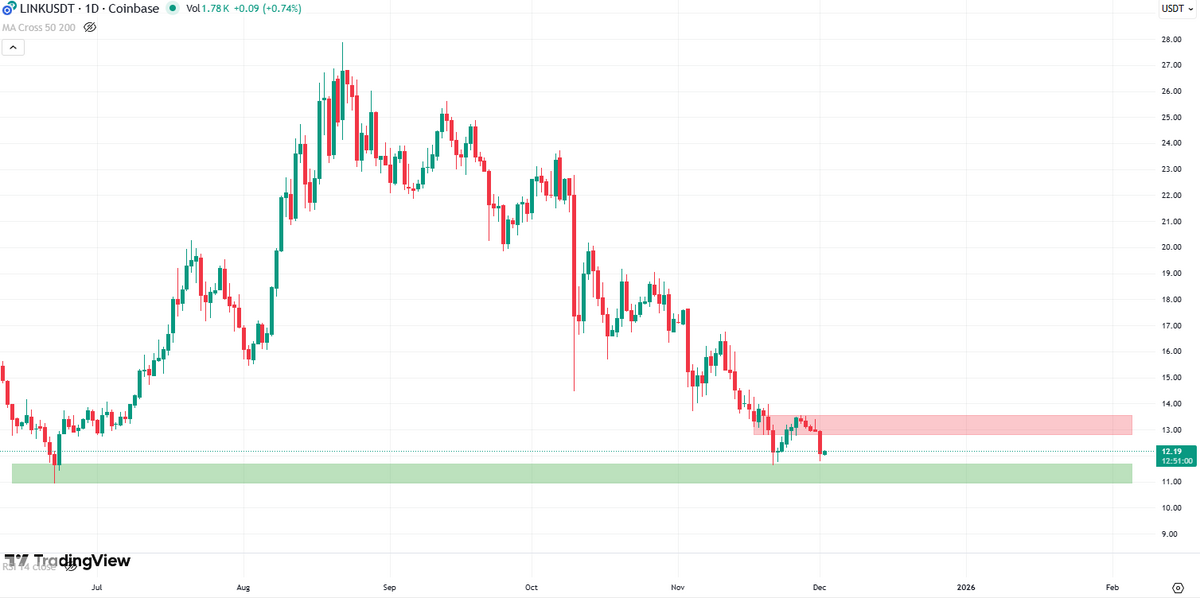
Chainlink ETF Set to Debut as LINK Slips Amid Market Weakness
Striking baristas win $38.9 million in compensation, yet contract disputes continue
- Starbucks settles NYC Fair Workweek Law violations for $38.9M, including $35.5M restitution to 15,000+ workers. - Striking baristas demand collective bargaining amid ongoing labor disputes and unionization efforts at 550 stores. - Mayor-elect Mamdani and Sen. Sanders join protests, framing demands as moral issues against corporate resistance. - Settlement addresses 500,000 scheduling violations since 2021, with workers receiving $50/week compensation. - Starbucks defends labor law complexity but faces cr

Trending news
MoreCrypto prices
More





