
South Korea Faces Inflation Challenges: Central Bank Maintains Rates Despite Ongoing Pressures
- South Korea's inflation held at 2.4% in November as food , fuel, and housing costs persist, exceeding economist forecasts. - The Bank of Korea maintained 2.5% interest rates for the fourth meeting, balancing weak won, inflation risks, and fragile economic recovery. - Weather disruptions, fuel-tax removal, and Seoul's 43-week housing price rise intensified cost pressures on households and businesses. - A $9.73B trade surplus from semiconductor exports and U.S. tariff cuts complicate inflation management a
South Korea's Inflation Holds Steady Amid Economic Pressures
In November, South Korea's annual inflation rate remained at 2.4%, mirroring the previous month's figure and surpassing market expectations. Ongoing increases in the prices of food, energy, and housing continue to strain the economy.
The Bank of Korea (BOK) is navigating a challenging environment. Although core inflation is approaching the central bank’s 2% target, policymakers have chosen to keep the benchmark interest rate at 2.5% for the fourth straight meeting. This move signals a pause in rate reductions, reflecting concerns over a weakening won and persistent inflation risks. The decision highlights the difficulties of supporting a fragile recovery, as both a soft currency and subdued domestic demand threaten to keep price pressures elevated.
Factors Driving Stubborn Inflation
Several underlying and external factors are contributing to the inflation plateau. The depreciation of the South Korean won has increased the cost of imports, prompting businesses to pass these higher expenses on to consumers in the form of more expensive groceries, fuel, and electronics. The government’s decision to end fuel-tax subsidies in October has further raised transportation and logistics costs, sectors heavily dependent on fuel. Additionally, severe weather events—including storms and heavy rainfall—have disrupted the supply of agricultural and fishery products, leading to higher prices for essential items.
Finance Minister Koo Yun Cheo has pointed out that these weather-related supply disruptions and shortages have significantly pushed up the cost of processed foods, adding to the financial burden on households.

Housing Market Adds to Inflation Concerns
Seoul’s real estate market is further complicating the inflation outlook. Apartment prices have climbed for 43 weeks in a row, and officials warn that continued low interest rates could encourage speculative buying. Rising property values not only make living more expensive for residents but also drive up costs for businesses, perpetuating inflationary trends.
Reflecting these ongoing risks, the BOK has raised its inflation forecast for 2025 to 2.1%, up from the previous estimate of 2%. Governor Rhee Chang Yong has emphasized that the sluggish recovery of the won remains a significant obstacle.
Global Trade and Geopolitical Influences
International factors are also shaping South Korea’s inflation landscape. In November, the country’s trade surplus expanded to $9.73 billion, fueled by a 39% year-on-year jump in semiconductor exports to $17.26 billion. While this growth benefits the technology sector and the broader economy, it has also led to increased competition for raw materials, pushing up production costs.
The recent U.S.-South Korea trade agreement, which took effect on November 1, reduced American tariffs on Korean goods to 15%. This change offers relief to exporters but complicates inflation management, especially as domestic demand remains robust.
Policy Challenges and Outlook
The BOK’s policy path is complicated by differing opinions among its Monetary Policy Board members. While some advocate for maintaining current rates to protect against currency volatility, others support cautious rate cuts to boost growth amid global uncertainty. This division underscores the broader challenge of balancing inflation control with economic recovery, particularly as the U.S. Federal Reserve’s upcoming rate decision could impact global capital flows and exchange rates.
Looking forward, the direction of South Korea’s inflation will depend on factors such as external demand, currency movements, and domestic policy choices. A stronger won could help ease import costs, but ongoing structural changes—like increased overseas investment and a shift toward capital-intensive industries—suggest that currency weakness may persist. For now, the BOK’s careful approach appears to match market expectations as policymakers tread carefully to avoid reigniting inflationary pressures.
Disclaimer: The content of this article solely reflects the author's opinion and does not represent the platform in any capacity. This article is not intended to serve as a reference for making investment decisions.
You may also like
ZEC Rises 8.55% Over 24 Hours as Significant Short Covering and Position Flips Occur
- ZEC surged 8.55% in 24 hours to $346.59, but fell 23.78% in 7 days amid volatile swings. - A major ZEC short position turned $21M loss into $5M+ profit after price declines in late October. - The same address holds ETH and MON shorts, with ETH shorts generating $9.5M gains (643% profit). - ZEC's 1-year 563% rise contrasts recent declines, highlighting liquidity-driven market risks for leveraged positions. - Analysts remain cautious as short-term gains coexist with uncertain long-term volatility in crypto

ALGO Climbs 5.83% as Recent Gains Counteract Overall Downtrend
- ALGO surged 5.83% in 24 hours on Dec 2, 2025, but remains down 58.74% annually amid broader crypto market declines. - Short-term buying interest drove the rally, though analysts warn of continued volatility due to macroeconomic uncertainties. - The 24-hour rebound contrasts with a 4.37% seven-day loss, highlighting uneven recovery in the crypto sector. - Traders remain cautious as isolated buying pressure emerges, but long-term bearish trends persist despite temporary optimism.

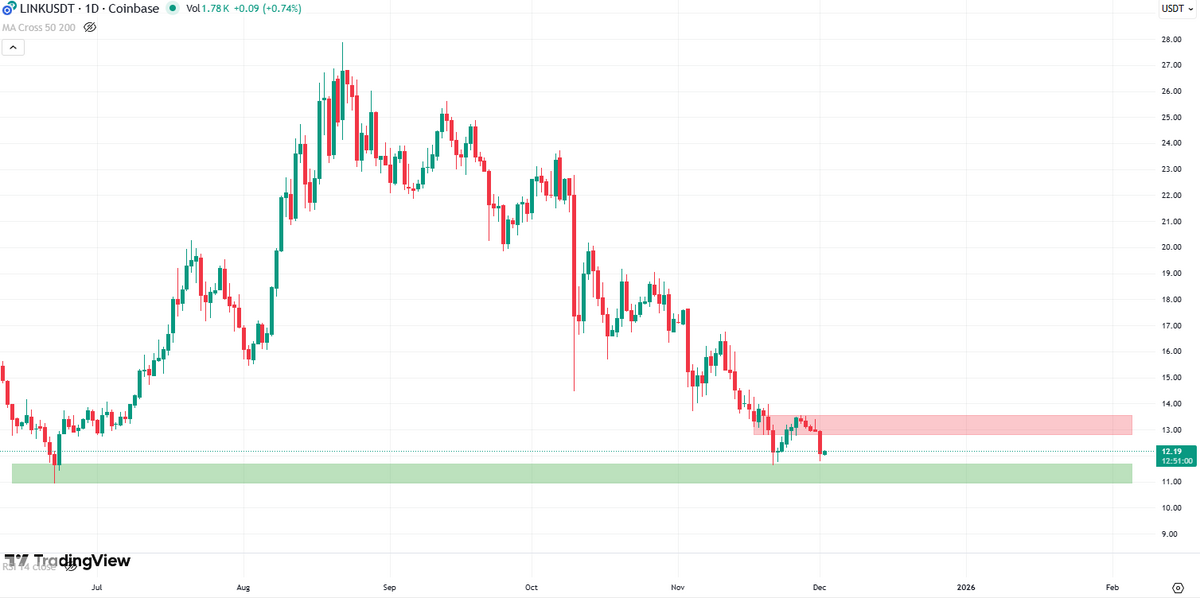
Chainlink ETF Set to Debut as LINK Slips Amid Market Weakness
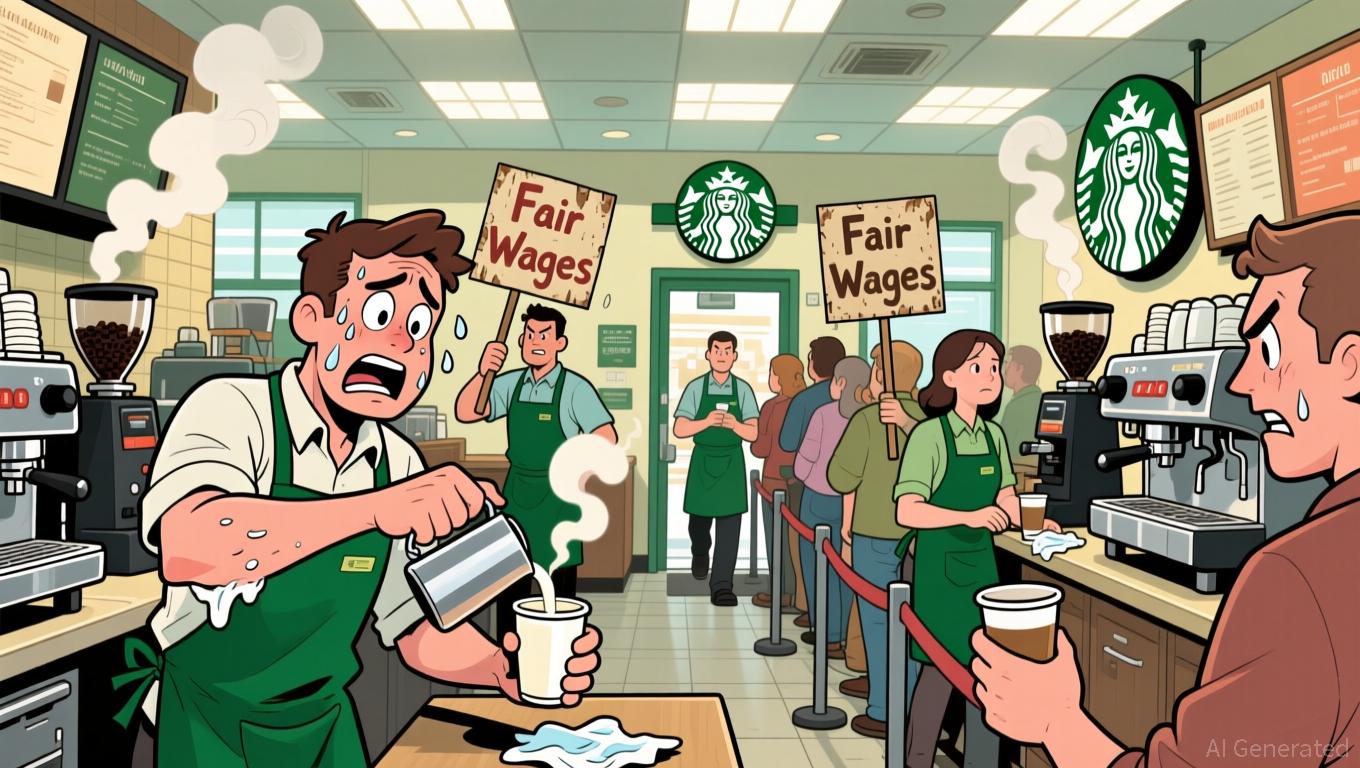
Striking baristas win $38.9 million in compensation, yet contract disputes continue
- Starbucks settles NYC Fair Workweek Law violations for $38.9M, including $35.5M restitution to 15,000+ workers. - Striking baristas demand collective bargaining amid ongoing labor disputes and unionization efforts at 550 stores. - Mayor-elect Mamdani and Sen. Sanders join protests, framing demands as moral issues against corporate resistance. - Settlement addresses 500,000 scheduling violations since 2021, with workers receiving $50/week compensation. - Starbucks defends labor law complexity but faces cr
Trending news
MoreCrypto prices
More





