Investing in People: Maximizing Returns from Higher Education in a Tech-Focused Economy
- Higher education ROI is shifting as tech-driven economies prioritize vocational training for faster, lower-cost career pathways. - Certificate programs show short-term financial gains over bachelor's degrees, but long-term returns favor traditional degrees according to Utah Foundation data. - Corporations now treat human capital as a strategic asset, investing in AI-driven training to bridge skill gaps in emerging fields like cybersecurity. - Macroeconomic growth relies on aligning education with tech de
The Changing Landscape of Education and Workforce Investment
As technological advancements rapidly transform industries, the traditional value of a four-year college degree is being reevaluated. Once considered a reliable route to financial security, conventional higher education now faces competition from vocational and technical programs that offer faster and more cost-effective entry into the job market. This shift signals a broader reconsideration of how both societies and businesses invest in developing talent for a technology-centric world.
Assessing the Modern Value of Higher Education
Recent research reveals a complex picture regarding the financial benefits of higher education. In Utah, certificate programs at public technical colleges provide impressive short-term financial returns, with a 10-year net present value surpassing $350,000—outperforming many four-year colleges due to lower tuition and quicker workforce entry, according to Utah Foundation data. However, over a 40-year span, bachelor's degree holders tend to see greater cumulative earnings, highlighting the enduring benefits of extended study, as noted by the Utah Foundation.
Across the United States, about 70% of graduates from public universities achieve a positive return on investment within ten years, though this rate varies by region—from 82% in Washington, D.C., to 53% in North Dakota, based on financial research. These differences underscore the importance of factors like program affordability, alignment with job market needs, and local economic conditions.
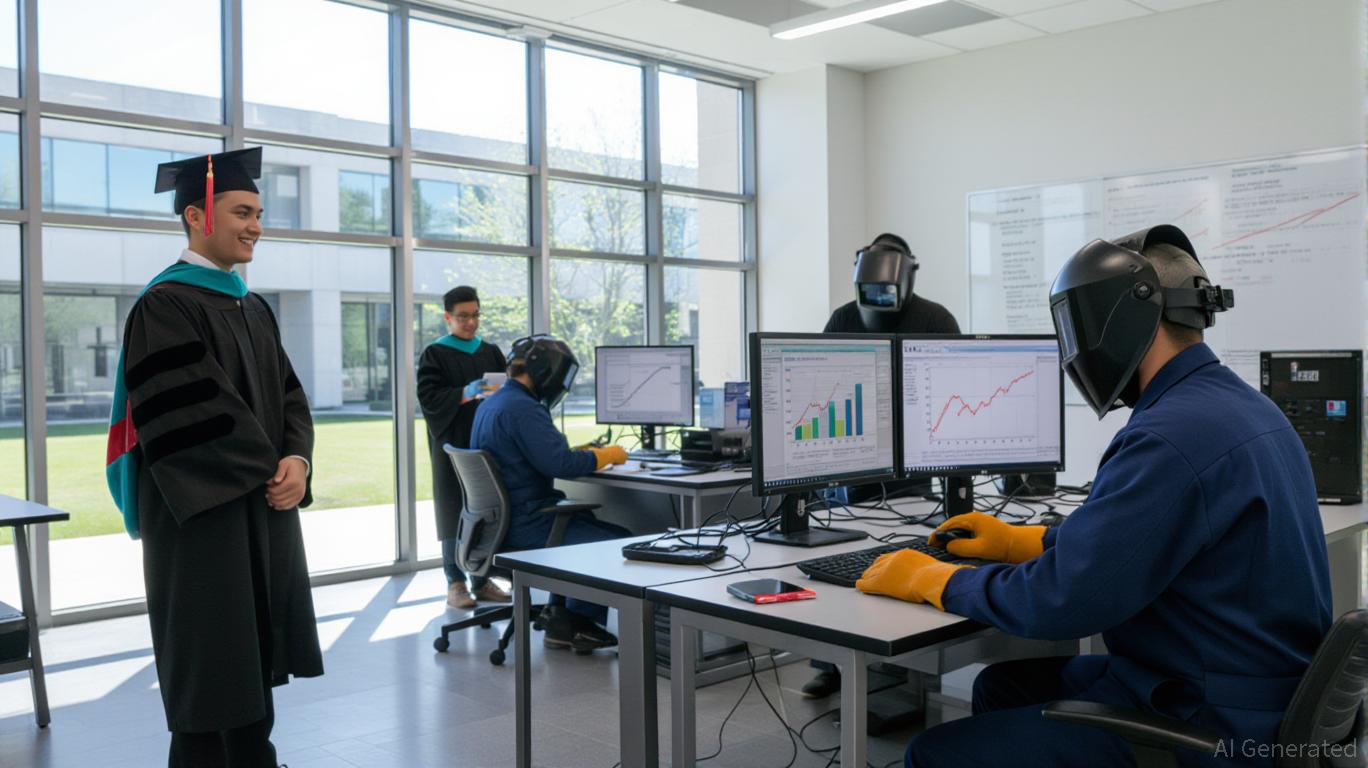
Colleges are under increasing pressure to prove their value, prompting institutions such as Michigan State University to partner with industry leaders, update curricula, and expand internship opportunities to better prepare students for the workforce, according to financial analysis. Nevertheless, a 2025 survey found that 52% of recent graduates are employed in roles that do not require a degree, highlighting a disconnect between academic programs and labor market demands.
Vocational Education: A Promising Alternative
Technical and vocational training is emerging as a strong alternative, especially in fields like healthcare, information technology, and skilled trades. These programs typically last one to two years, allowing students to start their careers quickly, often with little debt and competitive salaries. For example, trades such as plumbing and electrical work can lead to median annual incomes of $60,000 to $75,000 within a few years, according to industry reports. This approach not only minimizes financial risk but also helps address workforce shortages in essential sectors, providing a swift path to upward mobility.
Corporate Strategies for Talent Development
As workforce needs evolve, companies are rethinking how they invest in their employees. The 2025 Global Human Capital Trends report from Deloitte highlights a shift: human capital is now seen as a strategic resource rather than just an expense, according to Deloitte research. Businesses are increasingly adopting AI-powered HR technologies to boost employee performance, foster innovation, and support well-being, with global investment in HR tech rising by 60% year-over-year, as reported by SHRM analysis. This trend reflects a growing recognition that enhancing workforce skills through advanced training and technology is vital for maintaining a competitive edge.
Investments in AI-driven education and training have been directly linked to economic growth, according to scientific research. Companies are focusing on programs that close skill gaps in emerging areas like cybersecurity and data science, ensuring their teams remain adaptable in a rapidly changing environment.
Broader Economic Impact
On a larger scale, investing in higher education—especially in technology-related fields—serves as a powerful driver of economic growth. Digital transformation, fueled by strong investments in human capital, leads to greater innovation and productivity, supporting high-quality economic development, according to research findings. Educational institutions are responding by revising their financial strategies to better match labor market requirements, aiming not only for efficiency but also for cultivating a workforce capable of advancing technological progress and national competitiveness.
Summary
The financial return on higher education is no longer uniform. While bachelor's degrees continue to offer significant long-term benefits, vocational training presents a high-value alternative for certain career paths. The key challenge for businesses and policymakers is to align educational investments with the evolving demands of a technology-driven economy. By viewing human capital as a strategic asset—whether through traditional degrees, technical certifications, or AI-enhanced learning—societies can foster sustainable economic growth and ensure both individuals and organizations succeed in an age of constant innovation.
Disclaimer: The content of this article solely reflects the author's opinion and does not represent the platform in any capacity. This article is not intended to serve as a reference for making investment decisions.
You may also like
How CFTC-regulated platforms such as CleanTrade are transforming clean energy into a new category of tradable assets
- CFTC-approved CleanTrade transforms clean energy derivatives into standardized, liquid assets via its SEF platform, unlocking $16B in trading volume within two months. - By standardizing VPPAs/RECs and offering real-time analytics, CleanTrade bridges sustainability and profitability for institutional investors seeking ESG-aligned opportunities. - Early adopters like Cargill leverage CleanTrade to hedge energy costs while addressing fragmented markets, accelerating a $125T global clean energy derivatives

The Emergence of a Vibrant Clean Energy Market: How REsurety's CleanTrade Platform is Transforming Institutional Investments and ESG Approaches
- REsurety's CleanTrade platform, CFTC-approved for clean energy swaps, is transforming the market by enabling institutional trading of renewable assets with liquidity and transparency. - It addresses historical illiquidity in VPPAs/RECs through standardized contracts and real-time pricing, reducing transaction times and enabling $16B in notional value within two months. - The platform integrates ESG metrics with financial analysis, supporting 84% of institutional investors' growing demand for decarbonizat

COAI's Significant Recent Drop: Should Investors See This as a Chance to Buy or a Cautionary Signal?
- COAI's sharp stock decline sparks debate over short-term volatility vs. structural risks in South Africa's coal sector. - Weak domestic coal supply chains, US tariffs, and governance gaps amplify operational risks for export-dependent COAI. - Unclear AI policy implementation and media credibility issues deepen investor skepticism about COAI's transparency and adaptability. - Structural challenges including infrastructure bottlenecks and low AI adoption rates suggest the decline may reflect systemic indus

3 Future-Proof Cryptos to Add to Your Portfolio for 2026 — LINK, AVAX, and ALGO