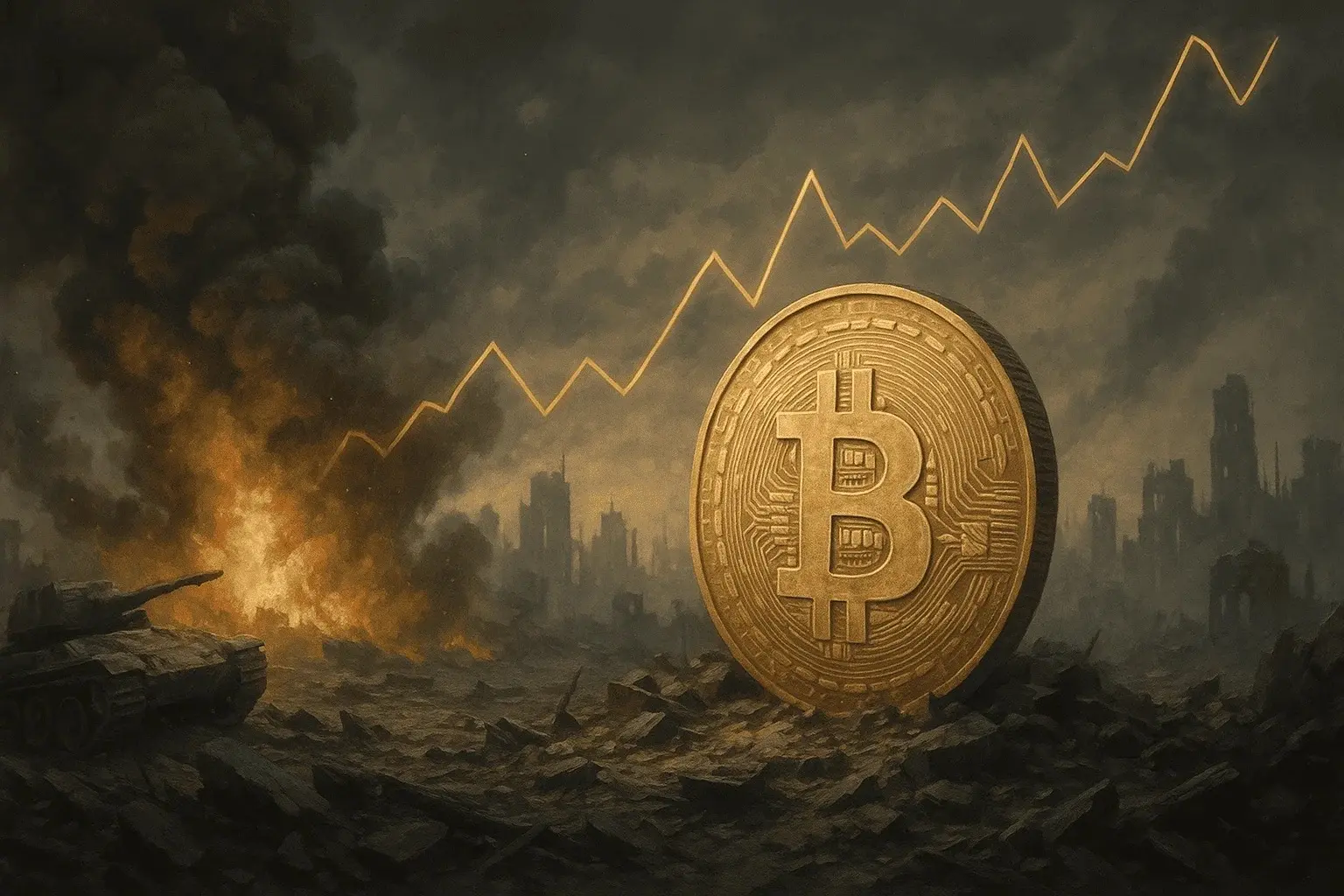
At the end of 2025, Binance founder Zhao Changpeng (CZ) challenged one of the crypto world’s most robust consensuses at the Bitcoin Middle East Conference. He publicly stated that the code-driven “four-year halving cycle” may have already failed, and an unprecedented “supercycle” could be on the horizon.
This statement is not unfounded; it precisely pierces the market’s collective obsession with simple historical patterns, revealing that Bitcoin’s underlying narrative is undergoing a fundamental paradigm shift from “cyclical pulses” to “structural trends.” The driving force has shifted entirely from miners’ hash rate competition to the deep-sea game of global capital and macro tides.

I. The Halving Cycle: The “Holy Grail” Once Worshipped, Now to Be Abandoned
For more than a decade, Bitcoin’s “four-year cycle” has acted like a precise tide chart, dominating every wave of market frenzy and despair. This rhythm is rooted in Satoshi Nakamoto’s original design: every 210,000 blocks (about four years), mining rewards are halved.
● The Echoes of History: The three halvings in 2012, 2016, and 2020, without exception, triggered super bull markets in the subsequent 12-18 months, with prices rising by one or two orders of magnitude. This “scarcity encoding–market feedback” model is simple and powerful, becoming the “bible” for all participants planning miner upgrades and investment cycles.
● The Logical Foundation: The core of this theory lies in the certainty of supply shock. Halving directly and abruptly cuts the flow of new coins. Assuming demand remains constant or grows, this inevitably drives price revaluation. This model, driven purely by internal protocol, made Bitcoin for a long time resemble an isolated economic experiment.
However, any model’s validity is based on its key assumptions not being overturned. As Bitcoin’s market cap surpassed 1 trillion USD and spread deep into the veins of mainstream financial systems, the gravity of the external world could no longer be ignored. The old pendulum is failing in a much larger gravitational field.
II. The New Dominators: Three Real Engines Driving the “Supercycle”
The “supercycle” is not just a longer bull market, but an entirely new price formation mechanism. It means Bitcoin’s pricing power has shifted from internal preset programs to external, complex, sustained, and massive real demand. This is driven by three irreversible engines.
1. Institutionalization: From Marginal Flow to the Anchor of Stability
The approval of the US spot Bitcoin ETF in 2024 is a landmark financial engineering event. It has built a compliant channel for trillions of dollars of traditional capital to flow into Bitcoin, fundamentally changing the nature of market funds.
● Qualitative Change in Capital Structure: What ETFs bring is not “smart money,” but “lazy money.” Allocations by pension funds, sovereign funds, and insurance assets are programmatic and rebalancing-driven. They do not study the halving schedule, only focusing on long-term allocation ratios for asset classes. This demand is stable and sustained, completely decoupled from the halving rhythm.
● “Permanent Lock-up” of Supply: Public companies like MicroStrategy purchase Bitcoin as a strategic reserve asset for their balance sheets. This behavior is not about buying low and selling high, but rather a strategic “removal” of circulating supply. According to on-chain data, the proportion of “long-term holders” whose coins have not moved for over a year has repeatedly hit record highs, forming a rigid support for prices on the downside.
2. Macrofactorization: Becoming the Digital Gauge of Global Liquidity
When Bitcoin’s correlation with the Nasdaq index often exceeds that of gold, it can no longer remain outside the global macro narrative.
● Hedging Against Fiat Depreciation: In the post-pandemic era where major central banks’ balance sheets are constantly expanding, Bitcoin’s absolute scarcity algorithm stands in stark contrast to the potential over-issuance of sovereign currencies. It is no longer just “digital gold,” but also a “call option” on the devaluation of modern monetary system credit. Its demand strength is deeply tied to global (especially US) real interest rate expectations and fiscal health.
● A Multidimensional Tool in Geopolitics: In an international reality where financial sanctions are normalized and capital controls are weaponized, the neutrality and censorship resistance of the Bitcoin network give it unique strategic value. This demand is hard to quantify with traditional models, yet injects a unique “risk premium” into the price.
3. Utilitarianization: From Storage Protocol to Foundational Layer Network
The value storage narrative is already powerful, but the ecosystem’s extension is building a more robust second growth curve.
● Layer 2 Breakthroughs: The steady growth of Lightning Network channel capacity and payment volume, along with explorations of smart contract solutions like RGB and BitVM, are slowly but surely breaking the utility curse of “Bitcoin network congestion and high fees.” It is evolving from a single settlement layer to a programmable foundational layer for the value internet.
● The Cornerstone of Digital Civilization: Having undergone multiple extreme market and political stress tests, the Bitcoin network’s security, decentralization, and resilience have been ultimately validated. Against the global backdrop of rising digital sovereignty awareness, its consensus as a neutral and open digital infrastructure is taking root among technology and thought leaders, giving rise to holding motivations that transcend price faith.
III. Paradigm Showdown: The Tug-of-War Between Cyclical Pendulums and Trend Waves
The alternation of old and new paradigms is playing out sharply in current market data.
● The “Transformation” of Volatility: Traditional cycles are accompanied by emotional swings from extreme greed to utter despair, with volatility showing steep peaks and valleys. In the early stages of the “supercycle,” volatility appears “smoothed out” but “prolonged”. Sharp single-day crashes are reduced, but mid-level corrections lasting several weeks triggered by macro events are more common, as institutional investors conduct programmatic risk-driven sell-offs.
● The “Failure” and “Rebirth” of Indicator Systems: Previously accurate on-chain indicators, such as MVRV (market value to realized value ratio), have repeatedly breached their top thresholds. Because the daily net inflows from ETFs, as a new “external realized value” invisible on-chain, continuously push up the bottom. Analysts must creatively integrate traditional financial capital flow data with on-chain behavioral data to see the full picture.
● The “Demotion” of the Halving Event: The halving has not lost its significance, but its role has shifted from being the “director” of bull markets to an important “press conference” during long-term bull markets. It remains a core ritual reinforcing the scarcity narrative, but the subsequent price trajectory will be determined more by prevailing macro liquidity (such as Federal Reserve interest rate policy) and the pace of institutional capital allocation at the time.
IV. Data Testimony: How Old Patterns Collapse in the New Reality
Theoretical debates require data validation. There are at least three current market phenomena that clearly point to structural change:
1. Correlation with US Stocks Crossing the Threshold: During the 2023 banking crisis and afterwards, the rolling correlation between Bitcoin and the S&P 500 index has repeatedly been significantly positive and sustained for longer periods. This shows that systemic risk and liquidity changes have become more immediate and powerful short-term price drivers than the halving.
2. “Hoarding” Behavior Crossing Cycles: Glassnode data shows that regardless of price highs or lows, the number of non-zero addresses and long-term holder supply both remain on a steady upward trajectory. This proves that a large base of holders driven by faith and long-term allocation has formed, weakening cyclical selling pressure.
3. The Decline of Miner Influence: Halving directly impacts miner revenue, and historically, miner sell-offs have been a major source of pressure at cycle bottoms. Now, with diversified institutional buying channels and miners themselves managing risk in advance through financial tools (such as futures hedging), the marginal impact of miner selling pressure on the overall market has significantly decreased.
V. Navigating the New Map
CZ’s warning is a clear whistle. It does not mean the road to the future will be smooth, but rather declares that the era of blindly navigating with old charts is over. The essence of the “supercycle” is the inevitable stage after Bitcoin’s coming of age—it must learn to survive and be priced in a complex, interconnected, and multi-variable global financial ecosystem.
For everyone in the market, the new action guide is already clear:
● For investors: The importance of the “macro interest rate cycle” should be elevated to the same or even higher level than the “halving cycle.” Watching the Federal Reserve’s balance sheet and the US stock volatility index (VIX) is as important as monitoring hash rate.
● For builders: Opportunities in the Bitcoin ecosystem are expanding from pure financial speculation to underlying financial protocol innovation (such as asset issuance and collateralized lending) based on its security.
● For observers: To understand Bitcoin, one must also understand global monetary policy, technological progress, and geopolitics. It has become a digital prism reflecting the world’s complexity.
Ultimately, Bitcoin may not have lost its cycle, but has instead been incorporated into a larger and more magnificent economic cycle. Its heartbeat has begun to resonate in sync with the heart of the world economy. This transformation from “code rhythm” to “world resonance” is the truly exciting super narrative behind the “supercycle.”