Clean Energy Market Fluidity and the Emergence of REsurety's CleanTrade Solution
- CFTC's 2025 approval of REsurety's CleanTrade as a SEF marks a regulatory breakthrough for clean energy trading infrastructure. - The platform addresses $16B+ in pent-up demand by providing liquidity, transparency, and institutional-grade safeguards for VPPAs, PPAs, and RECs. - CleanTrade's integration of carbon tracking analytics and ESG alignment tools enables institutional investors to quantify environmental impact alongside financial returns. - By resolving counterparty risks and enabling cross-asset
Clean Energy Trading Enters a New Era
The renewable energy industry has faced a persistent challenge: despite rising interest in sustainable power and ESG-driven investments, the markets for both virtual and physical power purchase agreements (VPPAs and PPAs) have remained disjointed, lacking liquidity, and clouded by regulatory ambiguity. This landscape is undergoing a dramatic transformation in 2025, following the Commodity Futures Trading Commission’s (CFTC) decision to grant CleanTrade Swap Execution Facility (SEF) status. Enabled by REsurety’s CleanTrade platform, this regulatory breakthrough is more than a technical change—it marks a fundamental shift in how clean energy assets are exchanged, managed, and valued.
Building the Foundation for a Transparent Market
Institutional investors have historically been reluctant to expand their clean energy holdings, largely due to the absence of a unified and open marketplace. Traditionally, VPPAs and PPAs—which help companies and utilities secure long-term renewable energy pricing—were arranged through private, bilateral deals. This approach heightened counterparty risk and restricted market fluidity, discouraging broader participation. The CFTC’s 2021 advisory, which imposed strict limitations on SEF applications, further complicated the regulatory environment and stifled innovation.
The approval of CleanTrade as a SEF in late 2025 has become a pivotal moment. Now operating under the Commodity Exchange Act, the platform offers a regulated environment for trading VPPAs, PPAs, and renewable energy certificates (RECs), providing institutional-grade protections akin to those found in established markets such as the Intercontinental Exchange (ICE). This regulatory clarity has restored confidence and brought a new level of legitimacy to clean energy trading.
Unprecedented Liquidity: $16 Billion in Early Trades
Within its first two months, CleanTrade facilitated $16 billion in notional trading volume, highlighting the substantial demand for a transparent and liquid marketplace.
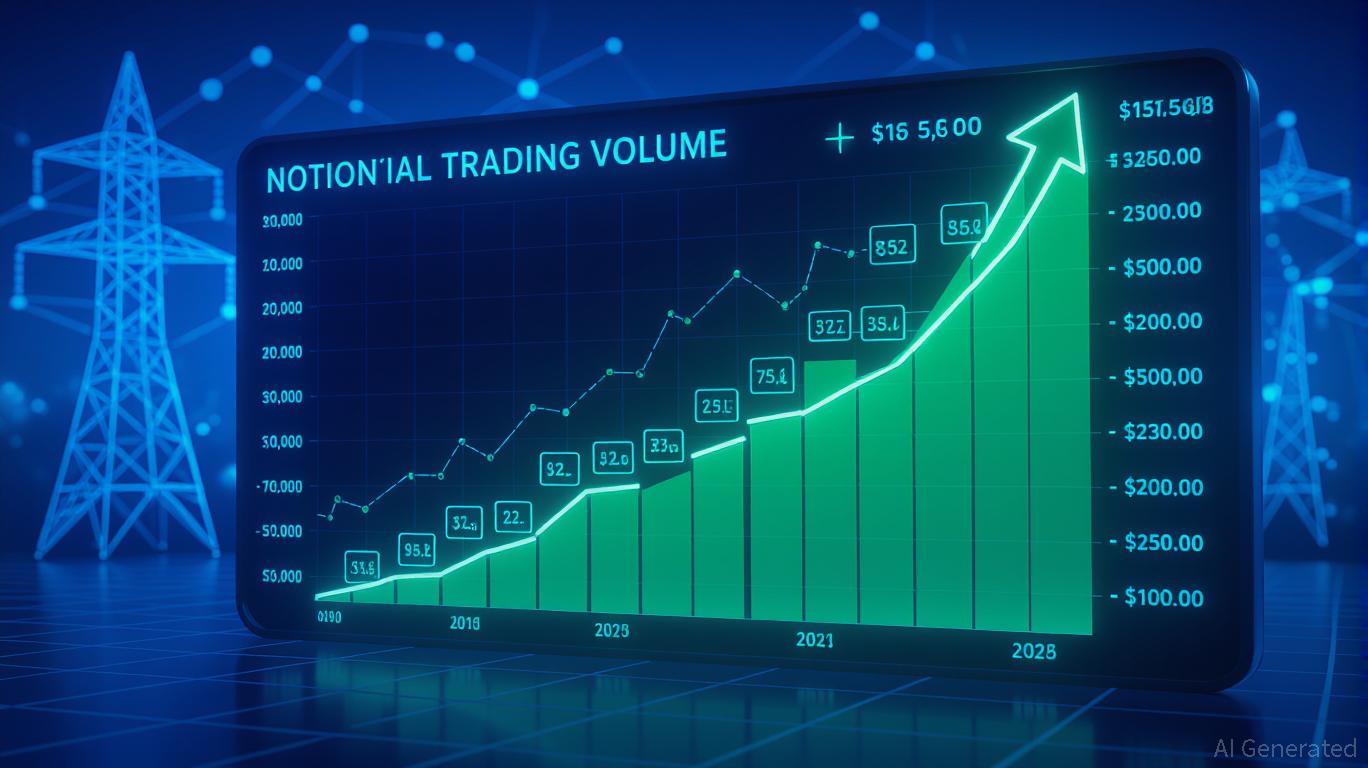
This surge was fueled by leading institutional participants, including Cargill and Mercuria, who conducted the platform’s inaugural trades. By consolidating trading activity, CleanTrade has resolved the sector’s “dark pool” issue, enabling immediate price discovery and minimizing the risks associated with private negotiations.
Another key to the platform’s success is its integration of sophisticated environmental analytics. With REsurety’s CleanSight tool, users can monitor project-specific carbon impact, ensuring compliance with ESG standards and reducing the risk of greenwashing. For institutional investors, this means not only greater financial certainty but also the ability to demonstrate measurable environmental benefits—an increasingly important requirement in the age of ESG accountability.
Institutional Capital Meets ESG Demands
The CFTC’s evolution from a rigid 2021 advisory to a more flexible, case-by-case approach for SEF applications has opened the door for greater institutional involvement. By easing compliance concerns, the agency has empowered a diverse array of investors—from pension funds to hedge funds—to allocate capital with greater assurance. CleanTrade’s SEF framework enables these investors to hedge against energy price swings, diversify their holdings, and pursue cross-asset arbitrage strategies that were previously out of reach.
For portfolios focused on ESG, the platform’s transparency—such as real-time carbon tracking and enhanced counterparty risk controls—meets the growing demand for verifiable sustainability claims. As one industry expert observed, “This is more than just energy trading; it’s about trading measurable impact. CleanTrade transforms clean energy from a niche investment into a quantifiable, tradable commodity.”
The Future: Clean Energy as a Mainstream Asset Class
CleanTrade’s emergence signals more than just a technological or regulatory milestone—it represents the dawn of a new era. By tackling the challenges of liquidity, transparency, and ESG alignment, the platform is paving the way for clean energy derivatives to be recognized as a standard asset class. This shift could unlock trillions in institutional investment for decarbonization, accelerating the global move toward a low-carbon economy.
Nonetheless, obstacles remain. The ongoing integration of physical and virtual markets will require further innovation, and regulatory frameworks must keep pace with rapid industry changes. Still, CleanTrade’s early achievements demonstrate that the necessary infrastructure now exists to transform the promise of clean energy into a scalable and investable opportunity.
Disclaimer: The content of this article solely reflects the author's opinion and does not represent the platform in any capacity. This article is not intended to serve as a reference for making investment decisions.
You may also like
Hyperliquid (HYPE) Price Rally: Key Factors Behind Institutional Embrace in 2025
- Hyperliquid's HIP-3 upgrade enabled permissionless perpetual markets, driving $400B+ trading volume and 32% blockchain revenue share in 2025. - Institutional adoption accelerated via 90% fee reductions, TVL of $2.15B, and partnerships with Anchorage Digital and Circle's CCTP V2. - HYPE's deflationary model (97% fees fund buybacks) and $1.3B buyback fund fueled price surges, mirroring MicroStrategy's Bitcoin strategy. - Regulatory alignment with GENIUS Act/MiCAR and USDH stablecoin compliance strengthened

HYPE Token's Unpredictable Rise: Analyzing Altcoin Hype After the 2025 Market Overhaul
- HYPE token's 2025 volatility surged with Hyperliquid's $47B weekly trading volume, driven by whale accumulation and $340M buybacks. - Institutional support via HIP-3 protocol upgrades boosted open interest to $15B, but technical indicators signaled short-term fragility. - Regulatory shifts in UAE and Fed policy amplified risks, while social media FOMO triggered extreme price swings between $41.28 and $27.43. - Market share erosion to <20% and $11M liquidations exposed structural weaknesses despite instit

The Value of Including CFTC-Approved Clean Energy Marketplaces in Contemporary Investment Portfolios
- CFTC-approved clean energy platforms like CleanTrade enable institutional investors to hedge risks, diversify portfolios, and align with ESG goals through renewable energy derivatives. - CleanTrade's $16B in two-month notional value highlights urgent demand for scalable, transparent infrastructure to access low-carbon assets with real-time analytics and risk tools. - These platforms reduce market fragmentation by standardizing VPPAs, PPAs, and RECs, offering verifiable decarbonization pathways and dynami

The Influence of Educational Institutions on the Development of AI-Powered Industries
- Farmingdale State College (FSC) invests $75M in AI infrastructure , doubling tech enrollment and launching an AI Management degree blending technical and business skills. - Industry partnerships with Tesla and cybersecurity firms, plus 80% graduate employment rates, highlight FSC's success in aligning education with AI-driven workforce demands. - FSC's RAM mentorship program and NSF-funded AI ethics research foster interdisciplinary innovation, addressing supply chain and healthcare challenges through ap