PENGU Token Technical Review: Managing Brief Price Fluctuations and Shifts in Momentum
- PENGU token's November 2025 analysis shows conflicting bearish RSI divergence and bullish MACD/OBV momentum. - Compressed Bollinger Bands ($0.00951-$0.0136) and low ATR signal potential breakout risks above $0.0235 resistance. - Whale accumulation ($9.4M) and ETF approval prospects contrast with $7.68M short positions and macroeconomic headwinds. - Mixed candlestick patterns and $273K institutional inflows suggest short-term reversal risks amid fragile market equilibrium.
PENGU Token: Navigating Volatility and Market Signals
The PENGU token, which serves as the cornerstone of the Pudgy Penguins ecosystem, has recently become a focal point for both traders and investors aiming to benefit from short-term price swings and momentum shifts in the cryptocurrency market. As of November 2025, a blend of technical indicators and blockchain data paints a complex picture—one that combines signs of bearish divergence with hints of emerging bullish momentum. This overview brings together the latest findings to assess PENGU’s near-term prospects and potential price movements.
Technical Indicators: Conflicting Signals from RSI and MACD
Throughout late November 2025, the 14-day Relative Strength Index (RSI) for PENGU has fluctuated between bearish and neutral zones. A recent reading of 38.705 points to downward momentum, further supported by 12 bearish signals from moving averages. In contrast, another report cites an RSI of 50.89, reflecting a more balanced market stance. This inconsistency highlights the token’s precarious position, offering opportunities for short-term traders to capitalize on overbought or oversold conditions.
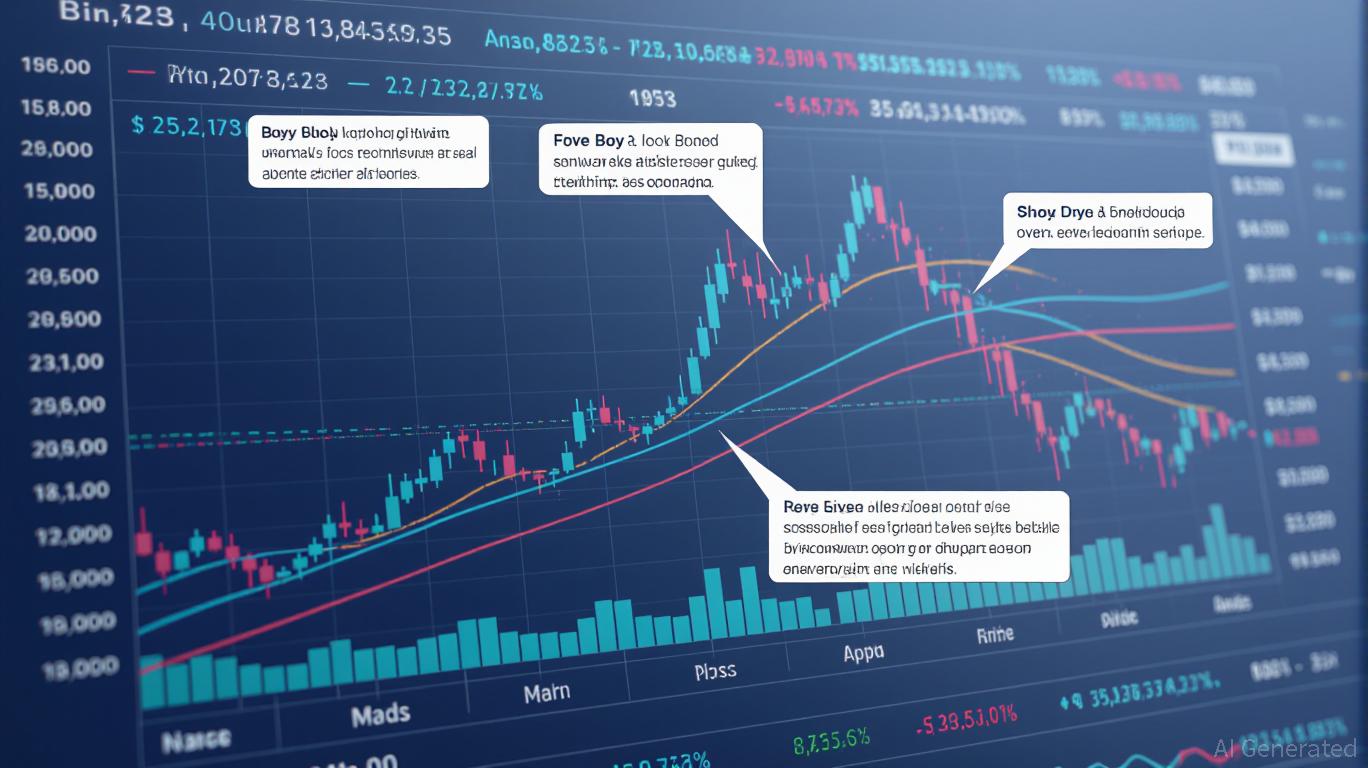
Meanwhile, the Moving Average Convergence Divergence (MACD) indicator has shifted into positive territory, suggesting that momentum may be stabilizing. This is further supported by the On-Balance Volume (OBV), which has shown increased buying interest since November 4, 2025. The combination of a positive MACD crossover and rising OBV hints at a possible short-term reversal, though traders should remain wary of the underlying bearish signals from the RSI.
Bollinger Bands and Volatility: Tight Ranges and Breakout Potential
During November 2025, PENGU’s price has been confined within narrow Bollinger Bands, with upper and lower limits at $0.0136 and $0.00951 respectively. The token has hovered just above the 14-day Simple Moving Average (SMA) at $0.0115, indicating a slight bearish tendency. The limited price range—between 0.02 and 0.03—signals low volatility, which often precedes sharp price movements.
The Average True Range (ATR) has dropped to an exceptionally low value of 0, reflecting minimal price changes. Such compressed volatility frequently sets the stage for significant breakouts or breakdowns. Currently, PENGU is testing a crucial resistance at $0.0235 after emerging from a falling wedge pattern. If the token can maintain momentum above this threshold, a rally of up to 60% toward $0.0188 could be triggered.
Candlestick Patterns and Volume: Indications of a Possible Reversal
Recent candlestick analysis shows that PENGU has experienced a 30.5% drop within a tight price corridor of $0.01454 to $0.01666, followed by a breakout from a descending channel. The TD Sequential indicator has issued buy signals, and the cumulative volume delta (CVD) points to declining selling pressure. These factors suggest the possibility of a short-term reversal, especially if institutional investors and large holders—who accumulated approximately $273,000 in November—continue to support the token.
Nevertheless, hidden bearish divergence in the RSI and a reduction in large holder positions raise the risk of a retreat to $0.0093. Sudden spikes in trading volume during support tests add further complexity, as they may signal both buying and selling fatigue. Market participants should also consider broader economic risks, such as central bank policy changes and geopolitical events, which could heighten volatility.
On-Chain Data and Whale Behavior: Accumulation Versus Short Pressure
Blockchain analytics reveal a 30% uptick in active addresses, indicating increased participation from retail investors. This stands in contrast to the $7.68 million in leveraged short positions, which could intensify downward moves if liquidations occur. Large holders have been active as well, with accumulation and exchange withdrawals totaling $9.4 million. While these outflows may reflect long-term confidence, they also underscore the token’s vulnerability to significant market moves by major players.
Institutional Factors and Market Risks
The potential approval of a PENGU-focused ETF could serve as a major catalyst, drawing institutional funds into the asset. However, this optimism is tempered by broader economic challenges, including tighter monetary policy and ongoing geopolitical uncertainties, both of which could dampen risk appetite in the crypto sector.
Summary: Balancing Opportunity with Caution
PENGU’s technical outlook for November 2025 reveals a delicate balance between bearish signals and the potential for bullish momentum. While indicators like the RSI and Bollinger Bands point to a cautious stance, the positive trends in MACD and OBV offer hope for a turnaround. Traders should keep a close watch on resistance levels, volatility shifts, and whale activity to anticipate the token’s next move. At present, PENGU remains a speculative asset with significant risk and reward, making disciplined risk management and timely analysis essential for anyone involved.
Disclaimer: The content of this article solely reflects the author's opinion and does not represent the platform in any capacity. This article is not intended to serve as a reference for making investment decisions.
You may also like
Investing in EdTech and Skills Training to Empower Tomorrow's Workforce
- Global high-growth sectors like AI, renewables, and biotech are reshaping workforce demands, driving rapid STEM education evolution through edtech and vocational training. - AI-powered adaptive learning and immersive VR/AR tools now personalize education, with 36% of 2024 edtech funding directed toward workforce-specific skill development. - Vocational programs and industry partnerships (e.g., U.S. EC4A, EU Green Deal) are closing STEM skills gaps, creating direct pipelines to 16.2M+ clean energy jobs by

The Rising Influence of EdTech on Career-Focused Investment Prospects
- Global EdTech market grows at 20.5% CAGR to $790B by 2034, driven by STEM/digital skills demand. - STEM workers earn 45% higher wages; 10.4% occupation growth vs 4.0% non-STEM, reshaping labor markets. - 2025 EdTech VC investments show 35% YoY decline, concentrating on AI tools and scalable upskilling platforms. - MENA/South Asia EdTech sees 169% funding growth, addressing equity gaps through global platforms. - AI-driven EdTech and M&A activity (e.g., ETS-Ribbon) highlight sector's shift toward outcome-
KITE Price Forecast Following Listing: Managing Post-IPO Fluctuations and Institutional Investor Outlook
- Kite Realty Group (KITE) fell 63% post-IPO despite strong retail occupancy and NOI growth, highlighting valuation disconnect between real estate fundamentals and tech IPO expectations. - Institutional sentiment split: COHEN & STEERS boosted holdings by 190% amid industrial pivot, while others divested $18. 3M , reflecting uncertainty over hybrid retail-industrial strategy execution. - Analysts remain divided on $24–$30 price targets, balancing KITE's 7.4% dividend increase and industrial shift against ma
The Increasing Importance of Blockchain Education for Strategic Growth in Emerging Markets
- Blockchain education in emerging markets is accelerating token adoption and financial inclusion by addressing technical barriers and fostering trust in decentralized systems. - Trust Wallet Token (TWT) enables low-cost remittances and DeFi access through gas discounts and fee reductions, targeting regions with weak traditional banking infrastructure. - Strategic partnerships like Trust Wallet-EBI and UNDP blockchain training programs amplify TWT's utility in governance, identity management, and cross-bor