HYPE Token Experiences Rapid Crypto Growth and Attracts Institutional Attention: Immediate Gains and Enduring Value Within Developing Token Ecosystems
- Hyperliquid's HYPE token surged 1,600% in 2025, driven by protocol upgrades, institutional validation, and retail speculation. - Institutional adoption accelerated via VanEck's ETF applications and $420M staking by Nasdaq-listed PURR , boosting token utility and governance confidence. - Ecosystem expansion into traditional finance and emerging markets, plus USDH stablecoin adoption, positions HYPE as a DeFi-mainstream finance bridge. - Risks include November 2025 token unlocks, macroeconomic volatility,
HYPE Token’s Explosive Growth in 2025: Drivers and Outlook
The HYPE token, integral to the Hyperliquid decentralized exchange (DEX), has witnessed a dramatic ascent in 2025, climbing more than 1,600% and reaching a high of $60 by the end of the year. This remarkable performance has been propelled by a combination of significant protocol enhancements, heightened retail trading activity, and a surge in institutional engagement. Although short-term momentum remains strong, the token’s enduring value and institutional uptake will depend on how it manages broader economic uncertainties, governance complexities, and shifting regulatory requirements.
Short-Term Surge: Technology Upgrades and Institutional Endorsement
Recent technical milestones have been pivotal to HYPE’s rapid appreciation. The introduction of HyperEVM and HyperCore in 2025 brought major improvements in transaction throughput and decentralization. Additionally, HIP-3 enabled the creation of permissionless perpetual markets, making the platform more attractive to both traders and developers.
These advancements coincided with a projected twelvefold increase in total value locked (TVL), soaring from $400 million to $5 billion, and offering liquidity providers an annual yield of 11%.
Institutional interest has further fueled HYPE’s rally. VanEck’s pending applications for HYPE staking ETFs in the U.S. and Europe signal a shift in institutional attitudes, potentially paving the way for greater participation from both retail and institutional investors. Meanwhile, Hyperliquid Strategy—a Nasdaq-listed company (ticker: PURR)—staked its entire 12 million HYPE tokens (valued at $420 million) via Anchorage’s nodes, generating an estimated $9.9 million in yearly interest. This move not only reduces the circulating supply but also demonstrates institutional confidence in HYPE’s governance and staking utility.
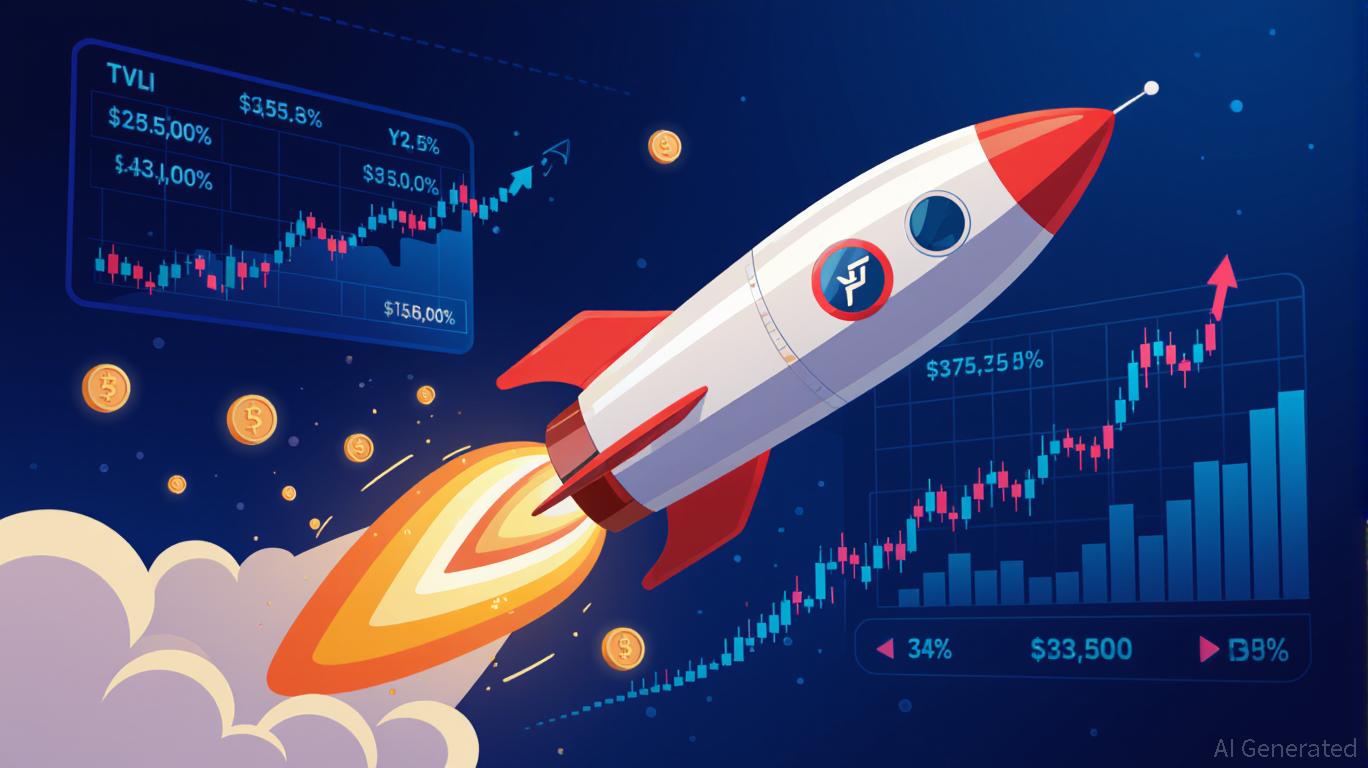
Retail traders have also contributed to the token’s price rally, with HYPE reaching $55.89 amid rising trading volumes and higher price floors. Analysts are now watching the $60–$70 range, with some predicting a possible move toward triple-digit prices. However, the token’s sensitivity to macroeconomic factors was highlighted by a 39.54% drop following a 2.3% PCE inflation report, underscoring its vulnerability to broader market shifts.
Long-Term Value: Expanding Ecosystem and Practical Use Cases
Hyperliquid’s ecosystem has grown beyond decentralized finance, with HYPE tokens now playing a role in traditional financial services and enterprise applications. The token is used for governance, staking, and transaction fee discounts, and its capped supply of 1 billion tokens (with 38.8% reserved for future emissions) supports a scarcity-driven value model.
Institutional collaborations are extending HYPE’s influence. Hyperliquid’s stablecoin, USDH, is being adopted by leading banks and asset managers for tokenized treasury and bond platforms, enabling instant settlements and enhanced liquidity. This trend is accelerating in 2025, with HYPE tokens also facilitating cross-border payments and syndicated loans in Africa, bypassing conventional banking hurdles and improving financial access in emerging markets. These advancements align with regulatory progress such as Europe’s MiCA framework, which standardizes tokenized securities and bolsters investor confidence, further driving institutional adoption.
On the technical front, Hyperliquid’s Layer 1 infrastructure can process up to 200,000 orders per second, securing a dominant 75% share of the decentralized perpetual trading market. The platform’s USDH stablecoin auctions and partnerships with organizations like Circle (through CCTP V2) further strengthen liquidity and security. The Hyperliquidity Provider (HLP) model, offering 11% annualized returns without directional risk, continues to attract both retail and institutional capital, supporting sustainable ecosystem growth.
Challenges: Risks and Regulatory Hurdles
Despite its achievements, HYPE faces notable risks. An upcoming token unlock on November 29, 2025, will release 2.66% of the total supply, raising concerns about potential sell pressure and transparency in governance. This event could introduce volatility, as evidenced by cautious institutional moves such as the 21Shares HYPE ETF application and the establishment of a $1 billion HYPE Digital Asset Treasury, which contrast with retail-driven market exuberance and highlight market fragmentation.
Regulatory compliance is a double-edged sword for Hyperliquid. While its S-1 filing with the SEC and partnerships with BlackRock and Stripe enhance its reputation among institutional investors, its selective approach to MiCA licensing in Europe excludes it from certain key markets, presenting both opportunities and challenges. Automated risk management tools, such as mechanisms to reduce exposure during periods of volatility, aim to stabilize the token, but debates over decentralization and governance persist.
Outlook: Weighing Growth Against Sustainability
HYPE’s recent surge is the result of technological progress, institutional backing, and retail enthusiasm. However, its future will depend on how effectively it navigates economic headwinds, manages token unlock events, and adapts to a fragmented regulatory environment. The token’s integration into both decentralized and traditional financial systems, along with ongoing ecosystem enhancements, positions it as a potential bridge between DeFi and mainstream finance.
For investors, the challenge lies in balancing the excitement of short-term gains with a careful evaluation of Hyperliquid’s capacity to maintain utility and robust governance. While reaching the $60–$70 range seems plausible, achieving even higher valuations will require overcoming structural obstacles and sustaining institutional trust in an increasingly regulated crypto landscape.
Disclaimer: The content of this article solely reflects the author's opinion and does not represent the platform in any capacity. This article is not intended to serve as a reference for making investment decisions.
You may also like
LUNA Drops 21.84% in 24 Hours as Legal Action Targets Do Kwon
- LUNA dropped 21.84% in 24 hours on Dec 7 but rose 44.74% over one month amid U.S. legal proceedings against Terraform Labs co-founder Do Kwon. - Prosecutors sought 12-year prison sentence for Kwon over Terra's $40B collapse, triggering 39% LUNA surge as traders speculated on legal outcomes. - Terra-related tokens like USTC (+78%) and LUNC (+19%) saw sharp gains as investors positioned ahead of December 11 sentencing hearing. - Legal uncertainty drove market volatility, with Kwon's potential 12-year sente

The Influence of Anthropological Research Approaches on Corporate Decision Processes: Cross-Disciplinary Investment Prospects in Innovation Led by the Humanities
- Anthropological methods are transforming business strategies by decoding human behavior, culture, and market dynamics through actionable insights. - Case studies like Intel's driver behavior analysis and Adidas' customer-centric redesign demonstrate tangible ROI in product innovation and brand loyalty. - Anthropology-driven education boosts cultural intelligence (CQ), with cross-cultural training linked to 2.3x higher AI implementation success rates and improved organizational cohesion. - Edtech and corp