ZEC Rises 4.81% After Major Investor Increases Long Position with 10x Leverage
- ZEC surged 4.81% in 24 hours to $330.5 amid a whale's 10x leveraged long position on HyperLiquid targeting $333.46. - The whale also holds 20x ETH and 5x DYDX longs but faces $2.7M total losses, highlighting risks of leveraged trading during crypto volatility. - Grayscale's ZEC ETF filing and Chainlink's ETF launch signal growing institutional interest in altcoins, potentially boosting ZEC liquidity and demand. - ZEC's 482.71% annual gain contrasts with 27.45% weekly drop, reflecting its cyclical nature
ZEC Sees Significant Price Fluctuations and Whale Activity
On December 3, 2025, ZEC experienced a 4.81% price increase within a single day, reaching $330.5. Despite this short-term gain, the cryptocurrency has seen a 27.45% decline over the past week and a 23.38% drop in the last month. However, looking at the bigger picture, ZEC has surged by 482.71% over the past year.
Major Whale Takes Aggressive Long Position on HyperLiquid
Blockchain data has revealed that a prominent investor, often referred to as a "whale," has made a substantial move in the Zcash (ZEC) market. This individual deposited 4.49 million USDC into HyperLiquid, using it to open a 10x leveraged long position at a target price of $333.46. This bold action suggests strong confidence in ZEC’s short-term prospects, even as the asset has shown considerable volatility recently.
Additionally, the whale has placed a buy order at $333.46, indicating a plan to increase their position if ZEC’s price continues to climb. Such a strategy is commonly employed to take advantage of minor price pullbacks in highly leveraged trades. The whale’s activity highlights ZEC’s ability to attract speculative capital, particularly during periods of market uncertainty and shifting liquidity.
Whale Maintains Leveraged Positions in ETH and DYDX Despite Heavy Losses
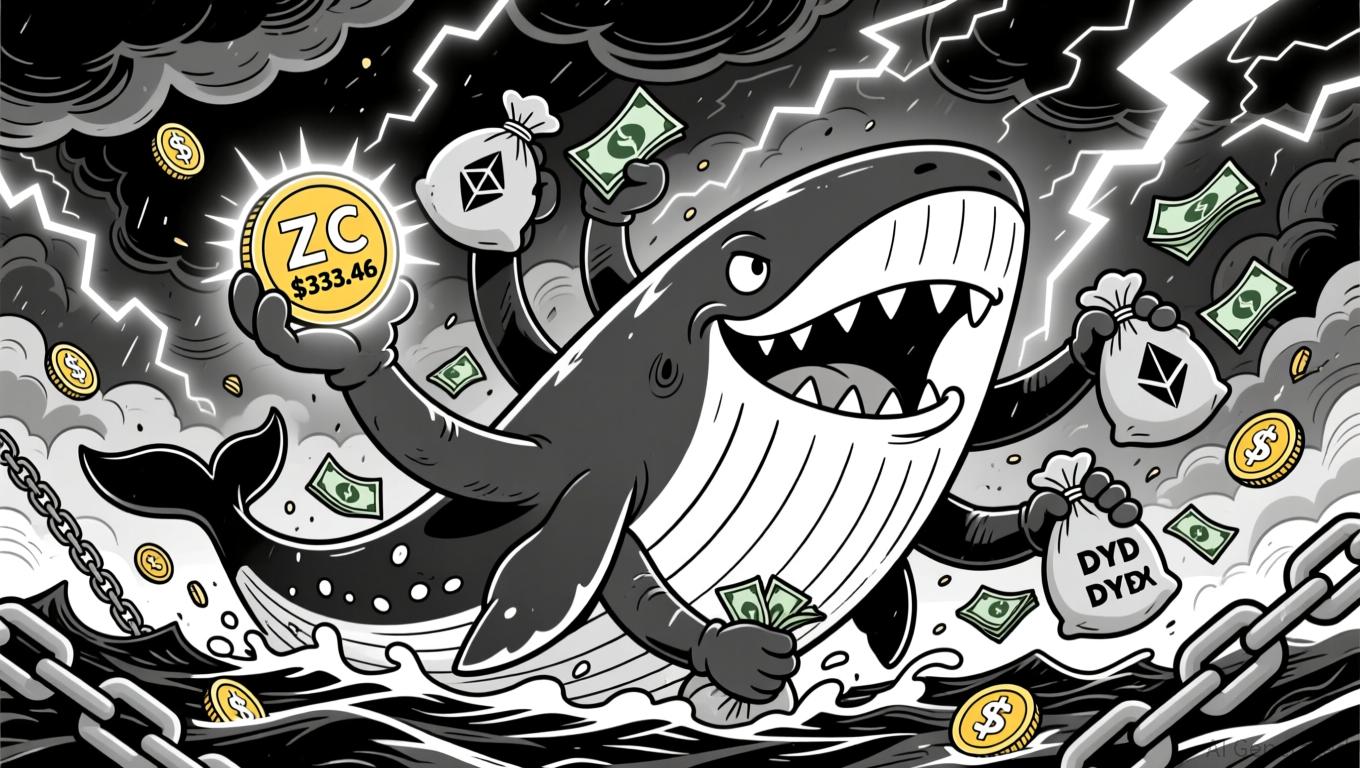
According to Onchain Lens, this same whale is also holding 20x leveraged long positions in ETH and 5x leveraged longs in DYDX. These trades suggest a broader strategy that involves hedging or scaling into multiple high-liquidity altcoins, even as the overall market sentiment remains bearish.
Currently, the whale’s account is showing an unrealized loss of $1.29 million and a total loss of $2.7 million, reflecting the significant risks associated with high-leverage trading, especially when several positions are exposed to downward price movements at once.
Market Dynamics: Volatility and Leverage Shape ZEC’s Trajectory
ZEC’s recent price movements—rising 4.81% in the past day, falling 27.45% over the last week, and soaring 482.71% in the past year—underscore its highly volatile nature. The whale’s decision to use 10x leverage at $333.46 suggests a belief that the recent bearish trend may be reversing or that ZEC is finding short-term support.
This aggressive approach is mirrored by other large traders on HyperLiquid, who are also adjusting their short positions in BTC, ETH, and ZEC. Such coordinated activity points to a market where major players are constantly repositioning in response to rapid price changes and evolving liquidity conditions.
Institutional Developments: ZEC ETF Filings and Broader Adoption
Grayscale Investments has recently submitted an application to the SEC for a ZEC ETF, joining a growing list of altcoin-focused ETFs such as those for Solana (SOL), Dogecoin (DOGE), and XRP. These new products are expected to make it easier for institutional investors to access ZEC and similar assets, potentially boosting both demand and liquidity over time.
Meanwhile, Chainlink (LINK) has already introduced its first spot ETF, signaling a wider movement toward ETF adoption within the crypto sector. Although ZEC’s ETF is still in the application stage, this development hints at its possible inclusion in future institutional offerings.
Summary: ZEC Remains a Magnet for High-Risk Leverage
The whale’s 10x leveraged long position in ZEC highlights the asset’s appeal to traders seeking to profit from rapid price swings. While the whale’s overall portfolio is currently underperforming, the ZEC trade remains open and could yield gains if the recent upward momentum persists.
ZEC’s 4.81% daily increase stands in stark contrast to its 27.45% weekly decline, emphasizing the asset’s sensitivity to leveraged trading and shifting market sentiment. As the crypto landscape evolves with new ETF products and greater institutional participation, the actions of large traders are likely to remain key indicators of short-term market direction.
Disclaimer: The content of this article solely reflects the author's opinion and does not represent the platform in any capacity. This article is not intended to serve as a reference for making investment decisions.
You may also like
Crypto Market Turns Green Overnight: What’s Happening?
Internet Computer's Rapid Rise: Key Drivers and What It Means for Long-Term Investors
- Internet Computer (ICP) surged 385% in November 2025, driven by Caffeine AI, Chain Fusion, and institutional partnerships. - Caffeine AI's no-code dApp platform and Chain Fusion's cross-chain interoperability expanded ICP's utility and developer adoption. - Institutional adoption via Microsoft/Azure and $237B TVL growth positioned ICP as a decentralized infrastructure leader in AI and DeFi. - Price forecasts range $4.4-$30 by 2025-2030, but risks include volatility, regulatory uncertainty, and unproven u

How Will the 2026 Federal Reserve Affect the Crypto Space?
To transition from the Powell era's technocratic caution to a more explicit policy framework aimed at reducing borrowing costs and advancing the President's economic agenda.

Bitcoin’s Sharp Decline: What Sparks Anxiety During a Bullish Market?
- Bitcoin's 2025 bull market collapsed 30% to $83,824 amid Fed policy shifts and liquidity contractions, defying typical risk-on dynamics. - A 0.72 correlation to Nasdaq 100 and $19B leveraged liquidation event exposed Bitcoin's vulnerability to macro risks and institutional sentiment shifts. - AI-driven algorithms and algorithmic feedback loops amplified volatility, with Treasury yields and dollar strength triggering cascading sales. - Market psychology metrics (Fear & Greed Index, stablecoin outflows) an