UAE's regulatory initiatives set the stage for a surge in institutional DeFi adoption
- DWF Labs commits $75M to DeFi projects enhancing institutional-grade infrastructure across Ethereum , BNB Chain, and Solana . - UAE's new Central Bank Law mandates licensing for DeFi protocols, balancing innovation with regulatory oversight and consumer protection. - Doma Protocol and ORA introduce liquid domain trading and cash-flow-driven models, expanding DeFi's functional scope beyond speculative tokenomics. - Institutional adoption faces hurdles including regulatory uncertainty, smart contract risks
Institutional Momentum Drives DeFi Evolution
The decentralized finance (DeFi) landscape is experiencing significant change as institutional players increasingly enter the space, propelled by targeted investments and evolving regulatory frameworks. DWF Labs, a prominent Web3 investment firm and crypto market maker, has pledged up to $75 million to support DeFi initiatives focused on building robust, institution-ready infrastructure. Their investment strategy centers on advancing technologies such as dark pool perpetual decentralized exchanges (DEXs), decentralized lending platforms, and yield-generating assets, all designed to enhance liquidity and scalability for large-scale investors.

DWF Labs is adopting a multi-chain perspective, prioritizing projects on networks like Ethereum, BNB Smart Chain, Solana, and Base. This approach aims to expand DeFi’s practical applications and reach. Andrei Grachev, the firm’s managing partner, highlighted the increasing need for infrastructure capable of supporting institutional trading volumes, safeguarding order flow, and delivering reliable returns.
DeFi’s Market Recovery and Institutional Impact
Currently, the total value locked (TVL) in DeFi has rebounded to over $120 billion, signaling renewed confidence after a previous high of $175 billion in 2021. This resurgence comes despite ongoing market fluctuations. Industry leaders view institutional involvement as a key driver for future expansion. Sergey Nazarov, co-founder of Chainlink, estimates that DeFi is about 30% of the way toward widespread adoption. He predicts that reaching 50% will depend on regulatory clarity, while 70% adoption could be achieved once infrastructure is streamlined for institutional capital movement. This vision aligns with DWF Labs’ mission to bridge the gap between traditional finance and decentralized systems by tackling challenges such as privacy in trading and efficient yield generation.
Regulatory Shifts Shape DeFi’s Future
Regulation is playing a crucial role in shaping DeFi’s trajectory. The United Arab Emirates has introduced a new Central Bank Law (Federal Decree Law No. 6 of 2025), requiring all crypto and blockchain-related entities—including DeFi protocols—to obtain licenses. This legislation, which enforces penalties of up to $272 million for non-compliance, grants the UAE Central Bank authority over virtual assets, stablecoins, and tokenized assets. Legal analysts, including Marina D'Angelo, suggest that this proactive regulatory stance could attract more institutional investors by reducing compliance risks and fostering innovation.
Innovative Protocols Expand DeFi’s Capabilities
Emerging protocols are broadening DeFi’s utility. The Doma Protocol, for example, has launched its mainnet, enabling users to own fractions of premium domain names and trade them around the clock as ERC-20 tokens. This development transforms the $360 billion domain aftermarket into a more liquid asset class. Similarly, ORA’s Omniverse ReFi Protocol introduces a transparent, cash-flow-based model with a dual-token system, aiming for long-term viability. These advancements signal a shift from speculative token models toward transparent, rules-based systems that attract both individual and institutional users.
Ongoing Challenges and the Road Ahead
- Regulatory ambiguity and the need for clearer legal guidelines, particularly regarding KYC/AML compliance in open systems, remain significant obstacles.
- Smart contract vulnerabilities and liquidity limitations continue to pose risks to broader adoption.
- Although DeFi lending platforms have seen a 72% increase in TVL this year, widespread adoption by large institutions such as pension funds and global banks depends on the development of secure custody solutions and enhanced security measures.
As DeFi navigates these regulatory and technological hurdles, its ability to secure a substantial role in global finance will depend on building institutional trust and scalable infrastructure. With support from major players like DWF Labs, progressive regulatory environments in regions such as the UAE, and innovative protocols like Doma and ORA, DeFi is set to redefine liquidity, transparency, and accessibility in the financial world.
Disclaimer: The content of this article solely reflects the author's opinion and does not represent the platform in any capacity. This article is not intended to serve as a reference for making investment decisions.
You may also like
ZEC Rises 8.55% Over 24 Hours as Significant Short Covering and Position Flips Occur
- ZEC surged 8.55% in 24 hours to $346.59, but fell 23.78% in 7 days amid volatile swings. - A major ZEC short position turned $21M loss into $5M+ profit after price declines in late October. - The same address holds ETH and MON shorts, with ETH shorts generating $9.5M gains (643% profit). - ZEC's 1-year 563% rise contrasts recent declines, highlighting liquidity-driven market risks for leveraged positions. - Analysts remain cautious as short-term gains coexist with uncertain long-term volatility in crypto

ALGO Climbs 5.83% as Recent Gains Counteract Overall Downtrend
- ALGO surged 5.83% in 24 hours on Dec 2, 2025, but remains down 58.74% annually amid broader crypto market declines. - Short-term buying interest drove the rally, though analysts warn of continued volatility due to macroeconomic uncertainties. - The 24-hour rebound contrasts with a 4.37% seven-day loss, highlighting uneven recovery in the crypto sector. - Traders remain cautious as isolated buying pressure emerges, but long-term bearish trends persist despite temporary optimism.

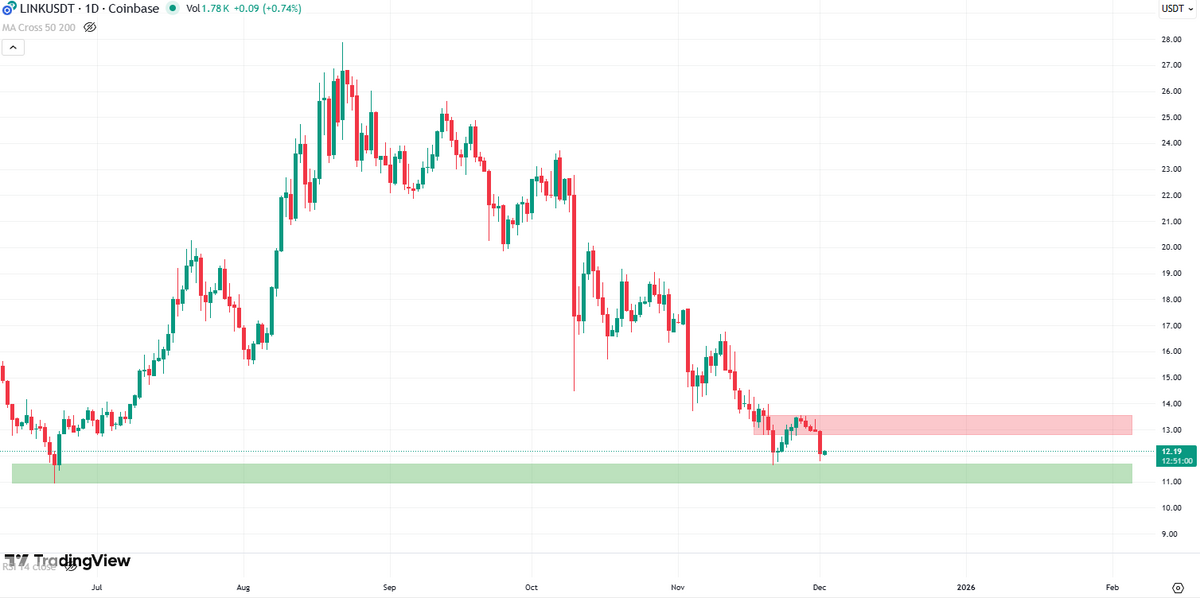
Chainlink ETF Set to Debut as LINK Slips Amid Market Weakness
Striking baristas win $38.9 million in compensation, yet contract disputes continue
- Starbucks settles NYC Fair Workweek Law violations for $38.9M, including $35.5M restitution to 15,000+ workers. - Striking baristas demand collective bargaining amid ongoing labor disputes and unionization efforts at 550 stores. - Mayor-elect Mamdani and Sen. Sanders join protests, framing demands as moral issues against corporate resistance. - Settlement addresses 500,000 scheduling violations since 2021, with workers receiving $50/week compensation. - Starbucks defends labor law complexity but faces cr