
SWIFT executive defends banks' role in the blockchain era

- Banks seek their own governance rather than external blockchains
- SWIFT sees public blockchains as an execution layer only.
- Cryptocurrencies spark debates on neutrality and institutional trust
SWIFT's Chief Innovation Officer, Tom Zschach, stated that traditional banks are unlikely to fully transfer transaction settlement to external blockchains or distributed systems. According to him, open source code and the transparency of public networks alone do not guarantee the trust required by financial institutions. For the executive, governance, compliance, and legal enforceability must be under the internal control of the entities themselves.
Zschach emphasized that while distributed ledgers offer programmability, financial institutions don't want to "live on a competitor's tracks." He classified public blockchains, such as Bitcoin and Ethereum, as a "substrate," a useful technological foundation, but insufficient to meet the requirements of trusted settlement in the banking sector.
"Public blockchains are the baseline environment for execution. The transformation occurs when you add the layer of trust that makes the results legally enforceable, compliant, and safe to scale," the executive wrote in a LinkedIn post.
According to Zschach, the next stage of integration will not be crypto networks replacing the financial system, but rather the financial sector absorbing the best of public blockchains on its own terms.
The SWIFT executive also refuted the idea that tokens like XRP would be the ideal option for banks simply because they survive regulatory processes. In a comment that was later removed, he stated that "surviving lawsuits is not resilience," reinforcing that institutional trust depends on neutral and shared governance, not on a single company.
He added that neutrality in finance isn't defined by the number of nodes or simply being open source. He believes billion-dollar disputes can't be resolved by validators alone, but rather by solid legal frameworks, noting that SWIFT acts as a neutral intermediary between more than 11.000 global institutions.
Cryptocurrency entrepreneurs, however, disagreed. Evgeny Yurtaev, CEO of Zerion, argued that true neutrality comes from open protocols that ensure fairness through code. Similarly, Merlin Egalite, co-founder of Morpho, argued that DeFi infrastructure should have immutable code, minimal governance, and no bias, unlike the model adopted by SWIFT.
The discussion reinforces the gap between the vision of traditional finance and the proposal of cryptocurrencies, where decentralization is seen as the way to ensure equity and resilience.
Disclaimer: The content of this article solely reflects the author's opinion and does not represent the platform in any capacity. This article is not intended to serve as a reference for making investment decisions.
You may also like
Mars Morning News | Ethereum Fusaka upgrade officially activated; ETH surpasses $3,200
The Ethereum Fusaka upgrade has been activated, enhancing L2 transaction capabilities and reducing fees; BlackRock predicts accelerated institutional adoption of cryptocurrencies; cryptocurrency ETF inflows have reached a 7-week high; Trump nominates crypto-friendly regulatory officials; Malaysia cracks down on illegal Bitcoin mining. Summary generated by Mars AI. The accuracy and completeness of this summary are still undergoing iterative updates.

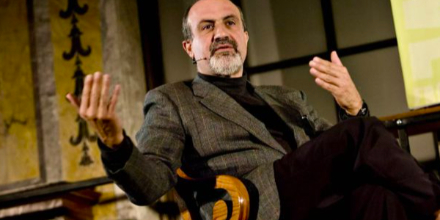
Do you think stop-losses can save you? Taleb exposes the biggest misconception: all risks are packed into a single blow-up point.
Nassim Nicholas Taleb's latest paper, "Trading With a Stop," challenges traditional views on stop-loss orders, arguing that stop-losses do not reduce risk but instead compress and concentrate risk into fragile breaking points, altering market behavior patterns. Summary generated by Mars AI. The accuracy and completeness of this summary are still being iteratively improved by the Mars AI model.
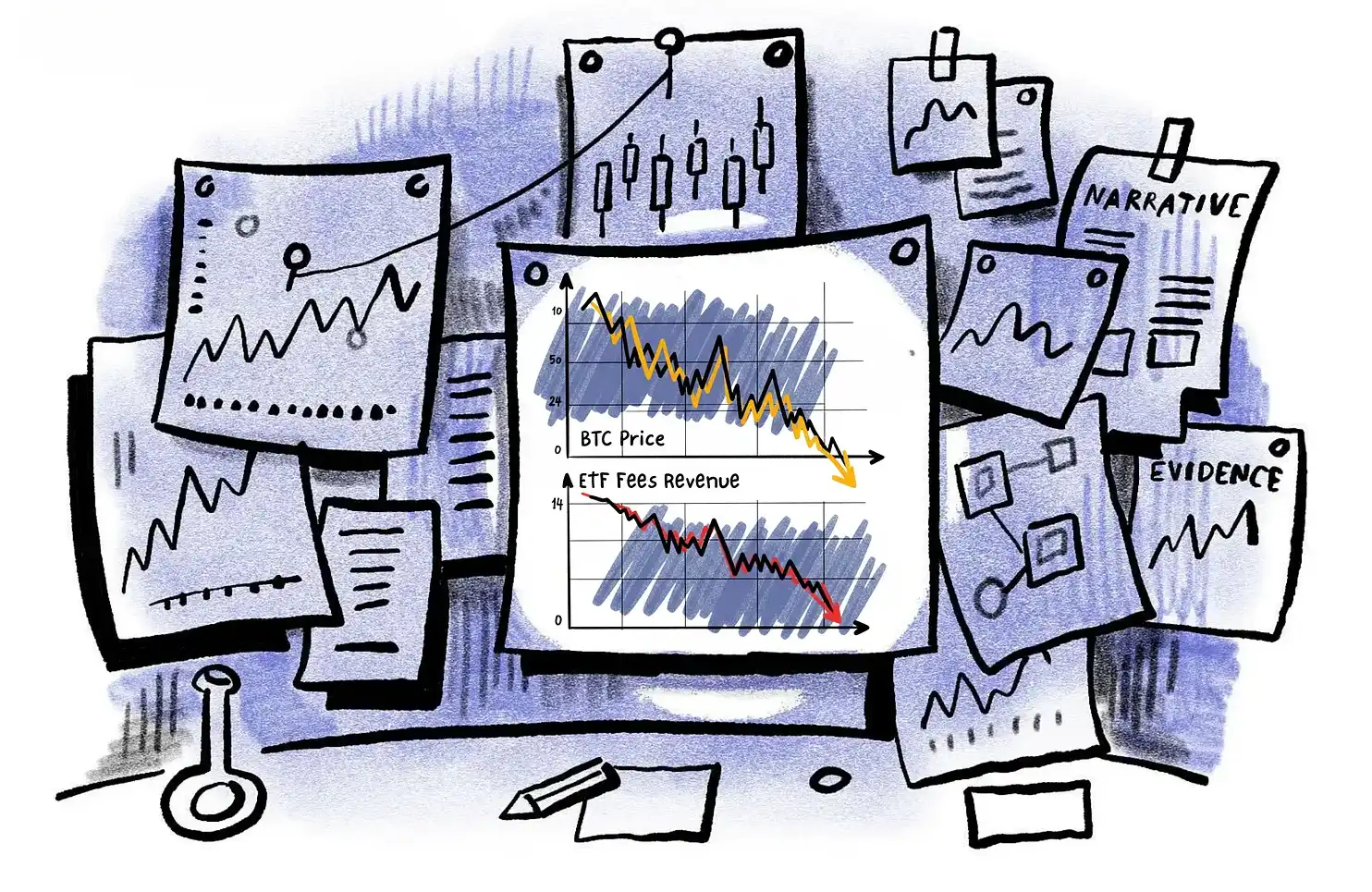
With capital outflows from crypto ETFs, can issuers like BlackRock still make good profits?
BlackRock's crypto ETF fee revenue has dropped by 38%, and its ETF business is struggling to escape the cyclical curse of the market.
Incubator MEETLabs today launched the large-scale 3D fishing blockchain game "DeFishing". As the first blockchain game on the GamingFi platform, it implements a dual-token P2E system with the IDOL token and the platform token GFT.
MEETLabs is an innovative lab focused on blockchain technology and the cryptocurrency sector, and also serves as the incubator for MEET48.






